British Airways Selects GTF Engines for 63 A320neos

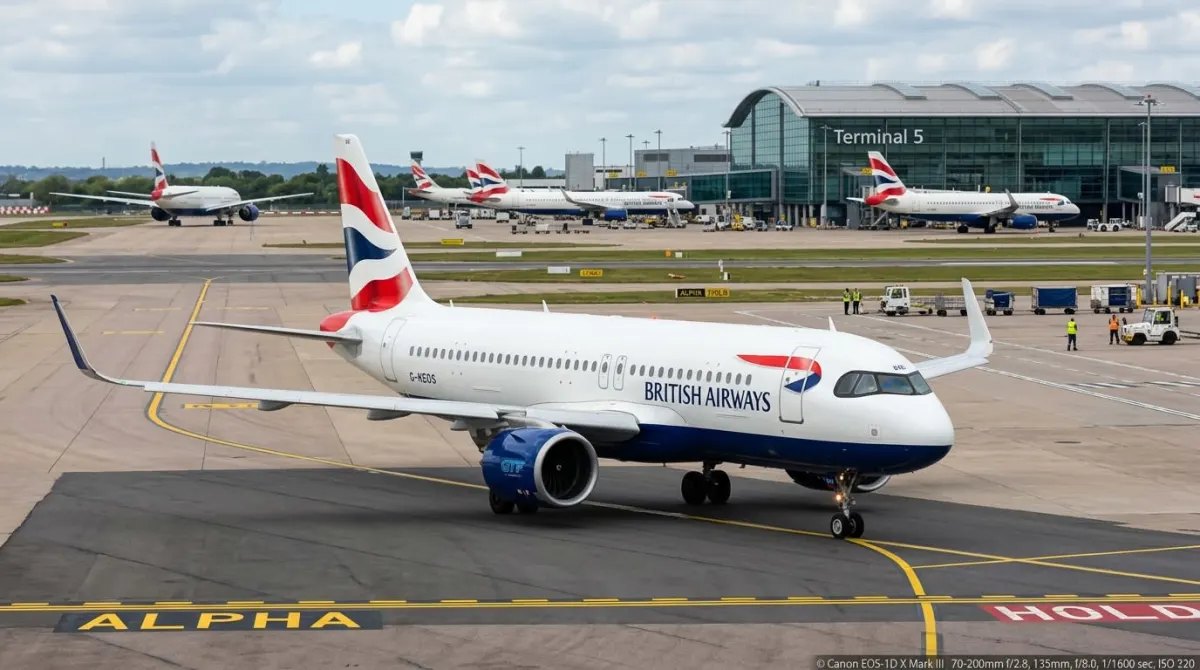
British Airways selected Pratt & Whitney GTF engines to power up to 63 Airbus A320neo aircraft, marking a major shift to a mixed-engine fleet strategy.
Key Takeaways
- •British Airways selects Pratt & Whitney GTF engines for up to 63 A320neos.
- •Agreement includes 33 firm orders and 30 options starting in 2027.
- •Contract features a 12-year EngineWise comprehensive maintenance deal.
- •Carrier adopts a mixed-engine strategy alongside existing CFM powerplants.
The recent Pratt & Whitney GTF contract announcement confirms that the carrier has selected Pratt & Whitney A320neo engines to power up to 63 of its narrowbody aircraft. This agreement, representing one of the most significant RTX aviation engine contracts of the year, covers 33 firm orders and 30 options for Airbus A320neo (Airbus A320 New Engine Option) family aircraft. Deliveries of the new GTF-powered fleet are scheduled to begin in 2027, introducing a new propulsion architecture to the airline's short-haul operations.
The decision represents a pivotal transition for British Airways, which currently operates a fleet of 33 A320neo family aircraft powered exclusively by competing CFM International (CFM) LEAP-1A engines. By introducing the GTF (Geared Turbofan) engine, the airline is implementing a mixed-engine narrowbody fleet strategy, breaking single-source engine commonality to diversify its supply chain. This move is designed to mitigate the operational and technical risks that have recently impacted single-platform narrowbody operations globally.
Under the terms of the agreement confirmed by parent company RTX Corporation (RTX), the order includes a 12-year EngineWise Comprehensive services contract. This long-term agreement shifts maintenance, repair, and overhaul risk to the manufacturer, providing British Airways with predictable maintenance costs and technical support over more than a decade of operations.
According to official performance data released by Pratt & Whitney, the GTF engine delivers 20% lower fuel consumption and carbon emissions compared to prior-generation engines. Additionally, the powerplant produces a 75% smaller noise footprint, significantly reducing the environmental impact around noise-sensitive airports.
"Today marks a pivotal moment and a strong vote of confidence in the GTF engine as the UK's flagship carrier, British Airways, becomes the newest GTF customer," said Rick Deurloo, President of Commercial Engines at Pratt & Whitney. "As the most fuel-efficient choice for the A320neo aircraft, the GTF engine will help British Airways achieve its international fleet expansion goals and enhance the travel experience for passengers."
This acquisition will directly impact key stakeholders. For Pratt & Whitney, securing British Airways as a blue-chip customer expands its European market share and guarantees 12 years of stable service revenue. Conversely, CFM International loses its exclusive engine supplier status for British Airways' growing A320neo fleet. Operationally, British Airways' maintenance and operations teams must manage increased complexity, including distinct pilot training, separate spare parts inventories, and dual maintenance protocols to support two completely different engine types.
While fleet strategy analysts view this dual-sourcing strategy as a necessary risk mitigation measure to protect the airline's network from single-manufacturer supply chain bottlenecks, some aviation maintenance analysts have raised concerns. Operating a mixed-engine fleet introduces operational complexity and higher inventory costs compared to maintaining a single engine type.
Historically, airlines have oscillated between the simplicity of single-engine fleets and the security of dual-sourcing. In 2021, Frontier Airlines executed a similar strategy, switching from CFM to Pratt & Whitney by ordering 134 GTF-powered A320neos despite already operating 60 LEAP-powered aircraft. Conversely, in 2019, IndiGo shifted in the opposite direction, placing a massive order for CFM LEAP engines after experiencing early operational challenges with the GTF. These precedents highlight the competitive dynamics of the narrowbody engine duopoly and the strategic importance of dual-sourcing to protect network integrity.
The two competing powerplants feature fundamentally different architectures, as detailed below:
Pratt & Whitney GTF vs CFM LEAP-1A: Key Specifications
| Metric | Pratt & Whitney PW1100G-JM (GTF) | CFM International LEAP-1A |
|---|---|---|
| Architecture | Geared Turbofan | 2-Spool Direct Drive |
| Fan Diameter | 81 inches | 78 inches |
| Bypass Ratio | 12.5:1 | ~11:1 |
The Strategic Logic of Mixed-Engine Propulsion
Introducing the Geared Turbofan architecture alongside the direct-drive LEAP engine represents a calculated hedge against systemic aerospace supply chain volatility. Historically, airlines prioritized fleet commonality to minimize training and inventory overhead. However, recent prolonged aircraft-on-ground cycles caused by durability issues and parts shortages have exposed the vulnerability of single-engine fleets. By splitting its narrowbody fleet between Pratt & Whitney and CFM International, British Airways insulates its short-haul network from a catastrophic fleet-wide grounding should either engine platform experience systemic technical directives. Furthermore, the GTF's 75% noise reduction directly aligns with stringent environmental limits, helping the carrier navigate the CAEP/6 and Stage IV Noise/Emissions Standards enforced by regulators like the International Civil Aviation Organization and the European Union Aviation Safety Agency.
British Airways A320neo Delivery Timeline
The integration of the new engines will follow a structured multi-year rollout starting in the late 2020s.
- 2027: First delivery of GTF-powered Airbus A320neo aircraft to British Airways is expected, initiating the operational transition.
- 2027–2039: The 12-year EngineWise Comprehensive services contract will govern the ongoing maintenance, repair, and overhaul of the 33 firm aircraft as they enter active service.
Why Engine Diversification Matters for Heathrow Operations
For British Airways, this contract is critical to maintaining operational resilience at its highly constrained London Heathrow hub, where any fleet grounding causes immediate, widespread disruption. The improved fuel burn and drastically reduced noise profile of the GTF engine allow the carrier to expand capacity while complying with strict local noise quotas. Ultimately, this deal signals that major global airlines are now willing to accept higher maintenance complexity in exchange for supply chain resilience and environmental compliance.
Frequently Asked Questions
- Why did British Airways select Pratt & Whitney GTF engines?
- British Airways selected the GTF engines to power up to 63 Airbus A320neo family aircraft to improve fuel efficiency by 20% and reduce its noise footprint by 75%. The decision also allows the airline to diversify its fleet with a mixed-engine strategy.
- When will British Airways receive the new GTF-powered A320neo aircraft?
- Deliveries of the Pratt & Whitney GTF-powered Airbus A320neo aircraft are scheduled to begin in 2027.
- What maintenance agreement is included in the British Airways engine order?
- The order includes a 12-year EngineWise Comprehensive services contract with Pratt & Whitney to cover long-term maintenance, repair, and overhaul of the engines.
For in-depth airline coverage and commercial aviation news, omniflights.com delivers timely industry insights. Track policy changes, airspace rules, and global aviation governance in the Regulatory category at omniflights.com/regulatory.

Written by Ujjwal Sukhwani
Aviation News Editor & Industry Analyst delivering clear coverage for a worldwide audience. Covers flight operations, safety regulations, and market trends with expert analysis.
Visit ProfileYou Might Also Like

Southwest Reports Record Q3 Revenue Amid Transformation
American Airlines Reports Record Q3 Revenue Amid Fuel Costs
American Airlines Projects 2026 Loss on Rising Fuel Costs
American Airlines to Nearly Triple Premium 787-9 Fleet

Airline Shares Rise Following United Revenue Guidance