Boeing Nears 500-Jet Order from China During Summit

Co-Founder & CEOAviation News Editor delivering trusted coverage across the global aviation industry.

Boeing is negotiating a potential 500-jet order from China, marking its first major deal in the country since 2017 during a presidential summit.
Key Takeaways
- •Boeing negotiates potential 500-jet order from Chinese airlines.
- •The deal would be Boeing's first major China order since 2017.
- •Order includes 737 MAX narrowbodies and 777X/787 widebodies.
- •CEO Kelly Ortberg joins President Trump's May 2026 China trip.
A landmark Boeing China aircraft order for up to 500 jets is reportedly nearing finalization, coinciding with a planned state visit by President Trump in May 2026. The potential agreement, which would see Boeing CEO Kelly Ortberg join the Trump China trip, marks the manufacturer's most significant step toward re-establishing its presence in the critical Chinese market after a near-decade hiatus. The order is expected to heavily feature the Boeing 737 MAX China fleet, alongside widebody models, signaling a major thaw in aerospace trade relations.
This development represents a crucial turning point for Boeing, which has not secured a major new aircraft order from China since 2017. The intervening years were marked by escalating trade tensions and the prolonged grounding of the 737 MAX, which allowed competitor Airbus to capture significant market share. According to Boeing's own data, China once accounted for approximately 25% of its total order book. As of early 2026, unfilled orders from Chinese airlines have dwindled to just 133 aircraft, representing a mere 2% of Boeing's total backlog. A 500-aircraft deal would dramatically reverse this trend, injecting billions into the company's revenue stream and providing long-term stability for its production lines.
Geopolitical Thaw and Regulatory Milestones
The negotiations are deeply intertwined with high-level diplomacy. The presence of Boeing's CEO alongside the U.S. President on a state visit follows a historical pattern where major aerospace contracts are announced as part of broader bilateral agreements. This was seen in November 2017, when Boeing signed a $37 billion agreement for 300 jets during a similar summit. While that deal was later hampered by geopolitical friction, the current negotiations suggest a renewed effort to use commercial aviation as a bridge.
Regulatory approvals from the Civil Aviation Administration of China (CAAC) are a key component of this reset. The CAAC was the first authority globally to ground the 737 MAX in March 2019 and among the last to fully clear its return to service. A large-scale order for the MAX family would serve as a definitive confirmation of the aircraft's standing in China. Furthermore, the deal's composition reportedly includes the 737 MAX 10, a variant awaiting certification from the Federal Aviation Administration (FAA), which is expected in late 2026. Securing a major Chinese customer for this model would be a significant vote of confidence.
Industry and Supply Chain Impact
A deal of this magnitude would send powerful ripples throughout the global aerospace supply chain. For Boeing Commercial Airplanes, it secures production slots for years to come, particularly for the 737 MAX program. This has a direct positive impact on key suppliers like Spirit AeroSystems, which manufactures the fuselages, and engine makers CFM International and GE Aerospace, who supply the LEAP-1B and GE9X engines for the 737 MAX and 777X, respectively.
The impact on Chinese carriers—including Air China, China Eastern, and China Southern—is equally significant. These airlines face pent-up demand for fleet renewal after years of slowed deliveries. Access to new, more fuel-efficient aircraft from Boeing's commercial lineup is essential for expanding their domestic and international networks while lowering operational costs. For competitor Airbus, the deal signals an end to its near-monopoly on large Chinese orders, re-igniting fierce competition in the world's fastest-growing aviation market.
Boeing 737 MAX 8 vs Airbus A320neo
| Metric | Boeing 737 MAX 8 | Airbus A320neo |
|---|---|---|
| Range | 3,500 nm | 3,400 nm |
| Typical Capacity (2-class) | 162-178 seats | 150-180 seats |
| Max Capacity | 210 seats | 194 seats |
Boeing 787-9 vs Airbus A350-900
| Metric | Boeing 787-9 | Airbus A350-900 |
|---|---|---|
| Range | 7,565 nm | 8,500 nm |
| Typical Capacity | ~290 seats | ~300-350 seats |
Technical Analysis
This potential 500-jet agreement is more than a commercial transaction; it represents a strategic realignment for Boeing within the geopolitical landscape of global aviation. The deal follows the historical precedent set in 2017, where aircraft sales are leveraged as a key deliverable in high-stakes diplomatic summits. This approach, while effective in securing large-volume orders, also exposes Boeing's backlog to the volatility of international relations, a concern voiced by some industry analysts. The transaction is fundamentally driven by the significant pent-up demand for fleet modernization among Chinese carriers, a backlog created by the dual pressures of the 737 MAX grounding and years of trade-related delivery slowdowns. By re-establishing a strong foothold, Boeing aims to counter Airbus's recent gains and restore a more balanced duopoly in a market projected to account for 20% of global aircraft demand over the next two decades. Environmental advocates, however, note that adding 500 new aircraft, despite their improved efficiency, presents a challenge to the industry's long-term decarbonization goals.
What Comes Next
All eyes are on the expected US-China Presidential Summit in May 2026, where an official announcement regarding the aircraft order is anticipated. While Boeing CEO Kelly Ortberg has remained tight-lipped on specifics, he confirmed in a recent earnings call that the number of airplanes being discussed is "a big number." Following any agreement, the focus will shift to production schedules and regulatory milestones, including the expected certification of the Boeing 737 MAX 10 by the FAA in late 2026, which is a key variant for high-density Chinese domestic routes.
Why This Matters
This potential deal is a watershed moment for Boeing, signaling its return to the world's most important aviation growth market after a long and costly absence. It re-establishes the competitive balance with Airbus in the region and provides a much-needed boost to the American aerospace manufacturing sector. For the broader industry, it may indicate a period of stabilization in US-China trade relations, with commercial aviation serving as a cornerstone of economic cooperation.
Frequently Asked Questions
- How many aircraft are in the potential Boeing China deal?
- Boeing is negotiating a potential order for up to 500 aircraft with major Chinese airlines. The deal is expected to include a mix of Boeing 737 MAX narrowbodies and widebody jets like the 787 Dreamliner and 777X.
- Why is this Boeing deal with China significant?
- The deal is highly significant because it would be Boeing's first major aircraft order from China since 2017, ending a long freeze caused by trade tensions and the 737 MAX grounding. It signals a major reset in a critical market where competitor Airbus has recently gained substantial market share.
Visit omniflights.com for the latest commercial aviation news and airline industry updates. Get the latest updates on major hubs, regional terminals, and airport operations via the Airports section at omniflights.com/airports.
Written by Hardik Vishwakarma
Co-Founder & Aviation News Editor leading initiatives that improve trust and visibility across the global aviation industry. Covers airlines, airports, safety, and emerging technology.
Visit ProfileYou Might Also Like
Discover more aviation news based on similar topics
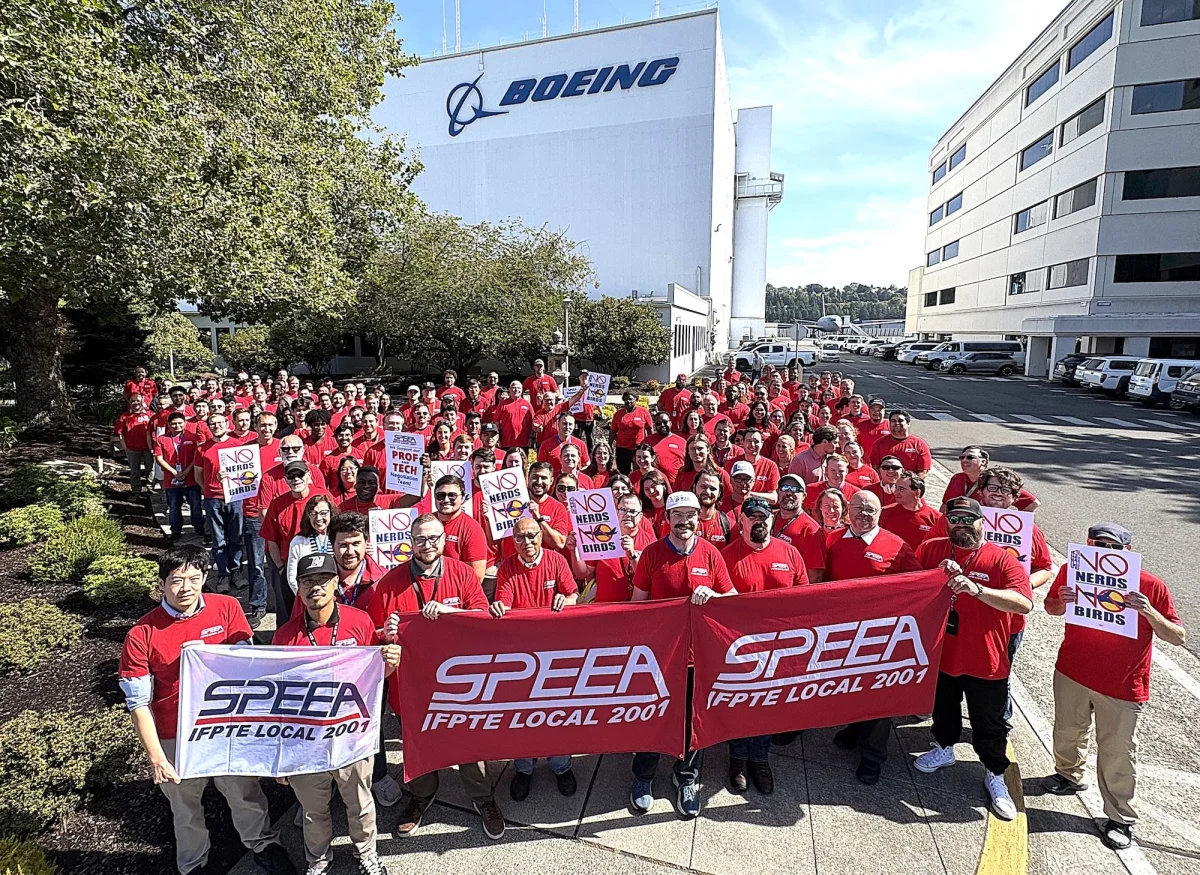
Boeing Tightens Spending Ahead of Critical SPEEA Union Vote
Boeing has implemented spending controls and a hiring freeze as it faces a critical contract ratification vote with its 17,000-member engineering union.
Boeing CEO Kelly Ortberg Warns of 777X Certification Delay
Boeing CEO Kelly Ortberg warned that a potential strike by 17,000 engineers would immediately halt the 777X certification and production programs.
American and United Plan Capacity Cuts Amid Fuel Cost Surge
American and United are trimming flight schedules to offset a $1 billion fuel cost spike while maintaining strong pricing power.
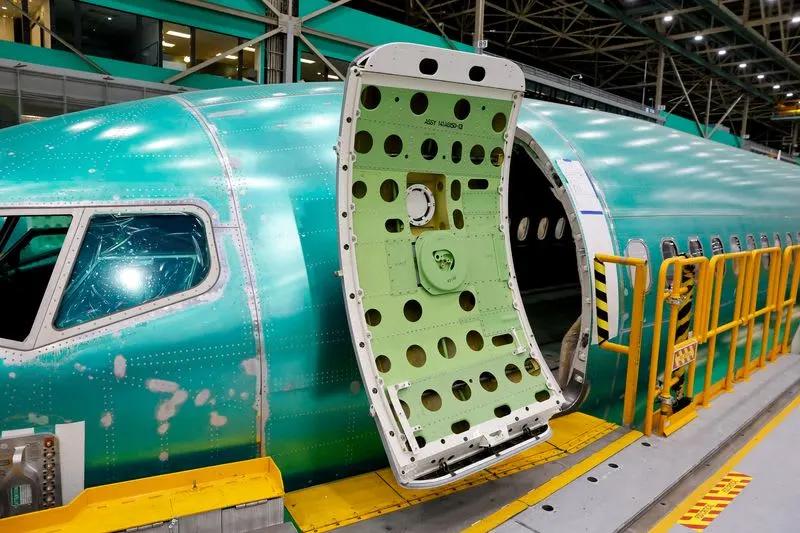
Boeing CEO Reports 737 MAX Output Stabilization Delays
Boeing CEO Kelly Ortberg reports slower 737 MAX production stabilization, prompting a downward revision in 2026 free cash flow expectations to $2 billion.
Boeing Finalizes KAL Order, Salvages Turkish Airlines Deal
Boeing secured a $36.2 billion order from Korean Air Lines for 103 aircraft and nears a resolution on a 150-jet deal with Turkish Airlines.
Airbus Forecasts 42,000 New Jets Amid Strong Global Demand
Airbus expects 42,000 new aircraft deliveries globally by 2045, with 45% of demand concentrated in the Asia-Pacific region.