Beta Technologies ALIA Takes Flight in FAA Testing Program

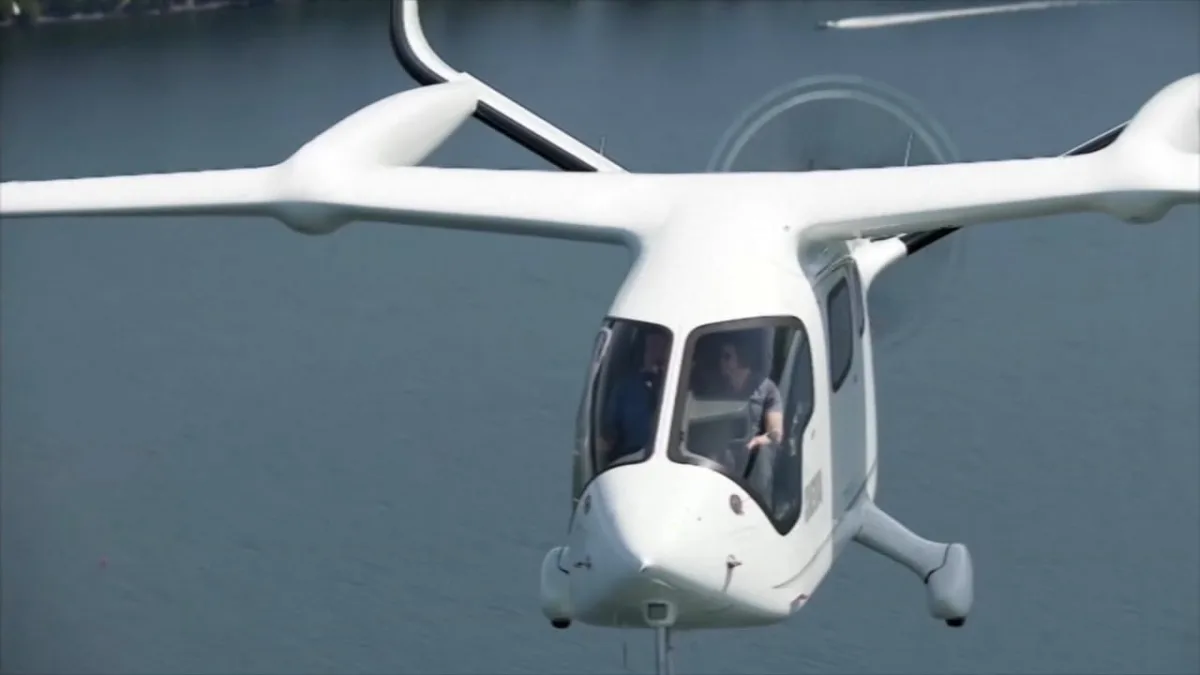
Beta Technologies' all-electric ALIA aircraft has begun flight testing as the firm pursues FAA certification for its eVTOL and eCTOL variants.
Key Takeaways
- •Beta Technologies ALIA charges in 50 minutes for approximately $13.
- •The aircraft offers a 40x reduction in energy costs over gas-powered planes.
- •FAA certification for the ALIA CX300 is expected by late 2026.
- •Beta targets a production capacity of 300 aircraft per year.
Advancing Electric Aviation
Beta Technologies is accelerating the development of its all-electric airplane, the ALIA, marking a potential shift in short-haul cargo and regional transport. During a recent demonstration, the company's founder and CEO Kyle Clark showcased the aircraft’s capabilities, emphasizing its role in the emerging Advanced Air Mobility (AAM) sector. The aircraft, which can charge in approximately 50 minutes for $13, is designed to reach flight readiness in just 15 seconds.
This development follows a high-profile flight test by U.S. Transportation Secretary Sean Duffy, who recently operated the aircraft. The demonstration underscores the growing alignment between private innovation and federal oversight, specifically through the FAA (Federal Aviation Administration) eVTOL Integration Pilot Program (eIPP). This program allows pre-certified electric aircraft to conduct operational testing in commercial airspace, providing critical data for final type certification.
Operational Economics and Performance
Beta Technologies is targeting a production rate of one aircraft per day at its Vermont manufacturing facility, aiming for a total of 300 units annually. According to the company, the ALIA offers a significant economic advantage over conventional gas-powered alternatives. An hour-long flight costs approximately $8 in energy, representing a 40-fold reduction in operating expenses compared to traditional combustion-engine aircraft.
Beyond cost, the aircraft features a maximum demonstrated range of 336 nautical miles on a single charge. This performance profile positions the ALIA to serve as a disruption tool for logistics giants like UPS and Amazon, which are seeking to optimize next-day delivery networks. Furthermore, the aircraft utilizes regenerative braking technology, where the force of descent recharges the battery, extending operational efficiency during flight cycles.
Safety and Technical Specifications
Safety remains a central pillar of the ALIA design. While the aircraft features a streamlined aesthetic, it is powered by dual electric motors housed behind the propeller. In flight demonstrations, Kyle Clark confirmed that the aircraft maintains stable flight characteristics even if one motor is disabled, or if both are shut down, allowing the vessel to function as a high-performance glider. The official ALIA specifications outline two distinct variants: the ALIA-250, an eVTOL (Electric Vertical Takeoff and Landing) version capable of helicopter-like lift, and the ALIA CX300, an eCTOL (Electric Conventional Takeoff and Landing) model designed for traditional runways.
Industry Context and Regulatory Path
Beta Technologies’ progress occurs within a broader industry movement toward zero-emission aviation. While electric aircraft currently face energy density limitations that confine them to short-haul missions, their impact on regional logistics is expected to be transformative. The U.S. Department of Transportation (DOT) continues to support the integration of these technologies into the national airspace, balancing innovation with rigorous safety standards.
Historically, the introduction of the Cessna 208 Caravan in 1984 reshaped the short-haul utility market. Beta’s CX300 aims to follow this precedent by replacing legacy turboprops in medical transport and cargo sectors. However, some analysts note that the transition requires significant infrastructure investment, including the deployment of megawatt-level charging networks, to achieve widespread commercial viability.
Certification and Future Milestones
Beta Technologies is navigating a dual-track certification process with the FAA. The company expects to achieve full type certification for the ALIA CX300 (eCTOL) by late 2026. Following this, the ALIA-250 (eVTOL) is anticipated to receive certification in 2027. Meanwhile, Beta will continue to expand its operational footprint under the eIPP, with final testing phases scheduled to ramp up across the United States starting in September 2026. These milestones represent a critical transition from prototype testing to full-scale commercial deployment.
Frequently Asked Questions
- What is the difference between the Beta ALIA-250 and the ALIA CX300?
- The ALIA-250 is an eVTOL (Electric Vertical Takeoff and Landing) aircraft capable of vertical lift, while the ALIA CX300 is an eCTOL (Electric Conventional Takeoff and Landing) model designed for traditional runway operations.
- When does Beta Technologies expect to receive FAA type certification for its aircraft?
- Beta Technologies expects to achieve FAA type certification for its ALIA CX300 (eCTOL) by late 2026, with the ALIA-250 (eVTOL) certification targeted for 2027.
For in-depth airline coverage and commercial aviation news, omniflights.com delivers timely industry insights. Track policy changes, airspace rules, and global aviation governance in the Regulatory category at omniflights.com/regulatory.

Written by Hardik Vishwakarma
Co-Founder & Aviation News Editor leading initiatives that improve trust and visibility across the global aviation industry. Covers airlines, airports, safety, and emerging technology.
Visit ProfileYou Might Also Like

Lockheed Martin Proposes 10-Year F-35 Production Framework
FAA Certifies Boeing 737 MAX 10 for Service

FAA Grants BETA Market Survey Rights for ALIA A250 eVTOL

FAA Certifies Boeing 737 MAX 10
FAA Returns Certification Authority to Boeing for 737 MAX