Autonomous Fixed-Wing Aircraft Development Gains Momentum

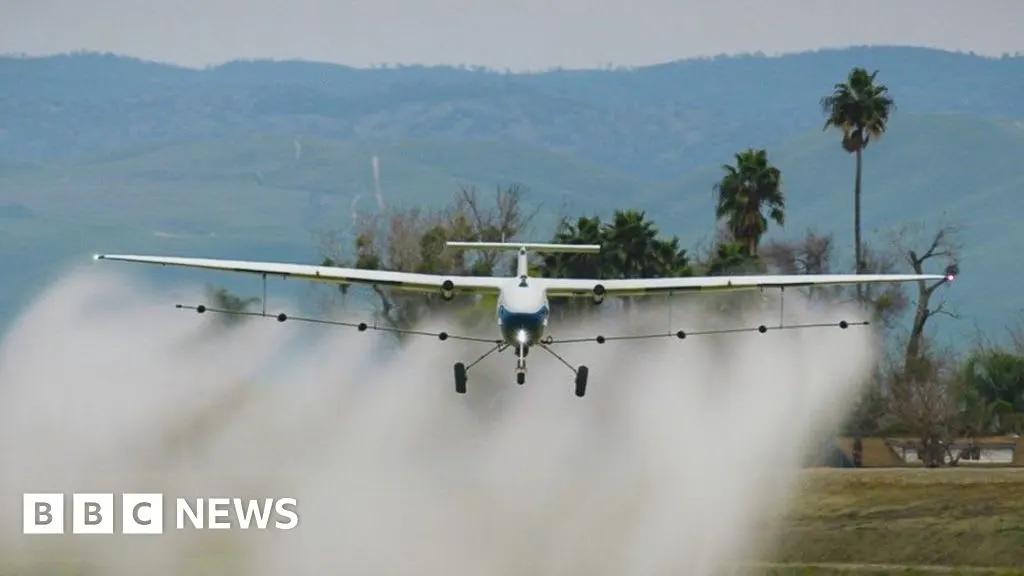
Start-ups are advancing autonomous fixed-wing aircraft for agricultural and cargo tasks, aiming to prove safety before pursuing passenger operations.
Key Takeaways
- •Pyka's Pelican 2 drone features a 300-liter payload and 11.5m wingspan.
- •Reliable Robotics is retrofitting Cessna 208B aircraft for autonomous cargo.
- •Merlin Labs holds a $105 million contract to automate C-130J aircraft.
- •ALPA and NAAA remain concerned about safety and shared airspace integration.
The Rise of Autonomous Fixed-Wing Aircraft
Autonomous fixed-wing aircraft are entering a critical phase of commercial development, moving beyond experimental prototypes into specialized agricultural and logistics roles. While the industry has been heavily focused on Electric Vertical Take-Off and Landing (eVTOL) air taxis, a parallel race is underway to deploy pilotless, fixed-wing platforms. These systems, ranging from purpose-built agricultural drones to retrofitted cargo planes, are designed to operate in structured environments, potentially paving the way for eventual passenger service.
Agricultural and Cargo Utility
In the United States, Pyka has emerged as a leader in uncrewed agricultural aviation, securing authorization from the FAA (Federal Aviation Administration) for commercial operations. The company's Pelican 2 agricultural drone features an 11.5-meter wingspan, a 35-minute flight endurance, and a 300-liter payload capacity. By flying lower than human-piloted aircraft, these systems reduce chemical spray drift, enhancing operational efficiency. Meanwhile, in the United Kingdom, the firm Windracers is seeking Civil Aviation Authority (CAA) approval to launch autonomous cargo services in the Shetland and Orkney islands. The company's ULTRA drone is already flying missions in Ukraine, demonstrating the utility of autonomous heavy-lift logistics in demanding environments.
Retrofitting vs. Clean-Sheet Design
Industry players are adopting divergent strategies for aircraft autonomy retrofitting. Reliable Robotics is focused on retrofitting the Cessna 208B Grand Caravan, a platform with a payload capacity of approximately 1,360 kg, to bypass the certification hurdles associated with novel airframes. Conversely, Merlin Labs is applying its autonomy system to larger platforms, including the Lockheed Martin C-130J Super Hercules, supported by a USSOCOM contract valued at up to $105 million. These military-backed initiatives provide the necessary flight hours and system validation to accelerate the path toward civilian certification.
Technical Approaches and AI Integration
Companies are also divided on the role of Artificial Intelligence (AI) in safety-critical systems. Reliable Robotics intentionally avoids AI, favoring deterministic rules-based software and radar for detect-and-avoid capabilities to simplify the certification process. In contrast, Merlin Labs utilizes AI-powered cameras and generative AI for air traffic control communication. This divide underscores the broader challenge of replicating a human pilot’s ability to navigate complex, shared airspace.
Historical Context and Safety Concerns
The Air Line Pilots Association (ALPA) has expressed significant reservations, characterizing the removal of human pilots as a "serious gamble with safety." These concerns are echoed by the National Agricultural Aviation Association (NAAA), which cites the difficulty of spotting small uncrewed aircraft in shared airspace. Proponents, however, point to the 1960s introduction of autoland systems as a historical precedent, arguing that increased automation consistently reduces human error and improves overall flight safety.
Technical Comparisons: Cargo Platforms
| Metric | Cessna 208B (Reliable Robotics) | Lockheed Martin C-130J (Merlin Labs) |
|---|---|---|
| Payload Capacity | ~1,360 kg | ~19,000 kg |
| Typical Crew | Single-pilot certified | Two pilots, one loadmaster |
Certification and Scaling Milestones
Looking ahead, the industry faces a series of critical milestones. Windracers expects to launch autonomous cargo services in the UK between late 2026 and 2027. Merlin Labs continues its integration and ground testing on the C-130J, with commercial multi-crew cargo aircraft planned as the next phase of development. Pyka has stated an objective to scale its manufacturing production to 1,000 autonomous aircraft per year by 2030, though this target remains subject to regulatory progress and market adoption.
Why Regulators and Stakeholders Are Watching
The shift toward autonomous fixed-wing platforms represents a broader industry evolution toward reduced-crew and eventually zero-pilot operations. For defense logistics commands, this technology offers a path to sustain high-risk resupply missions without human aircrew. For the broader aviation sector, the successful deployment of these systems in niche markets acts as a testing ground for the regulatory frameworks that will ultimately govern the future of autonomous passenger flight.
Frequently Asked Questions
- What is the primary difference between Pyka's autonomous approach and companies like Reliable Robotics?
- Pyka builds purpose-built autonomous agricultural aircraft from scratch, while Reliable Robotics focuses on retrofitting existing FAA-certified aircraft like the Cessna 208B to streamline the certification process.
- Why are aviation pilot unions concerned about autonomous aircraft?
- Organizations like the Air Line Pilots Association (ALPA) view the removal of pilots as a significant safety risk, while the National Agricultural Aviation Association (NAAA) highlights the difficulty of spotting uncrewed aircraft in shared low-altitude airspace.
Stay ahead of the airline industry with commercial aviation news from omniflights.com. For reporting on UAP sightings, investigations, and aviation-related encounters, see the UAPs section at omniflights.com/uaps.

Written by Shashank Shukla
Co-Founder & CTO leading the engineering and AI systems behind Omni Flights. Covers aviation technology, flight safety, aircraft manufacturing, and emerging aerospace developments.
Visit ProfileYou Might Also Like

Boeing 787-9 Completes Short Inlet Tests in Montana
Airbus A321neo to Test Folding Wings of Tomorrow Project
Voyageur Orders Canada's First Airbus U030 Flexrotor
LATAM Selects SES Multi-Orbit Wi-Fi for 60+ New Jets
Lufthansa 787-9 Tests Tech to Cut Fuel and Noise