American Eagle Flight 5318 Evacuates After Cabin Smoke

Co-Founder & CEOAviation News Editor delivering trusted coverage across the global aviation industry.
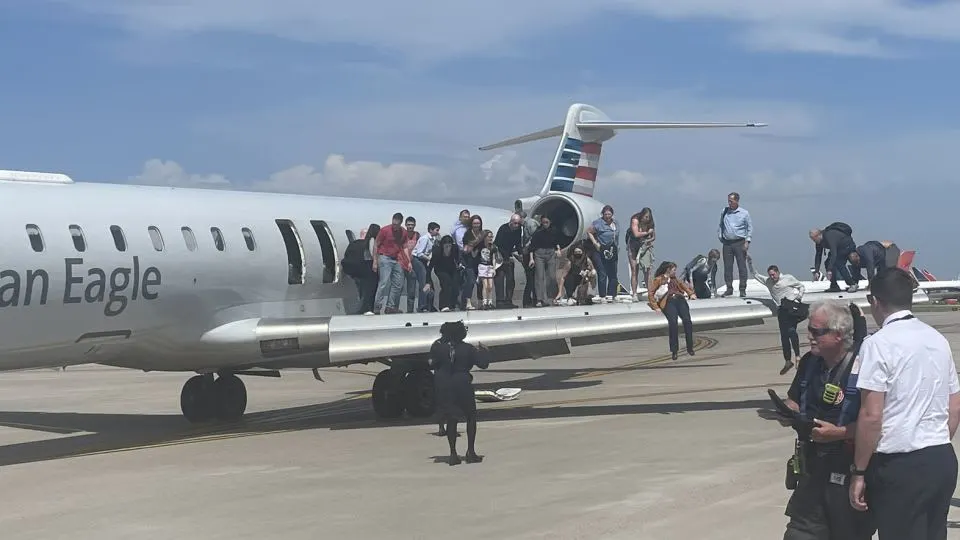
American Eagle Flight 5318 made an emergency landing in Kansas City, evacuating all 76 passengers after smoke was reported in the aircraft's cabin.
Key Takeaways
- •American Eagle Flight 5318 evacuated 76 passengers in Kansas City.
- •The CRJ900 crew declared an emergency due to smoke in the cabin.
- •A 2018 FAA directive previously addressed CRJ900 cabin smoke risks.
- •The Federal Aviation Administration has launched an investigation.
An American Eagle Flight 5318 service, operated by PSA Airlines, conducted an emergency landing and cabin smoke evacuation at Kansas City International Airport (MCI) on Friday, May 15, 2026. The Bombardier CRJ900 aircraft, carrying 76 passengers, was on its final approach when the crew declared an emergency. All passengers, including U.S. Representative Tracey Mann, were safely evacuated onto the taxiway with no reported injuries.
The incident has prompted an immediate investigation by the Federal Aviation Administration (FAA). This event places a renewed focus on regional jet safety and the protocols for managing in-flight smoke or fume events, which remain a significant concern for crew and passenger safety.
Incident Details
Flight 5318 departed from Ronald Reagan Washington National Airport (DCA) and was approximately two miles from landing at MCI when the flight crew reported smoke in the cabin to air traffic control. The pilots landed the aircraft without incident, after which emergency services met the plane. Passengers were evacuated directly onto the tarmac as a precautionary measure.
PSA Airlines, a wholly owned regional subsidiary of American Airlines Group, operated the Canadair Regional Jet 900 (CRJ900). In a statement, American Airlines apologized for the disruption and confirmed its full cooperation with the investigation. Rep. Tracey Mann posted a video on social media praising the rapid and professional response of the flight crew and airport emergency personnel.
The incident directly impacts several stakeholders. PSA Airlines faces an operational disruption with the aircraft grounded for investigation, which will scrutinize its maintenance procedures. For MHIRJ Aviation, the company that now supports the CRJ program, the event could necessitate a service bulletin to the fleet if a systemic design or manufacturing issue is identified. Airport operations at MCI were also briefly affected as emergency crews responded to the aircraft.
Regulatory Scrutiny and Historical Context
The FAA's investigation will determine the source of the smoke. This is not the first time the CRJ900 model has faced scrutiny over smoke-related risks. In 2018, the FAA issued Airworthiness Directive AD 2018-07-16, which mandated the installation of protective sleeves on bonding jumper wires in the aircraft's galley area. According to the FAA Airworthiness Directives Portal, this directive was specifically designed to prevent in-flight electrical fires and subsequent cabin smoke.
This event follows established industry procedures for such emergencies, which prioritize getting the aircraft on the ground and evacuating passengers as quickly as possible. Historical precedents underscore the seriousness of in-flight smoke. In September 2014, JetBlue Flight 1416 evacuated 147 passengers via emergency slides after an engine issue filled the cabin with smoke. Similarly, a British Airways A321 evacuated in Valencia in August 2019 due to thick smoke in the cabin on approach.
Industry Impact and Broader Concerns
The reliance on regional carriers is a key feature of the U.S. aviation network, with carriers like PSA Airlines operating approximately 40% of all scheduled domestic flights. This makes the safety and reliability of regional jets, such as the CRJ900, a matter of national importance. The incident also feeds into a broader trend of heightened scrutiny on cabin air quality. Flight attendant unions have reported thousands of smoke and fume events annually, advocating for stricter air monitoring regulations.
The Association of Flight Attendants-CWA (AFA-CWA) has argued that such events are often downplayed by regulators and airlines, despite potential long-term health risks to crew members from exposure to toxic fumes.
Bombardier CRJ900 vs. Embraer E175
To provide context on the aircraft type involved, the Bombardier CRJ900 is a key regional jet that competes directly with the Embraer E175. Both are mainstays of U.S. regional fleets.
| Metric | Bombardier CRJ900 | Embraer E175 |
|---|---|---|
| Typical Seating | 76 (2-class) | 76 (2-class) |
| Maximum Range | 1,553 nm | 2,200 nm |
| Engines | 2x GE CF34-8C5 | 2x GE CF34-8E |
Technical Analysis
While the safe evacuation of all passengers marks a successful outcome from a crisis management perspective, the incident aboard Flight 5318 points to persistent safety challenges within regional aviation. The primary focus of the FAA investigation will likely be the aircraft's electrical and environmental control systems, particularly in light of the pre-existing Airworthiness Directive concerning fire risks in the CRJ900 galley. Should the cause be linked to the issue addressed in AD 2018-07-16, it would raise serious questions about the effectiveness of the mandated fix and compliance across the fleet. This event reinforces the critical role of the type certificate holder, now MHIRJ Aviation Group, in providing ongoing support and addressing potential systemic flaws in aircraft that have been in service for many years.
What Comes Next
The FAA's investigation is underway, and the agency is expected to release its preliminary report on the incident by June 2026. This initial report will outline the basic facts discovered but will not state a probable cause, which will come later in a final report. Depending on the findings, the FAA could issue further airworthiness directives mandating inspections or modifications across the entire CRJ900 fleet.
Why This Matters
This emergency landing highlights the critical importance of effective crew training and standardized emergency protocols in ensuring passenger safety. For the industry, it serves as a reminder of the operational vulnerabilities and maintenance responsibilities associated with regional jet fleets. The investigation's outcome will be closely watched, as it could influence maintenance standards and regulatory oversight for hundreds of similar aircraft operating across North America.
Frequently Asked Questions
- What happened on American Eagle Flight 5318?
- American Eagle Flight 5318, a CRJ900 operated by PSA Airlines, made an emergency landing at Kansas City International Airport on May 15, 2026. All 76 passengers were evacuated onto the taxiway after the crew reported smoke in the cabin during the approach.
- Why is the FAA investigating the CRJ900 smoke incident?
- The Federal Aviation Administration is investigating to determine the root cause of the cabin smoke. The investigation is notable because a previous Airworthiness Directive (AD 2018-07-16) was issued to prevent electrical fires and smoke in the galleys of CRJ900 aircraft.
- Who operates American Eagle flights?
- American Eagle is the brand name for a network of regional airlines that operate flights for American Airlines. In this incident, the flight was operated by PSA Airlines, which is a wholly owned subsidiary of American Airlines Group.
omniflights.com is your source for accurate commercial aviation news and global aviation updates. For airline finances, mergers, and industry strategy, visit the Business category at omniflights.com/business.

Written by Hardik Vishwakarma
Co-Founder & Aviation News Editor leading initiatives that improve trust and visibility across the global aviation industry. Covers airlines, airports, safety, and emerging technology.
Visit ProfileYou Might Also Like
Discover more aviation news based on similar topics
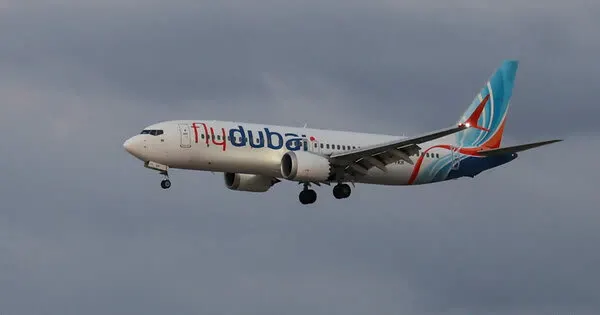
Flydubai FZ1073 Cockpit Attack: Inside the Terror Attempt
Flydubai flight FZ1073 diverted to Tabuk after co-pilot Hamam al-Hammami attacked Captain Smit Machchhar in a confirmed terrorist act.
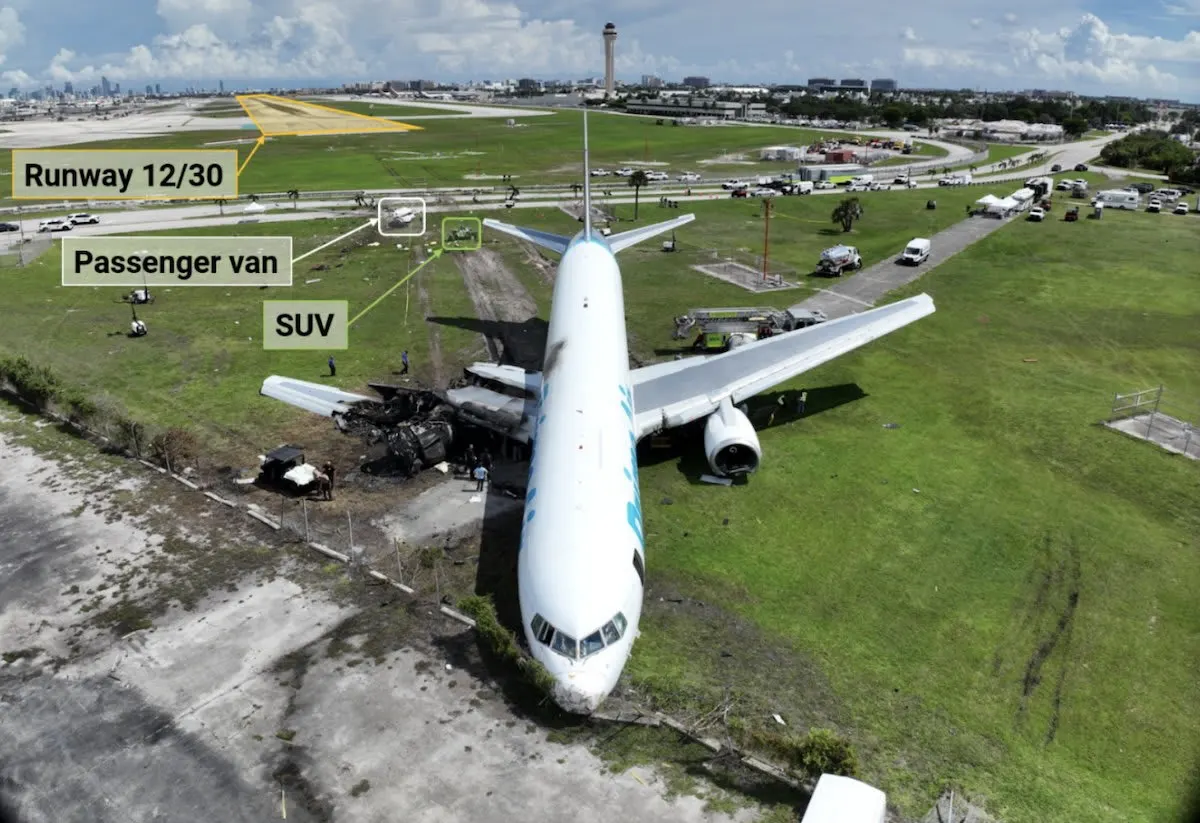
21 Air 767 Crash: NTSB Report Details Fatal MIA Overrun
The NTSB preliminary report on the 21 Air 767 crash at Miami International Airport confirms five ground fatalities following a late, high-speed landing.
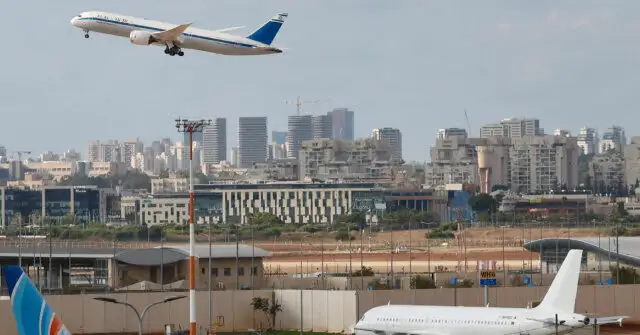
Flydubai FZ1073 Hijacker Flagged as Security Risk by Oman
A Flydubai co-pilot accused of attempting to crash flight FZ1073 had been previously barred from flying in Oman due to extremist concerns.
FAA Clears Boeing 737 MAX Software Issue, Resumes MAX 10
The FAA cleared a Boeing 737 MAX software issue after a safety review, allowing the 737 MAX 10 certification process to resume immediately.
Flydubai Flight 1073 Hijacking Attempt Over Jordan
A Flydubai Flight 1073 co-pilot attacked the captain mid-flight on September 30, 2026, forcing passengers to intervene and stabilize the aircraft.

Families Demand DCA Midair Collision Safety Reforms
Families of 67 victims from the 2025 DCA midair collision are pressing Congress for mandatory ADS-B In technology to prevent future aviation tragedies.