Alaska, Delta, WestJet Launch New European Routes for 2026

Co-Founder & CEOAviation News Editor delivering trusted coverage across the global aviation industry.

Alaska Airlines enters the European market while Delta and WestJet expand transatlantic routes, adding nearly 19,000 weekly seats on SEA-LHR alone.
Key Takeaways
- •Alaska Airlines begins its first European flights to London and Rome.
- •WestJet adds 8 new transatlantic routes using Boeing 737 MAX 8s.
- •Seattle-London capacity to reach 19,000 weekly seats by June 2026.
- •Delta increases its US-Italy summer seat capacity to 1.64 million.
Three major North American carriers are significantly expanding their transatlantic networks, with Alaska Airlines launching its first-ever Alaska Airlines European routes, WestJet undertaking a major WestJet transatlantic expansion, and Delta Air Lines bolstering its key Delta Air Lines Heathrow services. The new flights, scheduled to begin in May 2026, signal intensified competition and new strategic approaches to the highly lucrative summer travel season between North America and Europe.
This wave of expansion is driven by a combination of fleet changes, strategic partnerships, and the deployment of next-generation aircraft. For Alaska Airlines, the move into long-haul international service is a direct result of its merger with Hawaiian Airlines, which brought widebody Boeing 787-9 Dreamliner aircraft into its fleet. WestJet continues to leverage the range and efficiency of its 737 MAX 8 fleet to open new, previously unserved city pairs. Meanwhile, Delta is reinforcing its hub dominance and responding to growing demand on established, high-yield routes.
Alaska Airlines' Transatlantic Debut
Alaska Airlines is set to transition from a primarily domestic and near-international carrier to a global airline with the launch of daily, year-round service between its main hub at Seattle-Tacoma International Airport (SEA) and London Heathrow Airport (LHR), starting May 21, 2026. The route will be operated by the Boeing 787-9 aircraft inherited from Hawaiian Airlines. According to data from OAG Schedules Analyser, this new service will give Alaska Airlines approximately 22% of the total seat capacity on the competitive Seattle-London corridor by early June 2026. Total two-way capacity on the route is projected to reach nearly 19,000 weekly seats.
Access to the heavily constrained London Heathrow airport was made possible through a strategic partnership. As detailed by Airport Coordination Limited (ACL), the body that governs slot allocation, Alaska secured the necessary landing and takeoff permissions by leasing a slot pair from its Oneworld alliance partner, American Airlines. This move highlights the growing trend of leveraging alliance relationships to gain entry into fortress hubs.
In addition to the flagship London service, Alaska will also launch seasonal flights from Seattle to Reykjavik, Iceland, on May 28, 2026, using a Boeing 737 MAX 8. The airline has also announced service to Rome. Andrew Harrison, Alaska's Chief Commercial Officer, noted that the 787 enables the airline's transition to a global carrier. The full details of their expansion are available via the Alaska Airlines Official Newsroom.
WestJet's Narrowbody Expansion
Canadian carrier WestJet is embarking on its largest-ever transatlantic expansion, adding eight new European routes for the summer 2026 season. This growth is powered by the airline's fleet of fuel-efficient Boeing 737 MAX 8 aircraft, which require ETOPS (Extended-range Twin-engine Operational Performance Standards) certification from Transport Canada for long over-water flights. This strategy mirrors a broader industry trend of using narrowbody jets on long-haul routes, a precedent set by carriers like JetBlue with its A321LR service launch in 2021.
WestJet's expansion focuses heavily on its eastern Canadian hubs. From Halifax, the airline is adding new services to Amsterdam and Lisbon. From Toronto, new routes include service to Cardiff, Wales. According to OAG data, WestJet will offer approximately 360,300 two-way seats between Canada and the UK during the summer 2026 season. Jared Mikoch-Gerke, WestJet's Director of Airport Affairs, emphasized Halifax's importance as a growing transatlantic gateway connecting Canadians to nine European destinations. More information on these routes can be found in the WestJet Official Newsroom.
This strategy allows WestJet to connect secondary North American and European cities directly, bypassing larger hubs and stimulating new Origin and Destination (O&D) traffic.
Delta Reinforces Core Markets
In response to the increased competition and robust demand, incumbent carrier Delta Air Lines is also increasing its transatlantic capacity. The airline is adding a second daily flight between Seattle and London Heathrow, further solidifying the route's importance. Beyond the UK, Delta is significantly boosting its US-Italy network, with summer 2026 capacity increasing to 1.64 million seats, up from 1.54 million the previous year. This growth underscores the continued strength of leisure and business travel to popular European destinations.
Technical Analysis
The summer 2026 transatlantic expansion reflects a strategic divergence in fleet utilization. Alaska Airlines' entry into the market is a classic example of post-merger synergy, deploying acquired widebody assets on high-demand trunk routes like Seattle-London. This move is analogous to WestJet's own evolution when it introduced the Boeing 787 in 2019, shifting from its Low-Cost Carrier (LCC) roots to a full-service international model. In contrast, WestJet's current expansion validates the long-range narrowbody strategy, using the 737 MAX 8 to build a point-to-point network that avoids direct competition with widebodies on primary hub-to-hub routes. This approach targets niche markets where the lower capacity and trip cost of a narrowbody are more economically viable. Delta's expansion represents the incumbent's strategy: fortifying high-traffic hubs and adding capacity to proven, high-yield markets.
Boeing 737 MAX 8 vs Boeing 787-9
| Metric | Boeing 737 MAX 8 | Boeing 787-9 |
|---|---|---|
| Range | 3,500 nm | 7,530 nm |
| Typical Capacity | 162-178 seats | 296 seats |
| Transatlantic Role | Secondary/niche routes (WestJet Halifax-Lisbon) | Primary high-demand hubs (Alaska SEA-LHR) |
What Comes Next
The series of route launches is scheduled for late May 2026, positioning the carriers for the peak summer season. Key confirmed dates include:
- May 21, 2026: Alaska Airlines begins daily service between Seattle (SEA) and London Heathrow (LHR).
- May 22, 2026: WestJet launches its new service between Toronto (YYZ) and Cardiff (CWL).
- May 28, 2026: Alaska Airlines commences seasonal flights from Seattle (SEA) to Reykjavik (KEF).
These launches will be closely watched to gauge their impact on pricing and market share, particularly on the Seattle-London route, where British Airways and Virgin Atlantic will face a new, aggressive competitor.
Why This Matters
This collective expansion marks a significant shift in the competitive landscape of the North Atlantic. It demonstrates how fleet modernization and strategic partnerships are enabling new players to enter established long-haul markets. For travelers, it promises more choice and potentially lower fares on key routes. For the industry, it underscores the viability of both widebody and narrowbody aircraft in different segments of the transatlantic market, reshaping network planning for years to come.
Frequently Asked Questions
- Why is Alaska Airlines starting flights to Europe?
- Alaska Airlines is launching its first European routes to capitalize on strong transatlantic demand. It is using Boeing 787-9 aircraft acquired from its merger with Hawaiian Airlines and leasing landing slots from partner American Airlines to access London Heathrow.
- How can WestJet fly a Boeing 737 MAX across the Atlantic?
- WestJet uses the fuel-efficient Boeing 737 MAX 8, which has sufficient range for many transatlantic routes, particularly from Eastern Canada. These operations require ETOPS certification, which allows twin-engine aircraft to fly long distances over water.
From airline operations to fleet updates, commercial aviation news lives at omniflights.com. From aircraft production to supply chains, commercial aviation manufacturing news is covered at omniflights.com/manufacturing.
Written by Hardik Vishwakarma
Co-Founder & Aviation News Editor leading initiatives that improve trust and visibility across the global aviation industry. Covers airlines, airports, safety, and emerging technology.
Visit ProfileYou Might Also Like
Discover more aviation news based on similar topics
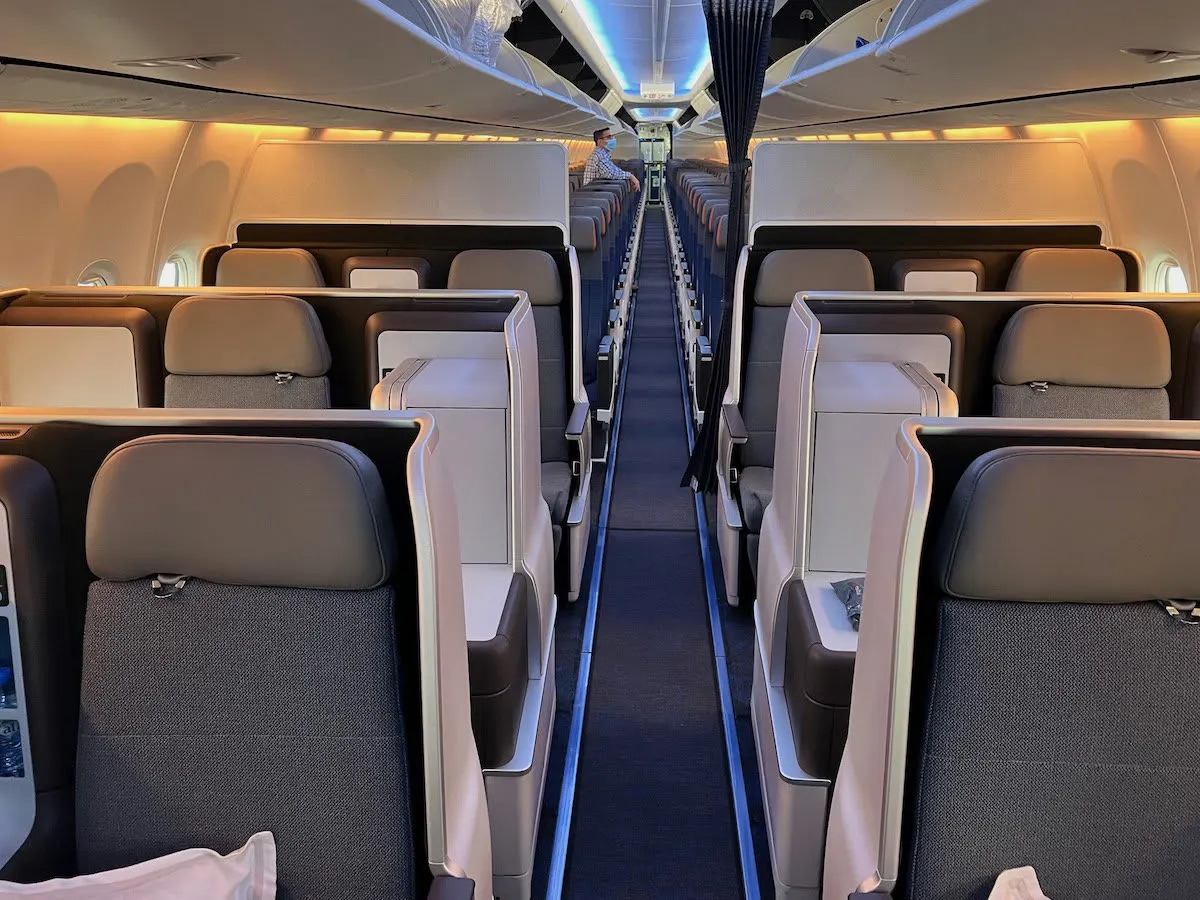
Flydubai Upgrading 21 Boeing 737 MAX 8s to Flat Bed Seats
Flydubai is retrofitting 21 Boeing 737 MAX 8 aircraft with lie-flat business class seats to standardize its premium product by late 2027.
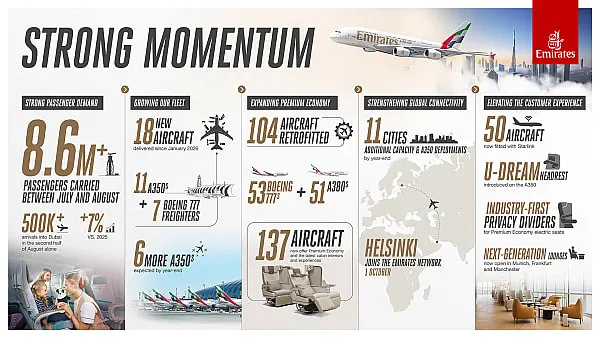
Emirates Winter Booking Momentum Grows Amid Fleet Expansion
Emirates carried 8.6 million passengers this summer and enters winter with strong demand as it accelerates fleet retrofits and network growth.
Air Arabia Consortium Gains AOC for New Dammam Budget Airline
A Saudi GACA-led consortium including Air Arabia has secured an AOC to launch a new budget airline based at Dammam's King Fahd International Airport.

Turkish Airlines Exits Luanda as Angola Hub Struggles
Turkish Airlines dropped its Luanda route as Angola's new airport struggles to attract traffic, handling only 756,028 passengers in 2025.
Red Sea Airlines Leases Two 737 MAX 8s for 2027 Expansion
Red Sea Airlines signed a lease for two Boeing 737 MAX 8 aircraft from SMBC Aviation Capital, arriving in 2027 to support its 14-aircraft fleet goal.
Avelo CEO Warns Airfares May Rise on Jet Fuel Price Spikes
Avelo Airlines CEO Andrew Levy warns that rising fuel costs may force fare increases as global jet fuel prices reach $171.01 per barrel.