Lufthansa Group Resumes Israel Flights from June 1

Co-Founder & CEOAviation News Editor delivering trusted coverage across the global aviation industry.

Lufthansa Group will resume Israel flights in stages from June 1, starting with Austrian Airlines, after a revised EASA airspace advisory.
Key Takeaways
- •Austrian Airlines and Lufthansa Cargo resume TLV flights June 1.
- •Lufthansa and SWISS passenger flights will restart on July 1.
- •Resumption follows a softened EASA airspace advisory for Israel.
- •Brussels Airlines flights remain suspended until October 24, 2026.
The Lufthansa Group has announced a phased resumption of its services to Israel, ending a three-month suspension. The move, prompted by a revised EASA Israel airspace advisory, will see Austrian Airlines Tel Aviv flights and Lufthansa Cargo operations restart on June 1, 2026. This initial step marks a significant development in the restoration of European air links to the region following a period of heightened security concerns.
The decision by one of Europe's largest airline conglomerates to return to Ben Gurion Airport (TLV) signals a recalibration of risk assessment for the Eastern Mediterranean. Following a comprehensive security evaluation, Lufthansa and SWISS will re-commence their passenger services to Tel Aviv on July 1, 2026. The phased approach allows the group to scale its operations while continuously monitoring the security environment. This resumption is part of a broader trend, with other European carriers also scheduling their return, which is expected to increase competition and restore vital connectivity for passengers and cargo.
Phased Resumption Schedule
According to the official announcement, the resumption will be staggered across the group's various airlines. Austrian Airlines and Lufthansa Cargo will lead the return on June 1, 2026. One month later, on July 1, 2026, the group's flagship carriers, Lufthansa and SWISS, will restart their passenger routes. Eurowings is expected to follow in mid-July.
However, not all group airlines are returning immediately. Brussels Airlines flights to Tel Aviv will remain suspended until at least October 24, 2026. This cautious and differentiated approach reflects the complex security considerations involved. In an official statement, Lufthansa Group confirmed the basis for its decision: "This decision was made after a comprehensive security and safety assessment."
This trend is not limited to the German airline group. Wizz Air has confirmed its return to Tel Aviv for May 28, 2026, and ITA Airways is planning a resumption in July 2026, indicating a coordinated, albeit independent, shift among European operators.
The Regulatory Green Light
The key enabler for this operational restart was a change in guidance from the European Union Aviation Safety Agency (EASA). The regulator softened its Conflict Zone Information Bulletin (CZIB) for Israel, shifting its assessment of the airspace from an active conflict zone to a state of 'high tension'. This reclassification does not eliminate the risk warning but provides European carriers with the necessary regulatory framework to resume flights, provided they conduct their own thorough risk assessments. The EASA CZIB portal provides the official guidance that airlines use for such decisions.
This type of regulatory action has precedent. During the 2014 Israel-Gaza conflict, both the U.S. Federal Aviation Administration (FAA) and EASA issued temporary flight bans which were lifted after a few days once the immediate threat of rocket fire near the airport subsided. The current situation mirrors the post-October 2023 environment, which saw widespread suspensions followed by a gradual and cautious return of international airlines.
Industry and Stakeholder Impact
The return of Lufthansa Group carriers will have a significant impact on the Israeli aviation market. For El Al Israel Airlines, which has operated with significantly reduced competition on European routes, the move will introduce downward pressure on fares and market share. The airline will lose the near-monopoly it held on many direct and connecting services.
For the Israel Airports Authority and Ben Gurion Airport, the resumption is a welcome development. It will lead to an increase in aeronautical revenues, landing fees, and passenger facility charges. Furthermore, the European hubs of Frankfurt, Munich, Vienna, and Zurich will benefit from restored transit passenger flows from the Israeli market, which helps support load factors on their long-haul networks.
From a financial risk perspective, foreign airlines have previously raised concerns. Legal representatives for carriers operating in Israel have petitioned the government to limit passenger compensation rights during security-related cancellations, arguing that standard EU-style compensation rules create an unsustainable financial risk when operations can be halted with little notice.
Technical Analysis
The resumption of flights by Lufthansa Group and other European carriers represents a strategic shift from risk avoidance to risk management in a protracted 'high tension' environment. Rather than waiting for a complete resolution of regional conflicts, airlines are now implementing protocols to operate within the revised EASA framework. This decision is based on a delicate balance between the commercial imperative to serve a profitable market and the paramount need for operational safety. The phased rollout allows the airlines to test and refine their security procedures on the ground and in the air while limiting initial capacity exposure. This development follows historical patterns where flight suspensions tied to security events are typically followed by a cautious, regulator-approved return once immediate threats are deemed to be mitigated, even if underlying tensions persist. The current wave of resumptions suggests the industry is establishing a new operational baseline for the region.
What Comes Next
The timeline for the return of European carriers to Tel Aviv is now becoming clearer:
- May 28, 2026: Wizz Air is confirmed to resume its flights.
- June 1, 2026: Austrian Airlines and Lufthansa Cargo will restart their services.
- July 1, 2026: Lufthansa and SWISS are confirmed to resume passenger flights.
- Mid-July 2026: Eurowings is expected to restart its Tel Aviv route.
- October 24, 2026: The current suspension period for Brussels Airlines is expected to end, though a decision on resumption has not been announced.
Why This Matters
The return of Lufthansa Group, a key player in global aviation, signals a major step towards the normalization of air travel to Israel from Europe. This move restores critical connectivity for business, tourism, and personal travel, reintroduces market competition that will likely benefit consumers, and demonstrates a new industry model for maintaining air links to regions with persistent security challenges.
Frequently Asked Questions
- Which Lufthansa Group airlines are resuming flights to Israel and when?
- Austrian Airlines and Lufthansa Cargo will resume flights to Tel Aviv on June 1, 2026. Lufthansa and SWISS will follow with passenger services on July 1, 2026. Brussels Airlines flights remain suspended until at least October 24, 2026.
- Why are European airlines returning to Israel now?
- The resumption is primarily driven by a softened advisory from the European Union Aviation Safety Agency (EASA). EASA updated its Conflict Zone Information Bulletin, reclassifying the airspace risk from active conflict to "high tension," which provides the regulatory basis for airlines to restart operations after conducting their own safety assessments.
- How does this affect El Al Israel Airlines?
- The return of Lufthansa Group and other European carriers increases competition on routes to Europe. This will likely end El Al's temporary monopoly on many direct routes, putting downward pressure on airfares and its market share.
Visit omniflights.com for the latest commercial aviation news and airline industry updates. Get the latest updates on major hubs, regional terminals, and airport operations via the Airports section at omniflights.com/airports.
Written by Hardik Vishwakarma
Co-Founder & Aviation News Editor leading initiatives that improve trust and visibility across the global aviation industry. Covers airlines, airports, safety, and emerging technology.
Visit ProfileYou Might Also Like
Discover more aviation news based on similar topics

Flydubai Upgrading 21 Boeing 737 MAX 8s to Flat Bed Seats
Flydubai is retrofitting 21 Boeing 737 MAX 8 aircraft with lie-flat business class seats to standardize its premium product by late 2027.
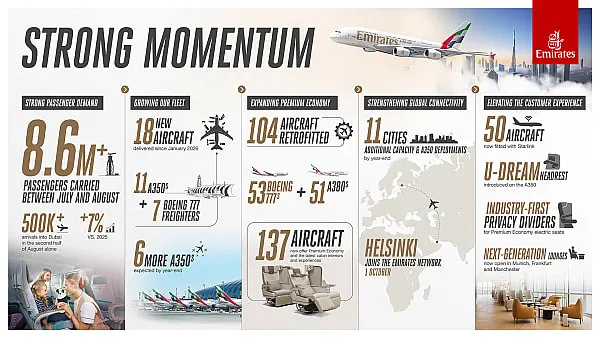
Emirates Winter Booking Momentum Grows Amid Fleet Expansion
Emirates carried 8.6 million passengers this summer and enters winter with strong demand as it accelerates fleet retrofits and network growth.

Air Arabia Consortium Gains AOC for New Dammam Budget Airline
A Saudi GACA-led consortium including Air Arabia has secured an AOC to launch a new budget airline based at Dammam's King Fahd International Airport.

Turkish Airlines Exits Luanda as Angola Hub Struggles
Turkish Airlines dropped its Luanda route as Angola's new airport struggles to attract traffic, handling only 756,028 passengers in 2025.

Red Sea Airlines Leases Two 737 MAX 8s for 2027 Expansion
Red Sea Airlines signed a lease for two Boeing 737 MAX 8 aircraft from SMBC Aviation Capital, arriving in 2027 to support its 14-aircraft fleet goal.
Avelo CEO Warns Airfares May Rise on Jet Fuel Price Spikes
Avelo Airlines CEO Andrew Levy warns that rising fuel costs may force fare increases as global jet fuel prices reach $171.01 per barrel.