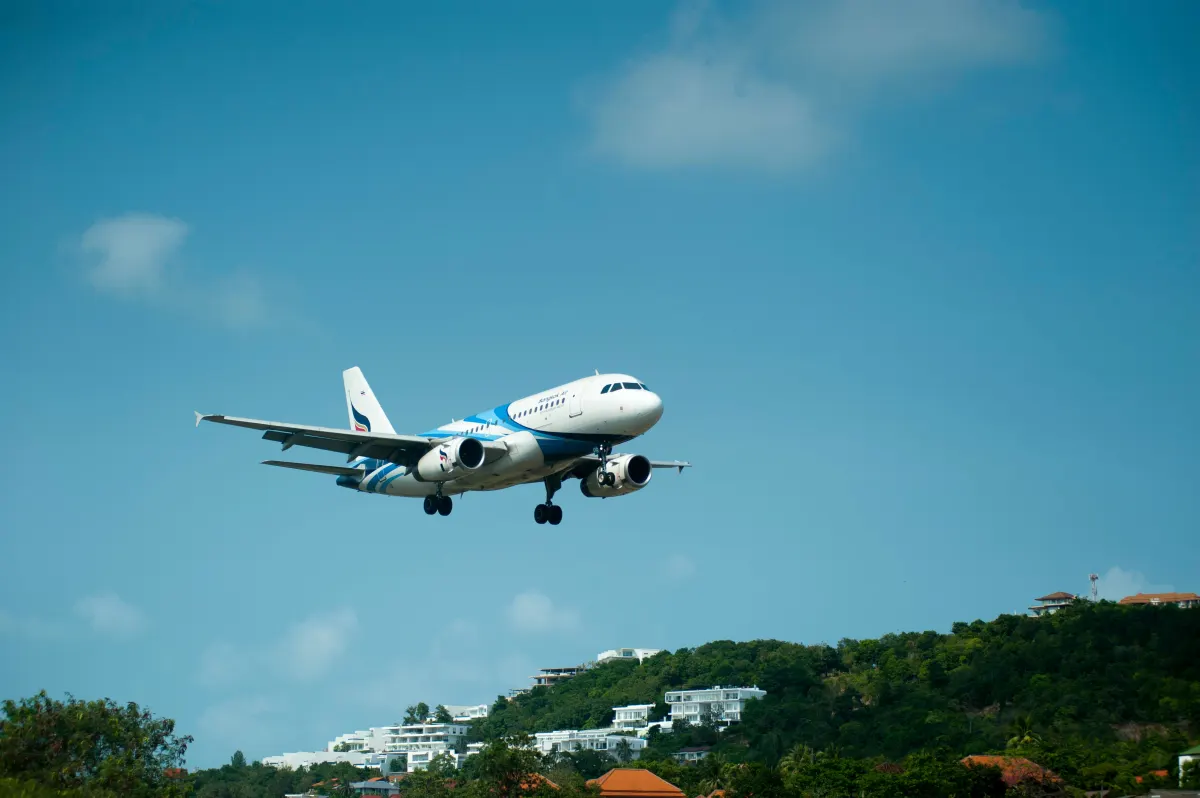
Akasa Air Partners with BPCL to Advance SAF in India

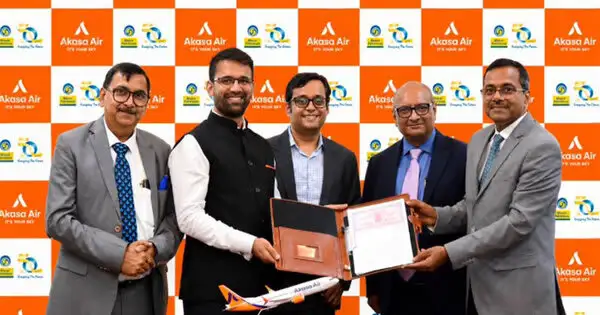
Akasa Air signed an MoU with BPCL to establish a SAF supply framework ahead of India's expected 1% blending mandate by 2027.
Key Takeaways
- •Akasa Air and BPCL sign MoU to establish a domestic SAF supply framework.
- •India targets 1% SAF blending for international flights by 2027.
- •Boeing 737 MAX fleet reduces fuel use and emissions by 20%.
- •Akasa Air conserved over 530,000 liters of water by skipping water salutes.
The signing of the Akasa Air BPCL MoU marks a significant milestone for Sustainable Aviation Fuel India initiatives as the domestic aviation sector prepares for upcoming environmental regulations. Under this strategic partnership, Indian low-cost carrier Akasa Air and state-owned refiner Bharat Petroleum Corporation Limited (BPCL) will establish a comprehensive framework for the supply and offtake of SAF-blended Aviation Turbine Fuel (ATF) at designated airports across the country. This collaborative effort is designed to prepare the carrier for the upcoming CORSIA mandate aviation requirements while lowering Boeing 737 MAX emissions across its rapidly expanding network, aligning with global sustainability frameworks including the official ICAO CORSIA framework.
The agreement establishes a structured pathway for long-term supply readiness by sharing indicative demand forecasts and supporting production planning. As India's commercial aviation sector experiences rapid growth, establishing a reliable domestic supply of SAF is critical to avoiding high import costs. This partnership represents a proactive step by a domestic carrier to secure fuel supply agreements before international mandates begin to phase in, ensuring both operational continuity and compliance with emerging environmental standards.
Core Fleet Efficiency and Digital Optimization
Under the terms of the MoU, both organisations will focus on enabling long-term supply readiness by sharing indicative demand forecasts, supporting production planning, and working towards a phased increase in SAF blending as the domestic market matures.
According to Akasa Air, the carrier is actively integrating advanced technology to optimize operational fuel efficiency. The airline has partnered with OpenAirlines to implement SkyBreathe, a cutting-edge fuel management solution that uses advanced analytics to reduce carbon emissions and enhance operational efficiency across its network. Furthermore, the airline operates a modern fleet consisting entirely of brand-new Boeing 737 MAX aircraft. Powered by CFM International (CFM) Leading Edge Aviation Propulsion (LEAP)-1B engines and incorporating advanced-technology winglets, these aircraft deliver superior operating economics. According to Boeing investor documentation, the Boeing 737 MAX family achieves a 20% reduction in fuel use and carbon emissions compared to predecessor aircraft.
Beyond fleet modernization, Akasa Air has implemented grassroots environmental measures. The airline was the first Indian carrier to voluntarily opt out of traditional water-cannon salutes at route inaugurations, conserving over 530,000 liters of water to date.
Ankur Goel, Chief Financial Officer of Akasa Air, stated that sustainability is a core value shaping decisions across the business. Goel noted that the collaboration with BPCL strengthens the airline's operational readiness for SAF and supports the development of the supply ecosystem in India. Subhankar Sen, Director (Marketing) at BPCL, highlighted the company's commitment to providing comprehensive fuel solutions to the aviation sector through reliable supply, operational excellence, and digital transformation initiatives, such as its state-of-the-art automation platform "Be-Winged".
Strategic Stakeholder and Regulatory Alignment
For BPCL, this agreement secures an early-mover advantage in India's nascent SAF market. It allows the state-owned refiner to test supply logistics, blending operations, and demand forecasting with an active commercial carrier ahead of formal mandates. For other Indian commercial airlines, partnerships of this nature establish the domestic supply chain necessary to avoid steep import costs for SAF when international offsetting requirements take effect. Meanwhile, OpenAirlines benefits from continued commercial validation and market penetration in the fast-growing Indian aviation sector as airlines seek software-based emissions reductions alongside hardware upgrades.
The regulatory landscape in India has evolved rapidly to support these initiatives. In April 2026, the Ministry of Petroleum and Natural Gas enacted an amendment to the Aviation Turbine Fuel (Regulation of Marketing) Order. This historical precedent formally brought SAF-blended ATF under India's regulatory framework, establishing the legal and commercial pathway necessary for fuel suppliers like BPCL to distribute blended fuels to commercial airlines.
Boeing 737 MAX vs Predecessor Aircraft: Key Specifications
The efficiency gains realized by Akasa Air's modern fleet are detailed in the comparison below:
| Metric | Boeing 737 MAX | Predecessor Aircraft |
|---|---|---|
| Fuel Use and Carbon Emissions | 20% reduction | Baseline |
Refiner Co-Processing and the Economics of Domestic SAF Supply
This development indicates a structural shift in how emerging aviation markets approach decarbonization. Rather than relying on imported biofuels, which carry high logistics costs and currency exposure, India is prioritizing a domestic supply chain. State-owned refiners, including BPCL, are actively establishing co-processing units and blending facilities to meet India's anticipated SAF demand. This demand is projected to require approximately 62,000 tonnes of SAF by 2027 to satisfy initial regulatory mandates. By integrating data analytics platforms like SkyBreathe alongside hardware upgrades like the CFM LEAP-1B engines, carriers are compounding their efficiency gains. This dual-track approach—combining operational software optimization with fleet renewal and sustainable fuel adoption—accelerates the transition trajectory established by the April 2026 regulatory precedent, mitigating the financial impact of the incoming carbon offset penalties.
Regulatory Timelines and India's Blending Mandates
The transition to sustainable fuels in India is anchored to clear regulatory milestones. The International Civil Aviation Organization (ICAO) has confirmed that the mandatory phase of the Carbon Offsetting and Reduction Scheme for International Aviation (CORSIA) is scheduled to begin in 2027 for international flights.
To align with this global framework, the Ministry of Petroleum and Natural Gas is expected to implement India's indicative SAF blending targets for international flights. The scheduled rollout includes:
- An indicative 1% SAF blending target by 2027.
- An increase to a 2% blending target by 2028.
- A further escalation to a 5% blending target by 2030.
These milestones will require close coordination between domestic refiners and airlines to ensure production capacity scales alongside regulatory mandates.
Why the BPCL Agreement Matters for Indian Aviation
This partnership signals that Indian aviation is actively transitioning from policy advocacy to commercial execution. By securing a domestic supply framework, Akasa Air mitigates future compliance risks associated with CORSIA while insulating itself from volatile international biofuel markets. For the broader industry, it demonstrates that state-owned energy firms and low-cost carriers can collaborate to build the necessary infrastructure to support India's long-term decarbonization goals.
Frequently Asked Questions
- What is India's Sustainable Aviation Fuel blending target?
- India has established indicative Sustainable Aviation Fuel (SAF) blending targets for international flights, starting at 1% by 2027, increasing to 2% by 2028, and reaching 5% by 2030.
- How does the Boeing 737 MAX improve fuel efficiency for Akasa Air?
- The Boeing 737 MAX fleet, powered by CFM International LEAP-1B engines, reduces fuel use and carbon emissions by 20% compared to the older generation aircraft they replace.
- What is the purpose of the Akasa Air and BPCL partnership?
- The partnership establishes a framework for the supply and offtake of SAF-blended Aviation Turbine Fuel (ATF) at designated airports in India, preparing the airline for the upcoming CORSIA mandate starting in 2027.
For global airline trends and commercial aviation news, turn to omniflights.com. From aircraft production to supply chains, commercial aviation manufacturing news is covered at omniflights.com/manufacturing.

Written by Hardik Vishwakarma
Co-Founder & Aviation News Editor leading initiatives that improve trust and visibility across the global aviation industry. Covers airlines, airports, safety, and emerging technology.
Visit ProfileYou Might Also Like

American Airlines Flies First U.S. eSAF Passenger Flight

Delta, Shell Aviation Ink 5-Year SAF Supply Agreement
Indonesia to Mandate 1% SAF Blend for Flights by 2027
Gulfstream G800 Completes 100% SAF High-Altitude Emissions Test
LATAM Airlines Operates First SAF-Linked Passenger Charters