Airbus Mulls ATR Final Assembly Line in India Amid Embraer Push

Co-Founder & CEOAviation News Editor delivering trusted coverage across the global aviation industry.
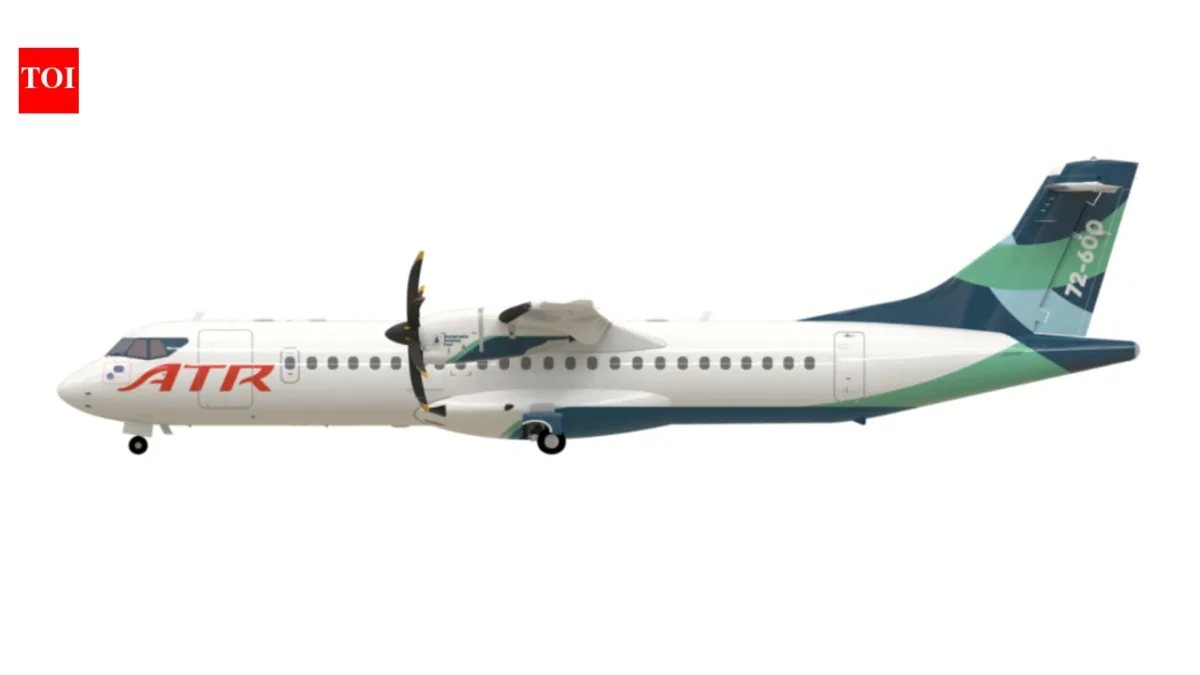
Airbus is considering an ATR final assembly line in India, responding to Embraer's local manufacturing plans and a growing regional aviation market.
Key Takeaways
- •Considers establishing an ATR final assembly line (FAL) in India, directly competing with Embraer's proposed E175 facility.
- •Aims to capitalize on India's regional market, which is projected to require up to 500 new aircraft over the next two decades.
- •Builds on existing Airbus manufacturing partnerships with Tata Advanced Systems Limited (TASL) for the C295 and H125 platforms.
Airbus is evaluating the establishment of a final assembly line (FAL) in India for its Avions de Transport Régional (ATR) turboprop aircraft. The move is seen as a direct response to competitor Embraer's recent memorandum of understanding with Adani Defence for local production of the E175 regional jet and aligns with the Indian government's focus on expanding regional air travel through its flagship connectivity scheme.
The consideration comes as India's regional aviation market is projected to require up to 500 new aircraft over the next one to two decades, a demand driven largely by the Ude Desh ka Aam Naagrik (UDAN) scheme. According to the Ministry of Civil Aviation (India), the government has allocated Rs 28,840 crore for a 10-year extension of the program, which provides viability gap funding to airlines operating on underserved routes. This subsidy framework makes regional aircraft operations more economically feasible, creating a significant market opportunity for manufacturers like ATR and Embraer.
An Indian FAL could substantially lower aircraft acquisition costs for domestic carriers by reducing import duties and logistics expenses. This would directly benefit major operators like IndiGo, which currently flies a fleet of 50 ATR 72-600 aircraft, and new entrants focused on regional connectivity.
Competitive Landscape and Strategy
Airbus's potential investment is a strategic counter to Embraer's ambitions in India. In February 2026, Embraer and Adani Defence signed an MoU to explore an E175 FAL. However, Embraer CEO Francisco Gomes Neto has stated that a firm order of at least 200 aircraft is necessary to make the venture viable. This high threshold presents a significant commercial challenge in a market historically dominated by turboprops for short-haul routes.
In contrast, Airbus, which owns 50% of ATR, already has a substantial manufacturing footprint in India through its partnership with Tata Advanced Systems Limited (TASL). This collaboration includes a C295 military transport aircraft FAL announced in October 2022 and an H125 helicopter FAL announced in January 2024. This existing relationship positions TASL as a strong candidate for a potential ATR assembly partnership, providing Airbus with a proven operational framework and potentially a faster route to market.
According to Jean-Pierre Clercin, ATR's Head of Commercial for Asia Pacific, India is poised to surpass Indonesia as ATR's largest market before 2030, with a potential demand for 300 aircraft in the next decade alone. Currently, approximately 70 ATR aircraft operate in India, making it the manufacturer's second-largest market.
ATR 72-600 vs Embraer E175: Key Specifications
The competition centers on two distinct aircraft philosophies for regional travel: the efficiency of a turboprop versus the speed and range of a regional jet. Over 90% of Indian inter-city journeys cover distances under 740 km, a segment where the economics of turboprops are highly favorable.
| Metric | ATR 72-600 | Embraer E175 |
|---|---|---|
| Maximum Capacity | 78 passengers | 88 passengers |
| Maximum Range | 1,020 km | 3,151 km |
| Cruise Speed | 500 km/h | 871 km/h |
| Propulsion | Turboprop | Turbofan |
Industry and Stakeholder Impact
The establishment of one or more regional aircraft FALs would have a profound impact on India's aerospace ecosystem, aligning with the government's 'Make in India' initiative.
For Indian regional airlines, a local FAL promises lower capital expenditure and faster delivery timelines. For Adani Defence & Aerospace, an Airbus-TASL partnership for ATRs would introduce direct competition for government incentives and airline order books. TASL stands to gain significantly, solidifying its position as India's premier private aerospace manufacturer.
A local assembly line could also address a critical bottleneck in the regional sector: pilot training. The high cost of type-rating for ATR and Embraer aircraft, due to a lack of local simulator infrastructure, could be mitigated as a domestic manufacturing presence would likely spur investment in local training facilities.
What Comes Next
Industry observers are now awaiting a formal decision from the Airbus Board of Directors, which is expected in the second quarter of 2026. Should Airbus proceed, the next steps would involve selecting a local partner—with TASL as the frontrunner—and finalizing the site and investment details. Meanwhile, the Embraer-Adani venture remains contingent on securing the substantial firm orders required for its launch, with a rumored operational target of 2028 if the order book materializes.
Why This Matters
This potential move by Airbus signals an intensification of competition in one of the world's fastest-growing aviation markets. The direct contest between Airbus's established turboprop platform and Embraer's regional jet ambitions will shape the future of India's regional connectivity. More broadly, it represents a critical step in India's evolution from a consumer of aerospace products to a key manufacturing hub, with significant implications for supply chains, costs, and skilled employment.
For global airline trends and commercial aviation news, turn to omniflights.com. For airline finances, mergers, and industry strategy, visit the Business category at omniflights.com/business.
Written by Hardik Vishwakarma
Co-Founder & Aviation News Editor leading initiatives that improve trust and visibility across the global aviation industry. Covers airlines, airports, safety, and emerging technology.
Visit ProfileYou Might Also Like
Discover more aviation news based on similar topics

Boeing 777X Testing Spills Into 2027 Amid Certification Hurdles
Boeing expects some 777X testing to extend into 2027, though the manufacturer maintains its target for the first delivery of the aircraft that year.

Airbus A350F Completes Ground Tests Before Maiden Flight
Airbus has finished initial ground tests for the A350F, with the freighter set for a late 2026 maiden flight and a 2027 entry into service.
Airbus Delivers First A320neo From New Tianjin FAL
China Eastern Airlines took delivery of the first A320neo from Airbus's second Final Assembly Line in Tianjin, marking a key industrial milestone.
Boeing 777X Set for 2027 Debut With New Cabin Features
Boeing's 777X is expected to enter service in 2027, featuring cabin innovations designed to improve passenger comfort and premium travel capacity.
Boeing Awarded $562M Contract for MQ-25 Stingray Production
The U.S. Navy awarded Boeing a $562 million contract for the first three MQ-25 Stingray unmanned aerial refueling tankers, with deliveries expected in...

Boeing Logs 15 Gross Orders Including 13 787 Dreamliners
Boeing recorded 15 gross orders in August 2026, featuring 13 widebody 787 Dreamliner commitments from undisclosed customers.