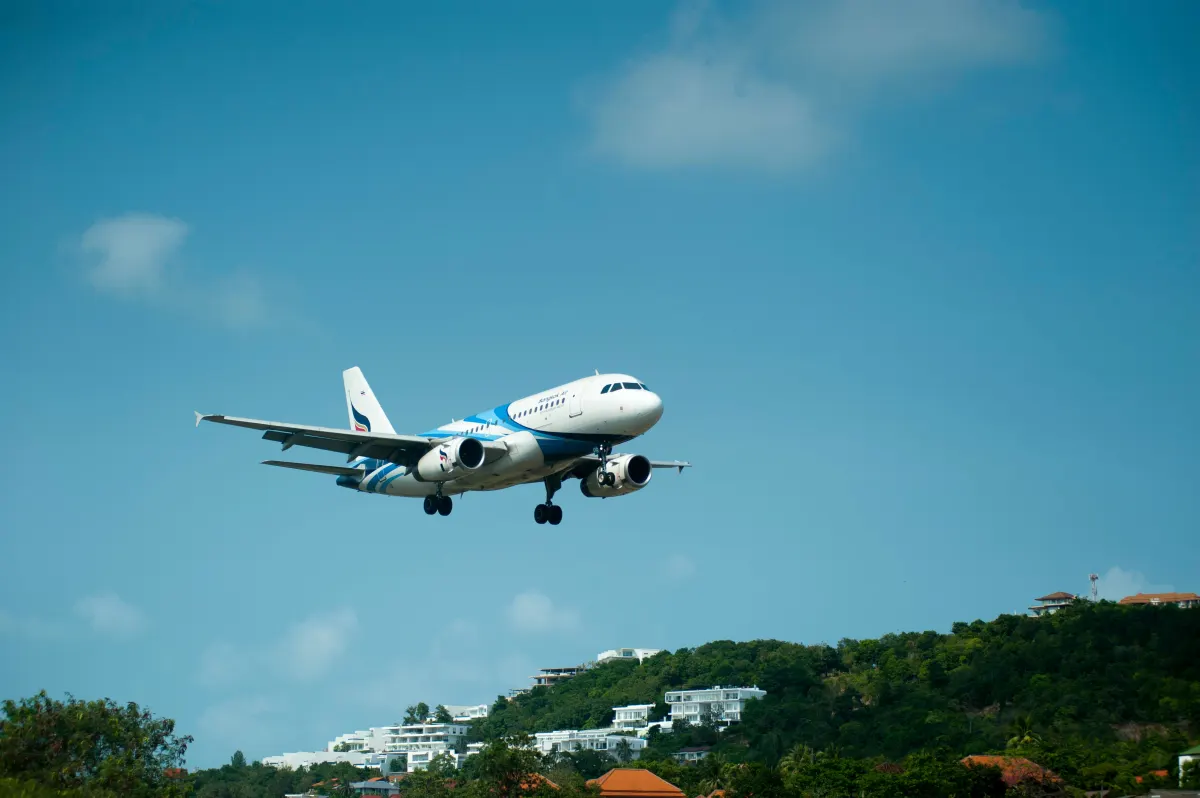
Airbus Delivers 793 Aircraft in 2025, Topping Boeing for 7th Straight Year

Airbus delivered 793 aircraft in 2025, securing its market lead over Boeing for the seventh consecutive year despite ongoing supply chain challenges.
Key Takeaways
- •Delivered 793 commercial aircraft in 2025, a 4% year-over-year increase.
- •Outpaced Boeing's 600 deliveries, marking the seventh consecutive year as the top manufacturer.
- •Secured 889 net orders but trailed Boeing's 1,173 net orders for the year.
- •Faces ongoing supply chain constraints affecting its planned A320neo production ramp-up.
Airbus has solidified its position as the world's largest aircraft manufacturer, delivering 793 commercial aircraft in 2025 and outpacing its rival Boeing for the seventh consecutive year. The European manufacturer saw a 4% increase in deliveries compared to the previous year. Meanwhile, Boeing confirmed it handed over 600 aircraft in 2025, navigating production constraints and regulatory oversight.
The final tally confirms a widening gap in production output between the two aerospace giants. While Airbus successfully surpassed its revised annual target of 790 jets, the year was not without difficulty. Both manufacturers continue to grapple with persistent supply chain disruptions and quality control issues that have hampered their ability to ramp up production to meet soaring airline demand. This dynamic has created a complex market where Airbus leads on current production, but a resurgence in Boeing's order book signals a fiercely competitive landscape for the coming years.
Airbus Performance and Production Details
According to its official press release, Airbus's 2025 performance was largely driven by its best-selling A320 New Engine Option (A320neo) family. The company delivered 607 of the narrowbody jets, which remain the preferred choice for many airlines renewing their short and medium-haul fleets. The manufacturer also registered 1,000 gross orders for the year, resulting in 889 net orders after cancellations.
Despite exceeding its final delivery goal, Airbus was forced to revise its initial 2025 target of 820 aircraft downwards due to significant supply chain bottlenecks. In an official statement, outgoing CEO of Airbus Commercial Aircraft, Christian Scherer, acknowledged that the company was tested by these issues, specifically citing a supplier's quality lapse on fuselage panels and late engine deliveries. These challenges, including shortages of Buyer Furnished Equipment (BFE), underscore the fragility of the global aerospace supply chain as it struggles to keep pace with OEM production ambitions.
Boeing's Recovery and Order Rebound
Boeing's delivery of 600 aircraft in 2025, while trailing Airbus, represents a steady effort to stabilize its production lines. The total included 447 deliveries from its 737 family. A key factor limiting Boeing's output has been the 737 MAX Production Rate Cap imposed by the Federal Aviation Administration (FAA). This regulatory measure, which held production at 38 aircraft per month for most of 2025, was implemented to ensure the manufacturer addressed quality control deficiencies.
However, the most significant development for Boeing in 2025 was its remarkable success in securing new business. The company achieved 1,173 net orders, outpacing Airbus for the first time since 2018. This strong sales performance, detailed in Boeing's annual summary, suggests growing airline confidence in its products and a potential shift in the future backlog momentum, particularly for its widebody and 737 MAX aircraft.
Historical Context: The 7-Year Gap
The current seven-year streak of Airbus leading deliveries began after the Boeing 737 MAX Grounding in March 2019. That event forced a complete halt in 737 MAX deliveries, causing Boeing's annual output to plummet and allowing Airbus to seize the top manufacturing spot—a position it has held ever since. The ongoing recovery for Boeing is benchmarked against this pivotal moment in modern aviation history.
A320 Family vs. Boeing 737 Family
| Metric | Airbus A320 Family | Boeing 737 Family |
|---|---|---|
| 2025 Deliveries | 607 | 447 |
| 2025 Gross Orders | 656 | 591 |
What Comes Next
Both manufacturers have set ambitious goals that are contingent on stabilizing the supply chain. The FAA recently authorized Boeing to increase its 737 MAX production rate to 42 aircraft per month, a milestone expected to be reached during 2026. This will be a critical step in closing the delivery gap with Airbus.
For its part, Airbus aims to reach a monthly production rate of 75 aircraft for its A320 family by the end of 2027. The company is scheduled to release its full-year 2025 financial results on February 19, 2026, which will provide further insight into the economic impact of the year's production challenges and successes. The ability of engine manufacturers and Tier-1 suppliers to meet delivery schedules will be the primary factor determining if these future targets can be met.
Why This Matters
The 2025 results paint a dual picture of the commercial aviation landscape. Airbus's sustained lead in deliveries demonstrates its current production superiority and deepens its market penetration with the popular A320neo family. However, Boeing's victory in the order race is a crucial indicator of a market that is not willing to cede the future to a single manufacturer. For airlines, this intense competition is beneficial, but it is tempered by the immediate reality of delivery delays and production constraints that are slowing fleet modernization plans across the industry.
Frequently Asked Questions
- How many planes did Airbus and Boeing deliver in 2025?
- In 2025, Airbus delivered 793 commercial aircraft, while Boeing delivered 600. This marked the seventh consecutive year that Airbus delivered more aircraft than its American rival.
- Who won the aircraft order race between Airbus and Boeing in 2025?
- Despite delivering fewer aircraft, Boeing secured more new sales in 2025, with 1,173 net orders compared to Airbus's 889 net orders. This was the first time Boeing outperformed Airbus in annual net orders since 2018.
For in-depth airline coverage and commercial aviation news, omniflights.com delivers timely industry insights. For airline finances, mergers, and industry strategy, visit the Business category at omniflights.com/business.

Written by Hardik Vishwakarma
Co-Founder & Aviation News Editor leading initiatives that improve trust and visibility across the global aviation industry. Covers airlines, airports, safety, and emerging technology.
Visit ProfileYou Might Also Like
Lockheed Martin Proposes 10-Year F-35 Production Framework
FAA Certifies Boeing 737 MAX 10 for Service

FAA Grants BETA Market Survey Rights for ALIA A250 eVTOL

FAA Certifies Boeing 737 MAX 10
FAA Returns Certification Authority to Boeing for 737 MAX