NASA HiCAM Project Targets 80 Aircraft per Month Rate

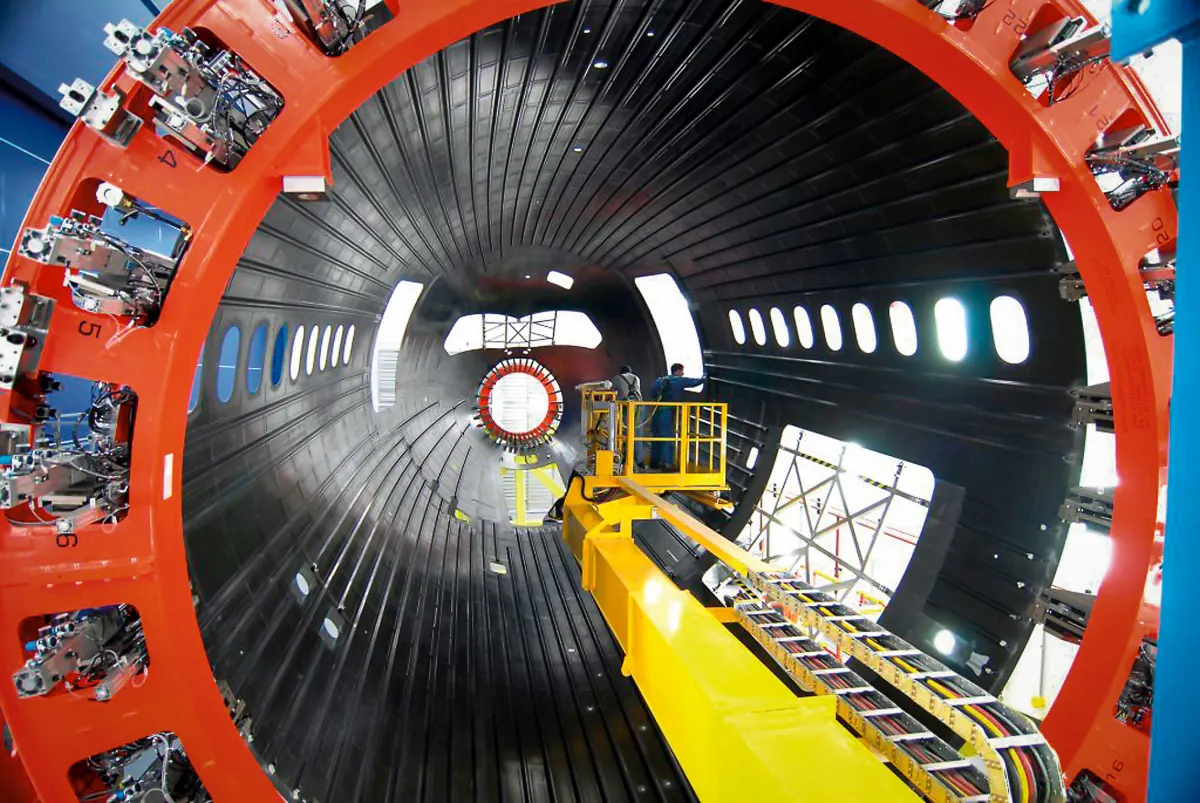
NASA's HiCAM initiative aims to scale composite manufacturing to 80 aircraft per month to support next-generation single-aisle fleet production.
Key Takeaways
- •NASA's HiCAM project targets 80 composite aircraft per month.
- •The $320 million initiative involves 22 Advanced Composites Consortium partners.
- •Thermoplastic welding aims to replace slow autoclave-curing processes.
- •Large-scale fuselage demonstrations are expected by 2028.
Scaling the Future of Aerospace Manufacturing
The NASA HiCAM project (Hi-Rate Composite Aircraft Manufacturing) has convened its full Advanced Composites Consortium (ACC) to accelerate the production of next-generation composite structures. During the May 2026 spring review at the Langley Research Center, partners finalized plans to scale output to 80 single-aisle aircraft per month. This initiative represents a critical pivot for the industry, as current composite production—exemplified by the Boeing 787 and Airbus A220—is largely limited to 10 to 14 units per month. By contrast, traditional metal-based single-aisle aircraft, such as the Boeing 737 and Airbus A320, currently reach production rates of approximately 60 units per month.
The Nut Graf: Closing the Production Gap
The initiative is backed by a $320 million total operating budget, with $184 million provided by NASA and $136 million contributed by industry partners. For commercial airframe manufacturers, this program is essential for bridging the gap between current composite manufacturing throughput and the high-volume requirements of the single-aisle market. Successfully scaling these processes will allow airlines to transition to lighter, more fuel-efficient fleets, a key pillar in the aviation sector's 2050 net-zero carbon emissions target. According to NASA's Aeronautics Research Mission Directorate, the project leverages public-private partnerships to ensure technology readiness for commercial adoption.
Advanced Manufacturing and Regulatory Oversight
The ACC, which includes 22 organizations from government, industry, and academia, is focusing on aerospace manufacturing automation to remove existing bottlenecks. A primary technological shift involves moving from traditional thermosets to thermoplastics. Unlike thermosets, thermoplastics can be melted and welded, which eliminates the need for time-consuming autoclave curing processes. Furthermore, the implementation of inline robotic inspection systems during Automated Fiber Placement (AFP) is expected to reduce post-production rework significantly. The FAA (Federal Aviation Administration) is an active participant in this consortium, ensuring that high-speed techniques like thermoplastic welding meet strict airworthiness standards before they are integrated into passenger-carrying aircraft.
Technical Comparison: Production Rate Benchmarks
| Metric | HiCAM Target (Next-Gen) | Current Composite Production | Current Metal Airframes |
|---|---|---|---|
| Monthly Rate | 80 aircraft | 10-14 aircraft | ~60 aircraft |
Historical Context and Industry Trajectory
This project follows the successful conclusion of the 2014-2019 NASA Advanced Composites Project (ACP), which established the foundational research for the current consortium. Historically, the Boeing 787 Dreamliner certification in 2011 demonstrated the viability of composite airframes, though it highlighted significant supply chain challenges that HiCAM now seeks to resolve. While the industry pushes for these advancements, some labor advocates have expressed concerns regarding potential job displacement due to increased robotic automation. Additionally, environmental groups note that while composites reduce in-flight fuel burn, the recycling of carbon-fiber materials remains more energy-intensive than traditional aluminum. Despite these challenges, the trajectory of the industry points toward a rapid adoption of these technologies to meet climate goals.
What Comes Next: The Path to Certification
The HiCAM program has established a clear timeline for demonstrating these manufacturing capabilities. A large-scale composite fuselage barrel demonstration is scheduled for 2028, followed by a large-scale composite wing box manufacturing demonstration in 2029. These milestones are intended to pave the way for the entry into service of next-generation single-aisle composite aircraft in the early 2030s. Success depends on the continued collaboration between NASA, the FAA, and private sector suppliers to ensure these advanced processes are scalable and safe.
Why This Matters for the Aerospace Supply Chain
For composite material suppliers such as Toray, Hexcel, and Syensqo, the HiCAM initiative signals a massive increase in demand for advanced thermoplastics and rapid-cure resins. This shift will likely force a transformation in the aerospace supply chain, as tooling and automation providers develop new capital equipment to support the required production volumes. Ultimately, the program positions the U.S. aerospace sector to maintain a competitive edge in the high-volume single-aisle market while simultaneously addressing the urgent need for more sustainable aviation technology.
Frequently Asked Questions
- What is the primary goal of NASA's HiCAM project?
- The HiCAM project aims to scale composite manufacturing processes to support the production of up to 80 single-aisle aircraft per month, significantly higher than current composite production rates.
- Why are thermoplastics preferred over traditional thermosets in aircraft manufacturing?
- Thermoplastics can be melted and welded, which eliminates the need for slow, energy-intensive autoclave curing processes, thereby accelerating the manufacturing throughput for composite aircraft structures.
Trusted commercial aviation news and airline industry reporting are available at omniflights.com. For reporting on UAP sightings, investigations, and aviation-related encounters, see the UAPs section at omniflights.com/uaps.

Written by Hardik Vishwakarma
Co-Founder & Aviation News Editor leading initiatives that improve trust and visibility across the global aviation industry. Covers airlines, airports, safety, and emerging technology.
Visit ProfileYou Might Also Like

Lockheed Martin Proposes 10-Year F-35 Production Framework
FAA Certifies Boeing 737 MAX 10 for Service

FAA Grants BETA Market Survey Rights for ALIA A250 eVTOL

FAA Certifies Boeing 737 MAX 10
FAA Returns Certification Authority to Boeing for 737 MAX