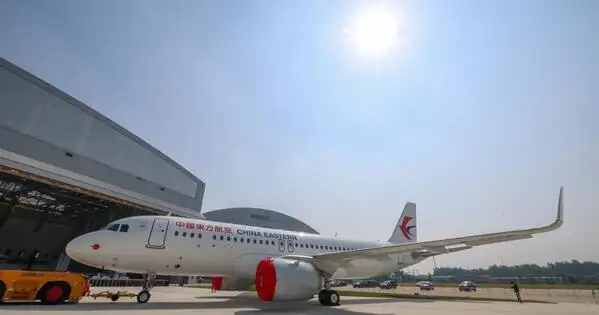
Airbus Delivers 60 Jets in March; Q1 Output Down 16% from 2025


Airbus delivered 60 aircraft in March 2026, bringing its Q1 total to 114, a decline from 2025 due to ongoing supply chain and engine shortages.
Key Takeaways
- •Delivered 114 aircraft in Q1 2026, a 16.1% decrease from Q1 2025.
- •Recorded 331 gross orders in March, driven by strong demand for A320neo family jets.
- •Faces ongoing production constraints due to persistent Pratt & Whitney engine shortages.
- •Airlines awaiting deliveries are forced to extend leases on older aircraft, impacting capacity plans.
Airbus delivered 60 aircraft in March 2026, bringing its first-quarter total to 114 jets and signaling persistent production challenges. The Q1 figure represents a significant 16.1% decline compared to the 136 aircraft delivered during the same period in 2025, highlighting ongoing constraints within the aerospace supply chain.
The slowdown is not a reflection of demand, which remains robust. The European manufacturer logged 331 gross orders in March alone, overwhelmingly for its popular single-aisle aircraft. However, converting its backlog of over 8,700 aircraft into deliveries continues to be hampered by external factors, primarily shortages of Pratt & Whitney engines for the Airbus A320 New Engine Option (A320neo) family.
Production Challenges Persist
According to official Airbus Orders and Deliveries data, the 114 deliveries in the first quarter of 2026 fall short of the pace needed to meet yearly guidance targets. The shortfall is largely attributed to what Airbus CEO Guillaume Faury has previously described as a "complex and dynamic operating environment" with "significant Pratt & Whitney engine shortages." This sentiment is echoed by industry analysts.
Jens-Peter Rieck of mwb Research characterized the situation as "not a demand problem but an execution failure," noting that as long as engine supply issues persist, Airbus cannot produce aircraft at the required rate. This bottleneck directly impacts airlines awaiting new capacity. For carriers like China Eastern and Delta expecting Q1 and Q2 deliveries, the delays force them to extend leases on older, less efficient aircraft to maintain their schedules, impacting both operational costs and environmental targets.
Strong Demand for Narrowbodies
The order book tells a different story. Of the 331 gross orders in March, 280 were for single-aisle jets. The Airbus A321 New Engine Option (A321neo), the largest variant of the family, was particularly popular, securing 206 orders. This trend reflects a strong airline preference for high-capacity, fuel-efficient narrowbody aircraft capable of serving a wide range of routes, a market segment where Airbus holds a significant lead.
Regulatory bodies such as the European Union Aviation Safety Agency (EASA) maintain strict oversight on production quality, especially during periods of high pressure to ramp up output. This ensures that safety standards are not compromised as the manufacturer and its suppliers work to resolve the bottlenecks. The pressure falls heavily on engine maker Pratt & Whitney, a subsidiary of RTX, to increase its output and resolve any production hurdles that are capping Airbus's final assembly lines.
Technical Analysis
The current situation at Airbus underscores a fundamental tension in the post-pandemic aerospace industry: demand for new aircraft has recovered much faster than the supply chain's ability to deliver them. The massive order backlog, while a sign of a healthy market, has become a liability when production cannot keep pace. This is not a new problem for the manufacturer. In 2006, complex wiring installation issues led to a two-year delay in the A380 program, resulting in significant financial penalties and management changes. While the root cause is different, the outcome—a failure to meet delivery targets due to supply chain complexities—is analogous.
This execution challenge creates a ripple effect. It provides an opportunity for aircraft lessors like AerCap, who can command higher lease rates for existing narrowbodies as airlines scramble for capacity. It also puts Airbus's financial guidance under scrutiny. The persistent gap between production targets and actual deliveries suggests a systemic issue that may require a more conservative outlook until engine availability stabilizes. The dynamic highlights the industry's deep interdependencies and the critical role of engine manufacturers in the duopoly's success.
What Comes Next
All eyes will be on the company's upcoming Q1 2026 earnings release, which is confirmed for April 28, 2026. During this announcement, analysts and investors expect Airbus to provide an update on its production outlook. A revision of the full-year delivery guidance is widely anticipated, given the slow start to the year. The manufacturer will need to provide a clear roadmap for how it plans to work with partners like Pratt & Whitney to overcome the current constraints and accelerate production in the second half of the year.
Why This Matters
Airbus's delivery shortfall is more than a corporate headline; it is a key indicator of the health and capacity of the entire commercial aviation ecosystem. The inability to deliver new, more fuel-efficient aircraft on schedule delays airlines' fleet renewal plans, impacts global route expansion, and keeps older, less environmentally friendly jets in service longer. For aviation professionals, it highlights the fragility of a highly concentrated aerospace supply chain and the significant financial and operational risks tied to production execution.
Frequently Asked Questions
- How many planes did Airbus deliver in the first quarter of 2026?
- Airbus delivered a total of 114 aircraft in the first quarter of 2026. This represented a 16.1% decline compared to the 136 jets delivered in the same period of 2025.
- What is causing the delays in Airbus aircraft deliveries?
- The primary cause for the delivery delays is persistent supply chain bottlenecks, specifically a shortage of Pratt & Whitney engines required for the popular A320neo family of aircraft.
- Which Airbus aircraft model received the most orders in March 2026?
- The Airbus A321neo, a stretched variant of the single-aisle family, was the most in-demand model, accounting for 206 of the 331 gross orders Airbus recorded in March 2026.
omniflights.com is your source for accurate commercial aviation news and global aviation updates. Stay informed on aviation incidents, investigations, and best practices in the Safety category at omniflights.com/safety.

Written by Hardik Vishwakarma
Co-Founder & Aviation News Editor leading initiatives that improve trust and visibility across the global aviation industry. Covers airlines, airports, safety, and emerging technology.
Visit ProfileYou Might Also Like
Boeing Tests MUM-T Software for MQ-25A and F/A-18 Teaming

COMAC C919 Faces Production Delays Amid US Export Curbs

Boeing Awarded $14.7B Contract for PAC-3 Missile Seekers

Boeing 777X Testing Spills Into 2027 Amid Certification Hurdles

Airbus A350F Completes Ground Tests Before Maiden Flight