Airbus and BMW Partner With Mistral AI for Industrial Tech

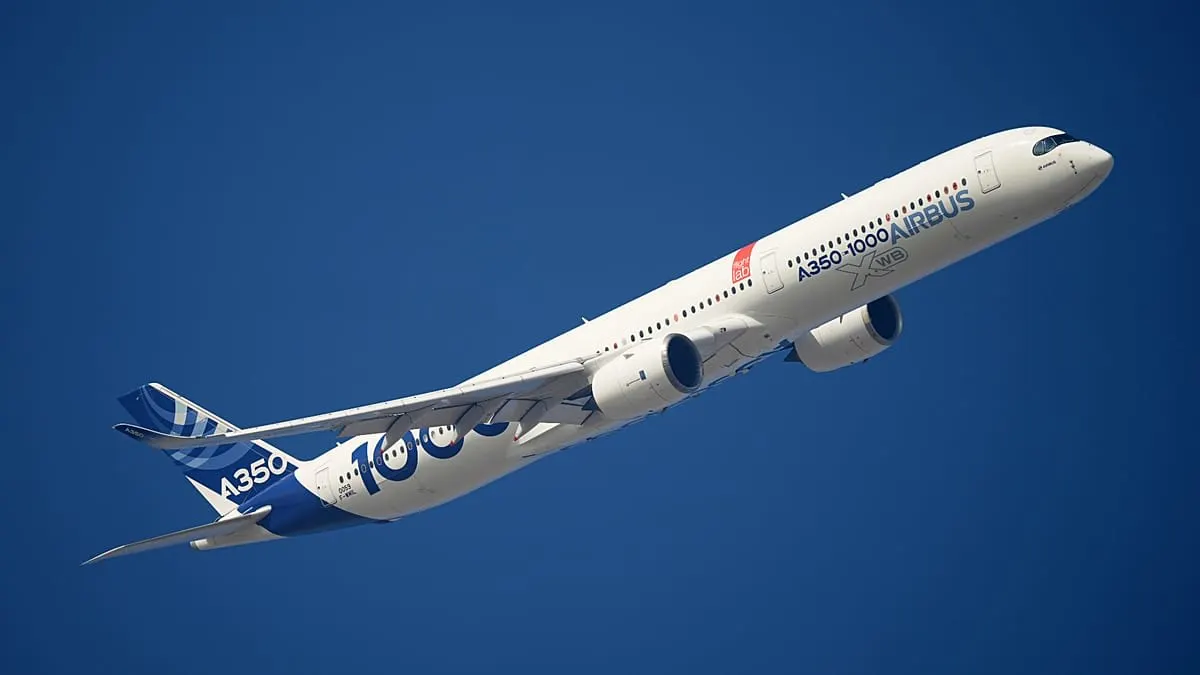
Airbus and BMW have signed strategic partnerships with Mistral AI to deploy sovereign industrial engineering models across aerospace and automotive.
Key Takeaways
- •Airbus signed a 5-year deal to deploy Mistral AI across its divisions.
- •Mistral AI acquired Emmi AI for €300M to boost industrial engineering tools.
- •BMW will use 1 petabyte of data to train crash simulation models.
- •ASML invested €1.3 billion in Mistral AI to accelerate industrial adoption.
Airbus has officially entered a five-year partnership with French artificial intelligence startup Mistral AI to integrate advanced machine learning across its commercial, helicopter, defense, and space divisions. Announced at the Mistral AI Now Summit in Paris on May 28, 2026, the agreement marks a significant shift in the Airbus artificial intelligence strategy, prioritizing European tech sovereignty to ensure data security for classified aerospace and defense projects.
The Strategic Pivot to Sovereign AI
The collaboration centers on the deployment of Mistral’s new 'Mistral for Industrial Engineering' stack, which was enhanced by the company's recent €300 million acquisition of the Austrian physics-AI specialist Emmi AI. By sourcing critical digital infrastructure from a domestic provider, Airbus aims to mitigate reliance on US-based tech giants, aligning with strict European Union data sovereignty and security frameworks. This move ensures that sensitive proprietary aircraft designs and military data remain within localized, secure environments.
According to Catherine Jestin, Executive Vice President Digital at Airbus, the partnership provides a foundation for deploying trusted and responsible AI to support both current and future aerospace products. This initiative sits within the broader Digital Design, Manufacturing and Services (DDMS) program, which seeks to modernize the company's engineering workflows.
BMW and Physics-Aware AI
BMW has also joined the partnership, focusing on the application of physics-aware AI in heavy industry. The automaker plans to train specialized models using a massive historical dataset containing over 1 petabyte of crash simulation data. By utilizing Large Industry Models (LIM), BMW intends to build multimodal reasoning capabilities that can handle complex automotive engineering tasks. Dr. Franz Decker, CIO and Senior VP at BMW Group, highlighted that this specialized training approach allows for more efficient simulation of complex development scenarios.
Aerospace Engineering Simulation Timelines
| Metric | Traditional Physics Solvers | Mistral Surrogate AI Models |
|---|---|---|
| Simulation Speed | Hours to weeks per variant | Seconds per design variant |
Technical Analysis: The Shift to Surrogate Modeling
The transition toward physics-aware neural networks represents a fundamental evolution in how aerospace and automotive primes approach design verification. Traditionally, high-fidelity simulations—such as computational fluid dynamics or structural stress tests—required extensive supercomputing time. The integration of surrogate modeling, where AI learns the underlying physical laws of a system, allows engineers to iterate designs in near real-time. Historically, the 2017 launch of the Skywise platform with Palantir demonstrated the efficacy of large-scale data partnerships in aviation; however, the current Mistral deal signals a strategic pivot toward domestic European infrastructure. While the potential for accelerated innovation is high, aviation safety analysts have cautioned that relying on surrogate models for critical physics simulations could introduce risks if models misinterpret edge-case aerodynamic phenomena. Consequently, rigorous validation against traditional solvers remains a prerequisite for flight-critical applications.
What Comes Next: Deployment Milestones
BMW expects to begin the deployment of its specialized multimodal reasoning models for crash simulations between 2026 and 2027. For Airbus, the integration of AI models into cockpit systems for enhanced flight safety is expected to occur within the five-year contract window, concluding by 2031, subject to oversight from the EASA (European Union Aviation Safety Agency). These developments will be supported by a €1.3 billion ($1.5 billion) investment from ASML (Advanced Semiconductor Materials Lithography), which holds an 11% stake in Mistral AI to accelerate industrial deployment.
Why This Matters for Industry Primes
For Airbus engineering and design teams, the adoption of physics-aware AI will drastically reduce the time required for aerodynamic and structural simulations, directly impacting development cycles for programs like the FCAS (Future Combat Air System). The move signals a broader trend where industrial giants are internalizing AI capabilities to protect intellectual property and maintain operational control over critical systems. For the European defense sector, the ability to operate an AI stack in air-gapped, secure environments provides a distinct advantage in maintaining technological independence from foreign-controlled digital platforms.
Further information regarding corporate strategy can be found at the Airbus Official Newsroom, Mistral AI Official Blog, and the BMW Group PressClub.
Frequently Asked Questions
- What is the primary goal of the partnership between Airbus and Mistral AI?
- The partnership aims to deploy Mistral's industrial engineering AI stack across Airbus's commercial, defense, and space divisions to enhance aerospace development while ensuring European data sovereignty.
- How does physics-aware AI improve aerospace engineering simulations?
- Physics-aware AI, or surrogate modeling, reduces simulation times from hours or weeks to seconds by training neural networks on physical laws, allowing engineers to iterate designs much faster than traditional physics solvers.
omniflights.com provides comprehensive commercial aviation news covering airlines, aircraft, and airports. For airline finances, mergers, and industry strategy, visit the Business category at omniflights.com/business.

Written by Hardik Vishwakarma
Co-Founder & Aviation News Editor leading initiatives that improve trust and visibility across the global aviation industry. Covers airlines, airports, safety, and emerging technology.
Visit ProfileYou Might Also Like
Autonomous Fixed-Wing Aircraft Development Gains Momentum
Boeing 787-9 Completes Short Inlet Tests in Montana
Airbus A321neo to Test Folding Wings of Tomorrow Project
Voyageur Orders Canada's First Airbus U030 Flexrotor
LATAM Selects SES Multi-Orbit Wi-Fi for 60+ New Jets