Air India Flight Cuts Boost Lufthansa, Cathay Market Share

Co-Founder & CEOAviation News Editor delivering trusted coverage across the global aviation industry.
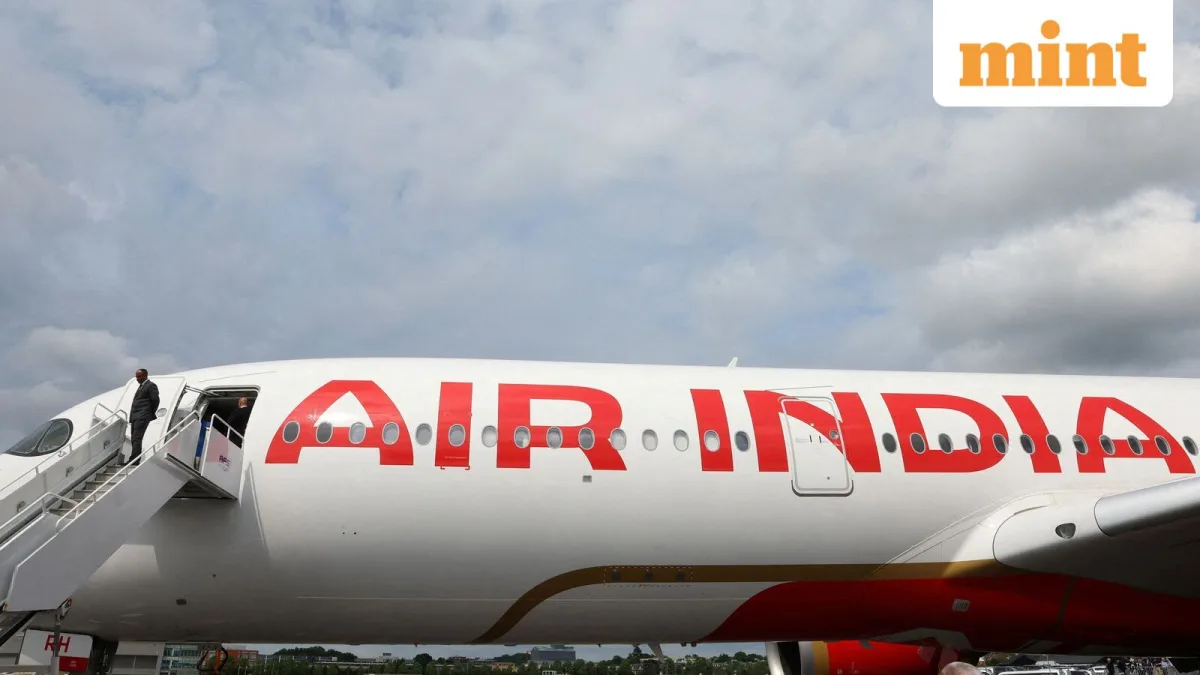
Air India's 17.5% international flight cuts amid Mideast tension allowed foreign carriers' market share on India routes to rise to 58.4%.
Key Takeaways
- •Air India cut international flights by 17.5% from March-May 2026.
- •Foreign carriers' market share on India-origin routes rose to 58.4%.
- •Dubai capped foreign airlines at one daily flight until May 31, 2026.
- •Air India's scheduled US-bound flights dropped by a sharp 77.4%.
A confluence of geopolitical airspace restrictions and airport capacity caps has forced Air India to implement significant international flight cuts, creating a strategic opening for foreign competitors. The carrier's schedule reductions, driven by the Middle East airspace restrictions and a Dubai foreign airline cap, have directly impacted the India international aviation market, allowing rivals like Lufthansa Group and Cathay Pacific to capture significant market share.
According to data from the OAG (Official Aviation Guide), Air India reduced its international flight schedule from India by 17.5% year-over-year between March and May 2026, operating just 6,404 flights. This retreat enabled foreign airlines to increase their collective share of India-origin international flights to 58.4%, a substantial rise from 51.2% during the same period in the previous year. The operational pressure has severely hampered the airline's turnaround strategy, with financial filings from co-owner Singapore Airlines revealing it accounted for a SGD 846 million share of Air India's full-year losses for the 2025/26 fiscal year.
The Regulatory Double-Bind
The challenges for Air India are twofold. Firstly, an ongoing airspace ban by the Pakistan Civil Aviation Authority prohibits Indian carriers from using its airspace for westbound flights. This forces lengthy and costly detours around the restricted zone, a problem exacerbated by tensions over Iranian airspace. Outgoing Air India CEO Campbell Wilson noted in internal communications that these longer flight paths, combined with surging jet fuel prices, rendered many long-haul services to Europe and North America commercially unviable. Data from Cirium confirms the impact, showing Air India's scheduled US-bound flights plummeted by a staggering 77.4% during the March-May 2026 period.
Secondly, a directive from the Dubai Civil Aviation Authority and Dubai Airports imposed a strict capacity cap on foreign airlines. From April 20 to May 31, 2026, all non-UAE carriers were limited to a single daily round-trip flight at both Dubai International Airport (DXB) and Dubai World Central (DWC). This measure, intended to manage airspace amid regional conflict, decimated schedules for Indian airlines. According to Cirium data, Air India and Air India Express had planned over 750 flights to Dubai during this period but were reduced to approximately 30 rotations each.
Widespread Industry Impact
The capacity vacuum has been swiftly filled by carriers operating through alternative hubs. Swiss International Air Lines, part of the Lufthansa Group, increased its scheduled India flights by 39%, primarily by expanding its Delhi-Zurich service. Similarly, Cathay Pacific grew its India-Hong Kong operations by 19% to 588 flights. This shift underscores a broader trend where geopolitical disruption funnels traffic towards unaffected hub carriers.
The impact extends across multiple stakeholders. Indian passengers traveling to long-haul destinations face fewer direct options, longer journeys, and likely higher fares. For Air India's owners, the Tata Group and Singapore Airlines, the situation represents a significant setback to the airline's ambitious transformation goals. Conversely, European and East Asian hub airlines are experiencing a surge in demand and improved pricing power on India-origin routes.
The Federation of Indian Airlines (FIA), an industry body, has voiced concerns over the Dubai flight caps. The FIA has suggested the measures may unfairly protect local UAE carriers from competition under the pretext of airspace management.
Echoes of the Russian Airspace Closure
This situation is analogous to the closure of Russian airspace to Western airlines in February 2022. That event forced European and North American carriers into much longer and more expensive routings to Asia, leading to widespread flight cancellations. Market share subsequently shifted to Middle Eastern and Chinese airlines that could still utilize Russian airspace. In a pattern that mirrors the current situation, Air India is now at a competitive disadvantage due to its inability to use direct, cost-effective flight paths, while foreign rivals capitalize on the disruption.
Technical Analysis
The convergence of airspace bans and airport caps has attacked every leg of Air India's transformation plan, as noted by Linus Benjamin Bauer of BAA & Partners. The data suggests this is not merely a temporary operational disruption but a catalyst for an accelerated market share realignment in the South Asian long-haul market. The events expose the acute vulnerability of airlines whose international networks are heavily dependent on passage through a single, geopolitically sensitive corridor. While Air India is forced into a defensive posture, competitors with diversified global hubs in locations like Zurich, Frankfurt, and Hong Kong can leverage their network flexibility to absorb displaced demand, reinforcing their strategic market position.
What Comes Next
The immediate focus is on the Dubai flight caps, which are expected to end on May 31, 2026. A return to normal capacity at DXB and DWC would provide some relief for Indian carriers. However, the more persistent and costly issue remains the airspace bans over Pakistan and Iran. Until a stable and direct westbound corridor is re-established, Air India's ability to compete effectively on long-haul routes to Europe and North America will remain severely constrained.
Why This Matters
This episode highlights how quickly regional conflicts can reshape global aviation networks and upend airline strategies. For Air India, it represents a major obstacle to its goal of becoming a premier international carrier, forcing a costly retrenchment just as its expansion was gaining momentum. The development serves as a stark reminder of the outsized impact of geopolitics on airline profitability and the strategic advantage held by carriers with globally diversified hubs.
Frequently Asked Questions
- Why did Air India cut so many international flights in 2026?
- Air India cut 17.5% of its international flights between March and May 2026 due to two main factors: airspace bans over Pakistan and Iran forced costly detours, and a strict capacity cap imposed by Dubai airports severely limited its flights to the Middle Eastern hub.
- How did Dubai's flight cap affect Indian airlines?
- Dubai's cap, effective from April 20 to May 31, 2026, restricted foreign carriers like Air India to just one daily flight at both Dubai International Airport (DXB) and Dubai World Central (DWC). This drastically reduced capacity for Air India and Air India Express, which had jointly planned over 750 flights in that period but were cut to roughly 30 each.
- Which airlines benefited from Air India's flight reductions?
- European and East Asian carriers capitalized on the situation. Swiss International Air Lines increased its India flights by 39%, while Cathay Pacific expanded its services by 19%, capturing traffic that could no longer fly directly with Air India or connect efficiently through Middle Eastern hubs.
Access up-to-date commercial aviation news and airline industry developments via omniflights.com. Discover how innovation is shaping aviation through aircraft systems, avionics, and digital tools at omniflights.com/technology.
Written by Hardik Vishwakarma
Co-Founder & Aviation News Editor leading initiatives that improve trust and visibility across the global aviation industry. Covers airlines, airports, safety, and emerging technology.
Visit ProfileYou Might Also Like
Discover more aviation news based on similar topics

Flydubai Upgrading 21 Boeing 737 MAX 8s to Flat Bed Seats
Flydubai is retrofitting 21 Boeing 737 MAX 8 aircraft with lie-flat business class seats to standardize its premium product by late 2027.
Emirates Winter Booking Momentum Grows Amid Fleet Expansion
Emirates carried 8.6 million passengers this summer and enters winter with strong demand as it accelerates fleet retrofits and network growth.
Air Arabia Consortium Gains AOC for New Dammam Budget Airline
A Saudi GACA-led consortium including Air Arabia has secured an AOC to launch a new budget airline based at Dammam's King Fahd International Airport.

Turkish Airlines Exits Luanda as Angola Hub Struggles
Turkish Airlines dropped its Luanda route as Angola's new airport struggles to attract traffic, handling only 756,028 passengers in 2025.

Red Sea Airlines Leases Two 737 MAX 8s for 2027 Expansion
Red Sea Airlines signed a lease for two Boeing 737 MAX 8 aircraft from SMBC Aviation Capital, arriving in 2027 to support its 14-aircraft fleet goal.

Avelo CEO Warns Airfares May Rise on Jet Fuel Price Spikes
Avelo Airlines CEO Andrew Levy warns that rising fuel costs may force fare increases as global jet fuel prices reach $171.01 per barrel.