Air India AI 479 Enters Pakistan Airspace During Go-Around

Co-Founder & CEOAviation News Editor delivering trusted coverage across the global aviation industry.

Air India flight AI 479 briefly entered Pakistani airspace during an Amritsar go-around, violating an active ban that remains in effect until July 24,...
Key Takeaways
- •Air India flight AI 479 strayed into Pakistan airspace on June 22, 2026.
- •The infringement occurred during a go-around maneuver at Amritsar airport.
- •Pakistan airspace remains closed to Indian aircraft until July 24, 2026.
- •Directorate General of Civil Aviation is conducting an internal investigation.
Airspace Infringement Incident
Air India flight AI 479, an Airbus A321 operating a domestic route from Delhi to Amritsar, briefly entered Pakistani airspace on June 22, 2026. The infringement occurred while the crew executed a go-around maneuver at Amritsar airport due to heavy traffic. The aircraft marginally crossed into the Lahore Flight Information Region (FIR) before returning to Indian airspace following communications with Air Traffic Control (ATC).
Regulatory Context and Ban
The incident occurred during a period of heightened geopolitical sensitivity. Under Pakistan Airports Authority (PAA) Notice to Airmen (NOTAM) A0357/26, all Indian-registered and Indian-operated aircraft are currently prohibited from entering Pakistani airspace. This ban, which applies to both civil and military flights, remains active until July 24, 2026, following the April 2025 Pahalgam attack. The infringement of this restricted zone carries significant regulatory implications for the carrier.
Operational Impact
Following the unauthorized entry into the Lahore FIR, the flight was diverted back to Delhi due to operational congestion. Passengers on board experienced a delay of approximately four hours before the aircraft eventually landed in Amritsar at 2:20 AM on June 23. Air India confirmed the incident in an official statement, noting that the safety of passengers and crew remains the primary priority. An internal investigation is currently underway to determine how the aircraft deviated from its intended navigation path during the go-around process.
Regulatory Oversight
The Directorate General of Civil Aviation (DGCA) is overseeing the investigation into the navigation failure. The agency is expected to review flight data recorder information to assess crew response and navigation system performance during the border-proximity maneuver. Historically, airspace closures between India and Pakistan have caused widespread operational disruption. In February 2019, a total closure of Pakistani airspace to Indian carriers lasted nearly five months, forcing significant route changes and increased fuel costs for the industry.
Technical Analysis of Border-Proximity Maneuvers
The incident highlights the technical and operational risks associated with flight operations near restricted geopolitical borders. When a go-around maneuver is initiated at an airport in close proximity to a national border, the margin for error in navigation is minimal. In this instance, the combination of heavy air traffic and the requirement for a rapid go-around maneuver placed the aircraft in a trajectory that intersected with the restricted Lahore FIR. The investigation will likely focus on whether the navigation systems provided sufficient warning to the flight deck crew regarding the proximity to the restricted boundary, and how the crew coordinated with ATC to rectify the course deviation.
What Comes Next
The Directorate General of Civil Aviation is expected to conclude its internal safety investigation by late 2026. This report will likely dictate any further regulatory action against the airline. Meanwhile, the Pakistan Airports Authority mandate remains in place, with the next major milestone being the expiration of the current airspace ban on July 24, 2026. Airlines operating in the region must continue to navigate these geopolitical constraints while maintaining strict adherence to international navigation standards.
Why This Matters for Regional Aviation
For regional carriers, this incident underscores the operational complexity of flying near restricted geopolitical boundaries. The breach of the Pakistan airspace ban serves as a reminder of the heightened scrutiny placed on cross-border navigation. For the aviation industry, the case emphasizes the necessity for robust flight path management and real-time coordination with ATC when operating in high-density, politically sensitive airspace.
Frequently Asked Questions
- Why is Indian aircraft currently banned from Pakistani airspace?
- Pakistan has enforced a ban on all Indian-registered and Indian-operated aircraft following the April 2025 Pahalgam attack. This restriction is currently active under NOTAM A0357/26 and is scheduled to remain in effect until July 24, 2026.
- What is the status of the investigation into Air India flight AI 479?
- The Directorate General of Civil Aviation is conducting an internal investigation into the navigation failure that led to the airspace infringement. The investigation is expected to conclude by late 2026.
Access up-to-date commercial aviation news and airline industry developments via omniflights.com. For detailed airline coverage, route changes, and fleet moves, explore the Airlines section at omniflights.com/airlines.
Written by Hardik Vishwakarma
Co-Founder & Aviation News Editor leading initiatives that improve trust and visibility across the global aviation industry. Covers airlines, airports, safety, and emerging technology.
Visit ProfileYou Might Also Like
Discover more aviation news based on similar topics

Families Demand DCA Midair Collision Safety Reforms
Families of 67 victims from the 2025 DCA midair collision are pressing Congress for mandatory ADS-B In technology to prevent future aviation tragedies.

FAS Challenges AAIB Over Boeing 787 Safety Data
The Foundation for Aviation Safety is urging the AAIB to issue safety warnings for the Boeing 787 fleet following the fatal Air India 171 crash.
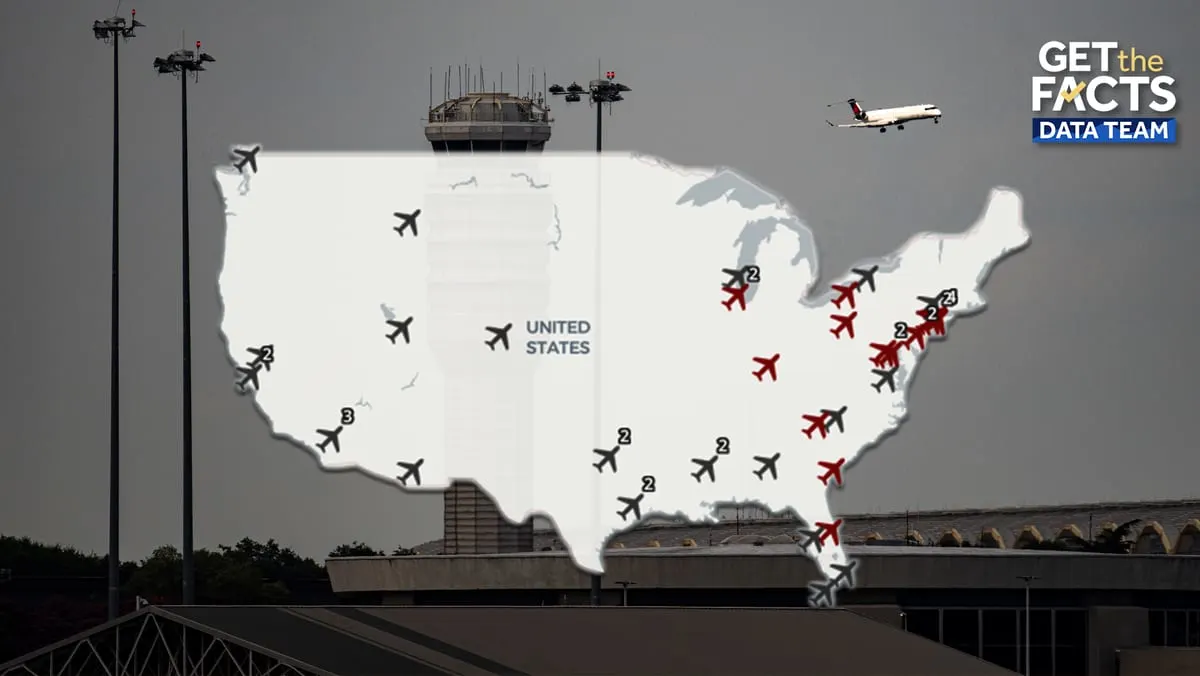
NTSB Safety Recommendations Lag Amid 6 Monthly Near-Misses
Approximately 6 near-miss incidents occur monthly at U.S. airports as 270 NTSB safety recommendations remain unaddressed by federal regulators.
NTSB Rejects FAA Safety Responses After 67-Fatality Crash
The NTSB labeled 11 FAA responses to 2025 DCA mid-air collision recommendations as unacceptable, citing the lack of a mandatory ADS-B In requirement.
EASA Orders Urgent Airbus A380 Wing Spar Inspections
The EASA ordered urgent inspections on 16 Airbus A380s after discovering wing spar cracks that could compromise structural integrity.
Ryanair Flight RK514 Diverts to Birmingham After Emergency
Ryanair flight RK514 diverted to Birmingham Airport on September 13, 2026, following a medical emergency involving a passenger.