Air India AI-171: FIP Challenges AAIB Crash Timeline

Co-Founder & CEOAviation News Editor delivering trusted coverage across the global aviation industry.
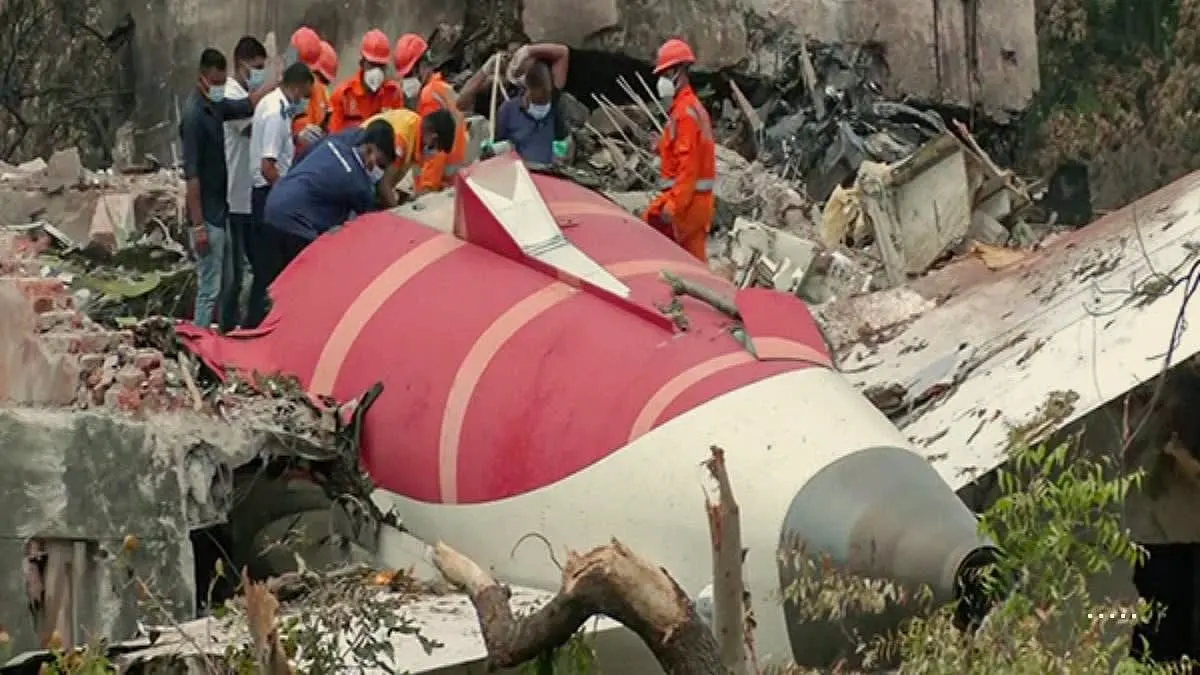
The Federation of Indian Pilots disputes the AAIB's findings on the fatal June 2025 Air India AI-171 crash, citing systemic Boeing 787 electrical flaws.
Key Takeaways
- •FIP challenges AAIB’s 4-second RAT deployment timeline for AI-171.
- •Simulator tests show 18-second RAT deployment for Boeing 787s.
- •The June 2025 crash of Air India AI-171 resulted in 260 fatalities.
- •Final AAIB accident report is expected between late 2026 and 2027.
Challenging the Official Investigation
The Federation of Indian Pilots (FIP) has formally challenged the preliminary findings issued by the Aircraft Accident Investigation Bureau (AAIB) regarding the June 2025 Air India AI-171 crash. The incident, which involved a Boeing 787 Dreamliner, resulted in 260 fatalities. While the AAIB’s preliminary report suggests that the flight crew initiated a manual fuel cut-off, the FIP argues that technical evidence points toward a systemic electrical failure rather than deliberate pilot action. This dispute centers on the deployment timeline of the Ram Air Turbine (RAT), a critical emergency backup system designed to generate power during total engine failure.
Simulator Evidence and Technical Discrepancies
To support their position, the FIP conducted 10 independent test runs using an European Union Aviation Safety Agency (EASA)-certified Level D six-axis flight simulator. According to the FIP, these tests demonstrate that the Ram Air Turbine requires 18 seconds to deploy following a manual fuel shutdown. This finding directly contradicts the AAIB’s official timeline, which claims the system deployed only 4 seconds after the fuel supply was cut. Captain C.S. Randhawa, President of the FIP, stated that the 4-second deployment is physically impossible under manual shutdown conditions. He argued that the rapid deployment observed suggests an underlying electrical failure, characterizing the official narrative as an attempt to assign blame to deceased pilots rather than investigating potential mechanical or software defects. The Aircraft Accident Investigation Bureau (AAIB) India remains the primary authority governing the investigation under the Aircraft (Investigation of Accidents and Incidents) Rules, 2017 and ICAO Annex 13.
Industry Implications and Stakeholder Impact
The investigation into the Air India AI-171 crash carries significant weight for Air India, which faces potential liability shifts depending on the final ruling. For Boeing, the 787 program faces the prospect of intense regulatory scrutiny and substantial financial liability if a systemic electrical failure is proven. Furthermore, the outcome of this investigation will dictate the trajectory of wrongful death lawsuits filed by victims' families, who are actively seeking clarity on whether the crash was caused by human error or a design flaw in the aircraft. The Boeing 787 Dreamliner Official Page outlines the manufacturer’s design specifications, while the EASA Flight Simulation Training Devices framework provides the regulatory basis for the high-fidelity testing utilized by the pilots' union.
Historical Precedents in Accident Analysis
This investigation mirrors past tensions in aviation safety, such as the 1997 SilkAir Flight 185 crash. In that case, the US NTSB (National Transportation Safety Board) ruled the cause was deliberate pilot action, while subsequent civil litigation identified a mechanical servo valve defect. Similarly, the 1999 EgyptAir Flight 990 crash saw conflicting conclusions between US investigators and Egyptian authorities regarding potential mechanical failures versus pilot input. These historical cases highlight the recurring difficulty in distinguishing between complex mechanical anomalies and crew behavior in modern, highly automated aircraft.
Technical Analysis of RAT Deployment
The discrepancy between the 4-second and 18-second deployment windows indicates a fundamental disagreement regarding the aircraft's state leading up to the impact. If the FIP’s simulator data is validated, it would suggest that the aircraft's systems were reacting to a catastrophic power loss event that bypassed manual controls. This development reflects a broader industry trend where labor groups are increasingly financing independent technical audits to challenge findings of pilot error. By utilizing high-fidelity simulation, the FIP is attempting to shift the focus toward the reliability of fly-by-wire backup systems in composite aircraft, a critical area of concern for modern aviation safety.
Future Milestones and Reporting
The AAIB is expected to release its final accident report between late 2026 and 2027. This document will serve as the definitive regulatory conclusion, though its findings will likely be subject to continued scrutiny from legal counsel and aviation safety experts. The aviation industry and the families of those lost in the AI-171 tragedy continue to await further clarification on the systemic factors that may have contributed to this disaster.
Frequently Asked Questions
- What is the Ram Air Turbine (RAT) on a Boeing 787?
- The Ram Air Turbine is an emergency backup system that deploys from the aircraft to generate essential electrical and hydraulic power in the event of a total power loss.
- Why is the Federation of Indian Pilots challenging the AAIB report?
- The FIP challenges the report because their independent simulator tests show the RAT requires 18 seconds to deploy, contradicting the AAIB's 4-second timeline and suggesting a possible systemic electrical failure.
Stay ahead of the airline industry with commercial aviation news from omniflights.com. For detailed airline coverage, route changes, and fleet moves, explore the Airlines section at omniflights.com/airlines.
Written by Hardik Vishwakarma
Co-Founder & Aviation News Editor leading initiatives that improve trust and visibility across the global aviation industry. Covers airlines, airports, safety, and emerging technology.
Visit ProfileYou Might Also Like
Discover more aviation news based on similar topics

Families Demand DCA Midair Collision Safety Reforms
Families of 67 victims from the 2025 DCA midair collision are pressing Congress for mandatory ADS-B In technology to prevent future aviation tragedies.
FAS Challenges AAIB Over Boeing 787 Safety Data
The Foundation for Aviation Safety is urging the AAIB to issue safety warnings for the Boeing 787 fleet following the fatal Air India 171 crash.
NTSB Safety Recommendations Lag Amid 6 Monthly Near-Misses
Approximately 6 near-miss incidents occur monthly at U.S. airports as 270 NTSB safety recommendations remain unaddressed by federal regulators.
NTSB Rejects FAA Safety Responses After 67-Fatality Crash
The NTSB labeled 11 FAA responses to 2025 DCA mid-air collision recommendations as unacceptable, citing the lack of a mandatory ADS-B In requirement.
EASA Orders Urgent Airbus A380 Wing Spar Inspections
The EASA ordered urgent inspections on 16 Airbus A380s after discovering wing spar cracks that could compromise structural integrity.
Ryanair Flight RK514 Diverts to Birmingham After Emergency
Ryanair flight RK514 diverted to Birmingham Airport on September 13, 2026, following a medical emergency involving a passenger.