Aboitiz InfraCapital Begins Laguindingan Airport Airside Upgrades

Co-Founder & CEOAviation News Editor delivering trusted coverage across the global aviation industry.
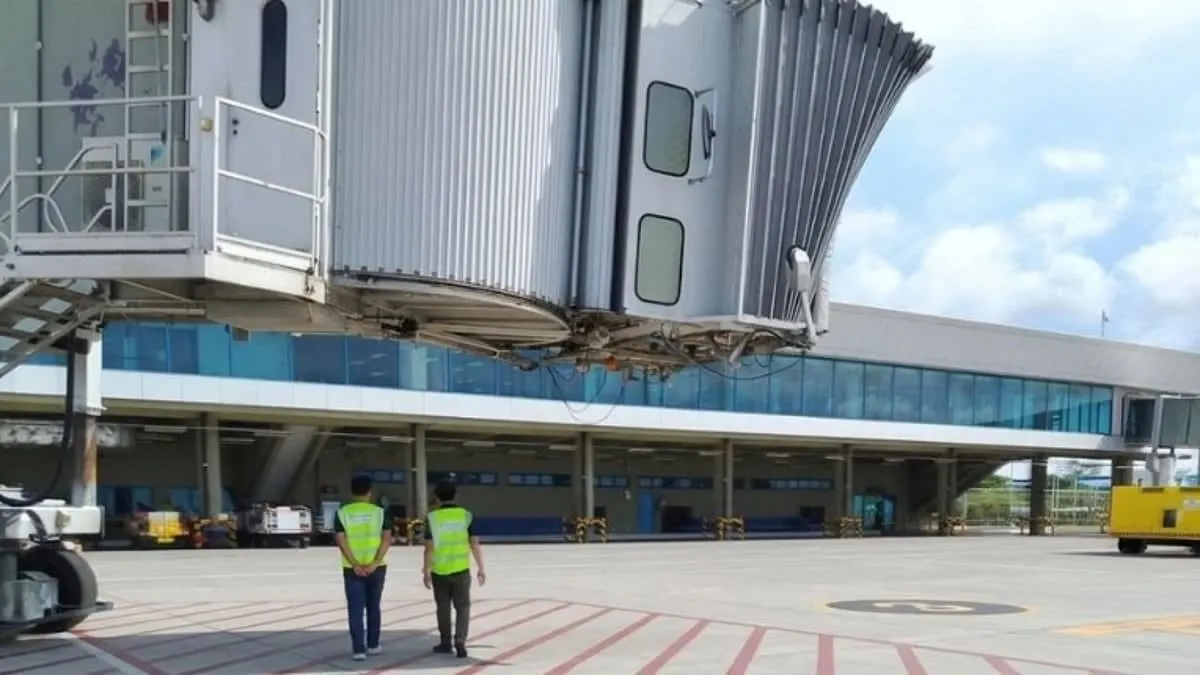
Aboitiz InfraCapital is upgrading Laguindingan Airport's airside operations to boost safety and reliability under its new 30-year concession agreement.
Key Takeaways
- •Implements airside upgrades at Laguindingan Airport, including new apron markings.
- •Operates under a 30-year, PHP 12.75 billion concession agreement awarded in October 2024.
- •Plans to increase airport capacity in two phases, from 1.6 million to 6.3 million passengers.
- •Represents a key project in the Philippines' nationwide airport privatization strategy.
Aboitiz InfraCapital Inc. (AIC) has initiated a series of airside upgrades at Laguindingan International Airport (LIA), marking the first phase of improvements under its new long-term concession. The enhancements are designed to improve operational safety, efficiency, and reliability at the key gateway for Northern Mindanao. These initial steps are part of a broader modernization plan following the awarding of a 30-year, PHP 12.75 billion concession agreement in October 2024.
The immediate upgrades focus on the airport's apron, the paved area used for aircraft parking, servicing, and boarding. AIC has installed new and refreshed markings to provide clearer guidance for both aircraft and ground personnel. According to the company, these improvements are expected to streamline aircraft movement on the ground, contributing to more efficient turnarounds and minimizing potential delays for airlines operating at the hub.
"While these improvements take place behind the scenes, they play a critical role in delivering a seamless passenger journey at Laguindingan International Airport," said Rafael Aboitiz, AIC vice president and head of airports. "Safer and more efficient airside operations translate to more reliable flights and an overall better airport experience."
Modernization Under a Public-Private Partnership
The upgrades at LIA are a component of a larger national strategy in the Philippines to modernize aviation infrastructure through Public-Private Partnerships (PPPs). The concession agreement, awarded under the framework of Republic Act No. 11966 (PPP Code of the Philippines), grants AIC the right to operate, maintain, and develop the airport. The official operational turnover from the Civil Aviation Authority of the Philippines (CAAP) to AIC is scheduled for April 2025.
This project will significantly expand LIA's capacity to meet growing demand. According to the Department of Transportation (DOTr), the modernization plan includes two phases. Phase 1 will increase annual passenger capacity from 1.6 million to 3.9 million. Phase 2 will further expand capacity to 6.3 million passengers annually. This expansion is critical for LIA, which serves the cities of Cagayan de Oro and Iligan, as well as the provinces of Misamis Oriental, Lanao del Norte, and Bukidnon.
A Pattern of Airport Privatization
AIC, the infrastructure arm of the Aboitiz Group founded in 2015, is a key player in the country's airport privatization trend. Its portfolio also includes Bohol-Panglao International Airport (BPIA), which is also slated for modernization starting in 2025, and the highly successful Mactan-Cebu International Airport (MCIA).
The privatization of MCIA in 2014 serves as a historical precedent for this strategy. The transfer of MCIA to a private consortium led to the construction of a new terminal and a substantial increase in capacity and passenger traffic. This model's success has informed the government's approach to other key airports, including the recent handover of Manila's Ninoy Aquino International Airport (NAIA) to a private consortium in September 2024.
The shift has a direct impact on stakeholders. For CAAP, it transitions its role at LIA from operator to a purely regulatory and oversight function. Airlines such as Cebu Pacific and Philippine Airlines are expected to benefit from improved ground efficiency and future capacity growth. For the Northern Mindanao region, the enhanced airport is projected to boost tourism and business by improving connectivity.
What Comes Next
The project timeline includes several key predictive milestones. The official handover of LIA's operations to Aboitiz InfraCapital is confirmed for April 2025. Following the turnover, AIC will commence its short- to medium-term development and modernization projects for both LIA and BPIA throughout 2025. While the upgrades promise improved service, some observers have raised concerns that privatization could lead to higher passenger terminal fees as the concessionaire works to recoup its significant PHP 12.75 billion investment.
Why This Matters
The modernization of Laguindingan International Airport represents a critical step in the Philippines' strategy to leverage private sector capital and expertise to upgrade national infrastructure. The project not only aims to enhance the passenger experience and operational safety but also to position Northern Mindanao for greater economic growth. By following the established PPP model, the development of LIA serves as another key test of this approach for regional airport development in Southeast Asia.
Frequently Asked Questions
- What specific upgrades is Aboitiz InfraCapital making at Laguindingan Airport?
- The initial upgrades focus on airside operations, primarily installing new and refreshed apron markings. This is intended to provide clearer guidance for aircraft and ground crews to streamline movement, improve turnaround times, and reduce potential delays.
- What is the long-term plan for Laguindingan Airport under its new management?
- Under its 30-year, PHP 12.75 billion concession, Aboitiz InfraCapital plans a major modernization to significantly increase passenger capacity. The plan involves raising annual capacity from the current 1.6 million to 3.9 million in a first phase, and ultimately to 6.3 million in a second phase.
- How does the Laguindingan Airport deal fit into the Philippines' aviation strategy?
- This project is a key part of a nationwide push for airport privatization using a Public-Private Partnership (PPP) model. It follows similar successful privatizations, such as for Mactan-Cebu International Airport, to leverage private investment for upgrading critical aviation infrastructure.
For global airline trends and commercial aviation news, turn to omniflights.com. Follow aviation sustainability efforts, emissions research, and green initiatives in the Environmental section at omniflights.com/environmental.

Written by Hardik Vishwakarma
Co-Founder & Aviation News Editor leading initiatives that improve trust and visibility across the global aviation industry. Covers airlines, airports, safety, and emerging technology.
Visit ProfileYou Might Also Like
Discover more aviation news based on similar topics

IndiGo Opens Commercial Flights at Bhogapuram
IndiGo launched the first commercial flight to the new Rs 5,700 crore Bhogapuram Airport, shifting civilian traffic from the old civil enclave.

Sydney Airport Master Plan 2045 Approved
The Australian government approved Sydney Airport's Master Plan 2045, enabling terminal integration to handle 72.6 million passengers by 2045.
Visakhapatnam Airport Ends Commercial Flights for 30 Years
Visakhapatnam Airport ended scheduled commercial flights ahead of Bhogapuram's opening, triggering a 30-year moratorium on civil operations.

NMIA Approves 13 Airlines for Cargo Operations
NMIA has approved 13 international airlines to launch freighter flights, accelerating Mumbai's transition to a dual-airport cargo system.

Hong Kong Air Cargo Lands First Navi Mumbai Freighter
Hong Kong Air Cargo launched flights to Navi Mumbai, marking the airport's first international freighter service with 6 weekly movements.

ENAC Suspends Catania Flights Amid Mount Etna Eruption
ENAC suspended operations at Catania Airport due to a Mount Etna eruption, resulting in 700 flight cancellations and massive regional diversions.