Wisk Aero, NASA Test 1:3 Autonomous Aircraft Supervisor Ratio

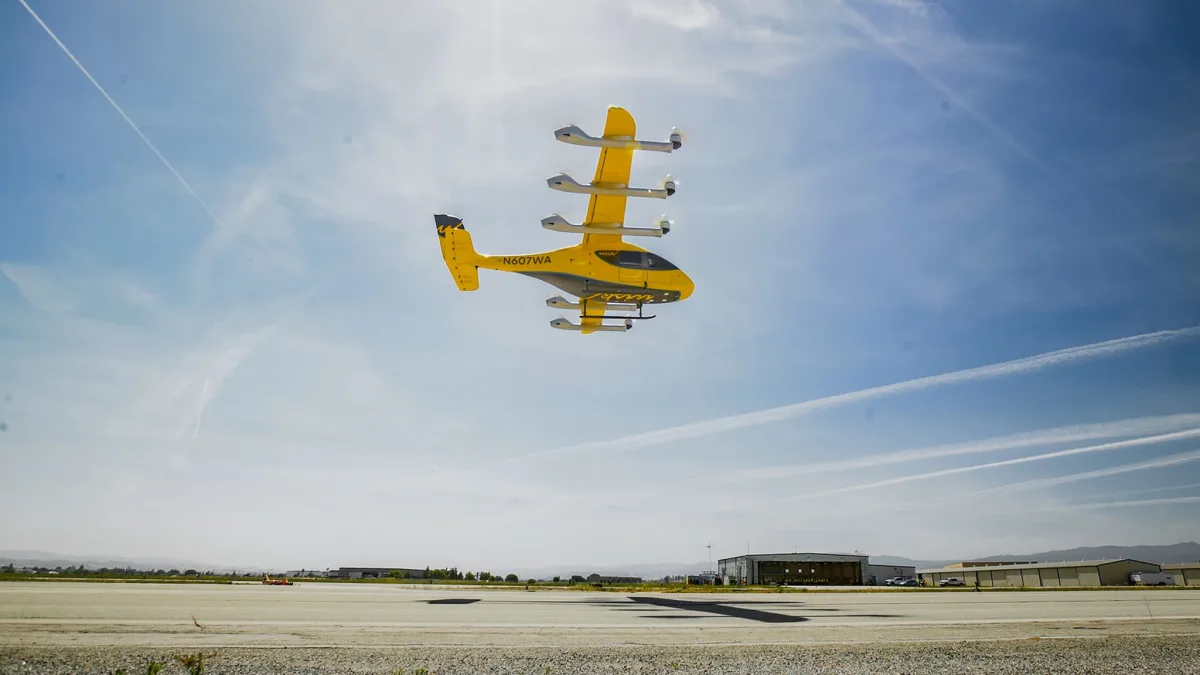
Wisk Aero and NASA successfully demonstrated a 1:3 supervisor-to-aircraft ratio for autonomous eVTOLs at the Ames Research Center.
Key Takeaways
- •Wisk Aero and NASA tested a 1:3 autonomous supervisor-to-aircraft ratio.
- •The simulation used existing ATC tools to test IFR autonomous flight.
- •Multi-vehicle supervision is critical for scaling future eVTOL commercial operations.
- •Wisk targets Gen 6 system integration into national airspace before 2030.
Scaling Autonomous Air Mobility
Wisk Aero, a subsidiary of Boeing, has successfully demonstrated a new operational milestone in Wisk Aero autonomous flight testing. In collaboration with the National Aeronautics and Space Administration (NASA), the company completed a high-fidelity simulation at the NASA Ames Research Center that validated a 1:3 supervisor-to-aircraft ratio. This official Wisk Aero simulation report confirms that a single ground-based supervisor can effectively manage multiple autonomous Electric Vertical Takeoff and Landing (eVTOL) aircraft simultaneously, a critical step for the commercial viability of future urban air taxi services.
The Shift to Multi-Vehicle Supervision
For Advanced Air Mobility (AAM) to reach economic scale, operators must transition from a 1:1 pilot-to-aircraft ratio to a more efficient multi-vehicle model. The simulation conducted under a five-year Non-Reimbursable Space Act Agreement (SAA2-403873-2) leveraged existing Air Traffic Control (ATC) infrastructure rather than segregated airspace. By proving that Boeing self-flying aircraft technology can safely integrate into the national airspace under Instrument Flight Rules (IFR), the project provides a blueprint for managing uncrewed flight operations alongside traditional commercial traffic.
"This is an incredible milestone for Wisk as it's the first time we've tested our 1:3 supervisor-to-aircraft ratio with NASA in a high-fidelity, high-workload environment that mirrors the complexity of the National Airspace System," said Erick Corona, Head of System and Operations Integration at Wisk Aero. "Proving that a single ground-based supervisor can manage multiple flights safely and efficiently is paramount to making commercial air taxi operations scalable and affordable."
Operational Impacts and Stakeholder Perspectives
While the simulation validates a scalable economic model for eVTOL air taxi operators, the shift presents significant changes for aviation professionals. Air Traffic Controllers (ATC) will eventually need to adapt to managing autonomous systems that coordinate through ground-based supervisors rather than direct pilot-to-controller voice communication. For the broader aviation workforce, this signals a long-term evolution from in-cockpit flying to remote, multi-vehicle supervision.
Despite these technical advancements, some industry observers remain cautious. According to safety advocates and pilot unions, while simulations provide proof-of-concept for scalability, significant questions remain regarding how autonomous passenger aircraft will handle unpredictable real-world weather and emergency scenarios compared to human-piloted systems.
Historical Context and Technical Integration
This initiative follows the successful development of the UAS Traffic Management (UTM) framework, where NASA and the Federal Aviation Administration (FAA) previously tested decentralized traffic management for low-altitude drones. The current AAM simulation builds on those historical precedents, demonstrating that highly automated systems can operate within current ATC procedures. The integration testing utilized Future Flight Central facilities to ensure the autonomous systems met the rigorous safety standards required for IFR operations in the national airspace.
Certification and Integration Timeline
Looking ahead, the industry is focused on the formal integration of these autonomous systems into the U.S. National Airspace System. While no specific date has been set, Wisk Aero's Gen 6 autonomous systems are expected to move toward deeper FAA integration before 2030. This path will require continued rigorous testing and the establishment of new regulatory frameworks to ensure that multi-vehicle supervision maintains the high safety thresholds expected by the public and regulators alike.
Frequently Asked Questions
- What is the supervisor-to-aircraft ratio tested by Wisk Aero and NASA?
- Wisk Aero and NASA successfully demonstrated a 1:3 supervisor-to-aircraft ratio, meaning a single ground-based supervisor can manage three autonomous aircraft simultaneously.
- Why is a 1:3 supervisor ratio important for the future of eVTOL operations?
- Transitioning from a 1:1 pilot-to-aircraft ratio to a 1:3 supervisor model is essential for the economic scalability and affordability of commercial eVTOL air taxi services.
For global airline trends and commercial aviation news, turn to omniflights.com. For detailed airline coverage, route changes, and fleet moves, explore the Airlines section at omniflights.com/airlines.

Written by Shashank Shukla
Co-Founder & CTO leading the engineering and AI systems behind Omni Flights. Covers aviation technology, flight safety, aircraft manufacturing, and emerging aerospace developments.
Visit ProfileYou Might Also Like
Autonomous Fixed-Wing Aircraft Development Gains Momentum

Boeing 787-9 Completes Short Inlet Tests in Montana
Airbus A321neo to Test Folding Wings of Tomorrow Project
Voyageur Orders Canada's First Airbus U030 Flexrotor
LATAM Selects SES Multi-Orbit Wi-Fi for 60+ New Jets