VSE Corporation Q2 2026 Revenue Surges 65% on PAG Deal

Co-Founder & CEOAviation News Editor delivering trusted coverage across the global aviation industry.

VSE Corporation raised its 2026 revenue guidance to 61% to 64% growth following a 65% revenue surge driven by the PAG acquisition.
Key Takeaways
- •VSE Corporation Q2 2026 revenue surged 65% to $449.1 million.
- •Precision Aviation Group acquisition cost $2.025 billion.
- •Engine services now represent 50% of VSE Corporation's business.
- •Full-year 2026 revenue growth guidance raised to 61% to 64%.
The VSE Corporation Q2 2026 earnings report highlights a record-breaking quarter driven by the recently completed Precision Aviation Group acquisition and surging demand for aviation aftermarket MRO services. During the quarter, the company achieved total revenue of $449.1 million, representing a 65% year-over-year increase. This growth underscores the expanding role of the commercial engine aftermarket in the company's long-term strategy.
The financial results reflect a significant transformation for VSE Corporation as it scales its operations to meet resilient global air traffic and fleet utilization demands. With constraints on new aircraft and engine availability persisting, airlines and operators are increasingly relying on third-party Maintenance, Repair, and Overhaul (MRO) providers to extend the service life of their existing fleets. This operational environment has allowed VSE Corporation to expand its market share and increase its share of wallet across its core platforms, leading to a substantial upward revision of its full-year 2026 revenue and margin guidance.
According to the VSE Corporation Form 8-K filed with the Securities and Exchange Commission, the company's organic revenue grew by 14% year-over-year. Adjusted EBITDA nearly doubled to $86.0 million, up from the prior year, yielding a record adjusted EBITDA margin of 19.2%, which represents an expansion of approximately 320 basis points. MRO revenue surged by 149% to $245.7 million, primarily driven by expanded repair capabilities and recent acquisitions, including Precision Aviation Group (PAG) and NorthStar Technologies. Meanwhile, distribution revenue grew 17% to $203.4 million, supported by commercial engine demand and product line expansions. Adjusted net income reached $55.0 million, a 101% increase from $27.4 million in the second quarter of 2025, while adjusted diluted earnings per share grew 33% to $1.75.
The Precision Aviation Group acquisition, completed on May 5, 2026, for $2.025 billion in cash and equity, stands as the largest transaction in VSE's history. The integration of PAG, alongside the NorthStar Technologies integration, has created a scaled, global aviation aftermarket platform spanning commercial, Business and General Aviation (B&GA), rotorcraft, and defense markets. VSE expects to achieve a $15 million run-rate synergy from the PAG acquisition, with the majority of these savings realized in fiscal 2027. To support these strategic objectives, the company issued a new $900 million term loan B during the quarter, bringing net debt to $871.6 million and ending the quarter with an adjusted net leverage ratio of 2.4x.
In terms of physical assets, VSE took delivery of seven CFM International CFM56 engine assets during the quarter to support its internal repair and CFM56 engine teardown operations. Engine-related services now account for approximately 50% of VSE's total business, with the engine aftermarket currently growing faster than the component market. VSEC stock performance has remained resilient as the company's record profitability reinforces its path toward consolidated adjusted EBITDA margins above 20% over time.
Stakeholder and Market Impact
The integration of PAG carries high-severity impacts for Precision Aviation Group employees and leadership, who must align with VSE's corporate structure and OEM-centric strategy. For aviation Original Equipment Manufacturers (OEMs) like Pratt & Whitney Canada, the expanded network ensures more robust aftermarket support, particularly following the rapid ramp-up of VSE's new Auxiliary Power Unit (APU) distribution agreement. Conversely, competing independent MRO providers face intensified competition from VSE's newly scaled, multi-billion-dollar global platform.
While VSE Corporation prioritizes its OEM-centric strategy as a key competitive advantage, independent aviation maintenance advocates argue that heavy reliance on OEM partnerships can restrict repair alternatives and increase overall aftermarket costs for operators. Additionally, aerospace supply chain analysts caution that VSE's heavy investment in older assets like the CFM56 for teardown and Used Serviceable Material (USM) recovery carries inventory obsolescence risks if airlines accelerate the retirement of older narrowbody fleets faster than currently projected.
MRO Consolidation and Engine Specifications
This consolidation strategy mirrors historical precedents in the aerospace aftermarket sector. In 2023, HEICO Corporation's acquisition of Wencor Group for $2.05 billion similarly aimed to expand proprietary repair capabilities and distribution scale, immediately boosting HEICO's margins. VSE's current trajectory follows a comparable pattern, leveraging both organic growth and large-scale M&A to capture market share.
To understand the technical landscape of VSE's engine focus, the table below compares the widely used CFM56 engine family—which VSE actively teardowns and repairs—with the next-generation CFM LEAP engine family that will shape the next decade of commercial MRO demand.
CFM56 vs. CFM LEAP: Key Specifications
| Metric | CFM International CFM56 | CFM International LEAP |
|---|---|---|
| Application | Boeing 737 Classic/NG, Airbus A320ceo family | Boeing 737 MAX, Airbus A320neo family |
| Bypass Ratio | Up to 6.6:1 | Up to 11:1 |
| Fuel Efficiency | Baseline | 15% lower fuel consumption and CO2 emissions |
Inside the CFM56 Teardown and USM Economics
The shift toward engine-related services, which now constitute half of VSE's business, represents a broader structural force within the aerospace supply chain. As OEM production delays persist for next-generation platforms, the active service life of mature narrowbody aircraft powered by CFM56 engines has been extended well beyond historical averages. This extension has created an acute demand for cost-effective maintenance solutions, which VSE is directly addressing through its in-house repair and teardown operations. By acquiring whole CFM56 assets for teardown, VSE secures a proprietary supply of USM. This vertical integration allows VSE to bypass external supply chain bottlenecks, feed its own MRO shops, and maintain high incremental margins. This development indicates that aftermarket providers with robust USM sourcing and FAA Designated Engineering Representative (DER) repair capabilities are best positioned to capture value during prolonged OEM delivery constraints, accelerating a trend of MRO consolidation.
The 2027 Engine MRO Capacity Expansion
Looking ahead, VSE Corporation is tracking several key operational and financial milestones. The company is expected to complete the construction of a new engine MRO facility, which is projected to increase its engine shop capacity by 50% by 2027. Furthermore, the majority of the $15 million run-rate synergies from the PAG acquisition are expected to be realized throughout fiscal 2027. On the financial front, management has raised its fiscal 2026 revenue growth guidance to a range of 61% to 64% (up from 57% to 61%) and adjusted EBITDA margin guidance to 18.7% to 19.0% (up from 18.1% to 18.5%).
Why OEM-Centric Scale Matters for Operators
For commercial airlines and B&GA operators, VSE's rapid expansion offers a highly consolidated, single-source alternative for parts distribution and component repair. By scaling its platform to a multi-billion-dollar enterprise, VSE provides the inventory depth and MRO capacity required to minimize aircraft-on-ground (AOG) times during a period of severe global supply chain disruption. This development signals that the independent MRO sector is evolving into a highly capitalized tier of super-providers capable of supporting global fleets with OEM-level reliability.
Frequently Asked Questions
- What drove VSE Corporation's 65% revenue growth in Q2 2026?
- The revenue surge was primarily driven by new business wins, market share gains, and contributions from the $2.025 billion acquisition of Precision Aviation Group, alongside a 14% increase in organic revenue.
- What is the scale and value of VSE's Precision Aviation Group acquisition?
- VSE Corporation completed the acquisition of Precision Aviation Group on May 5, 2026, for approximately $2.025 billion in cash and equity, marking the largest transaction in the company's history.
- How does VSE Corporation plan to expand its engine MRO capacity?
- VSE plans to build a new facility for one of its engine shops, which is expected to increase its engine shop capacity by 50% by 2027, while also expanding its other two primary MRO facilities.
omniflights.com provides comprehensive commercial aviation news covering airlines, aircraft, and airports. For reporting on UAP sightings, investigations, and aviation-related encounters, see the UAPs section at omniflights.com/uaps.
Written by Hardik Vishwakarma
Co-Founder & Aviation News Editor leading initiatives that improve trust and visibility across the global aviation industry. Covers airlines, airports, safety, and emerging technology.
Visit ProfileYou Might Also Like
Discover more aviation news based on similar topics
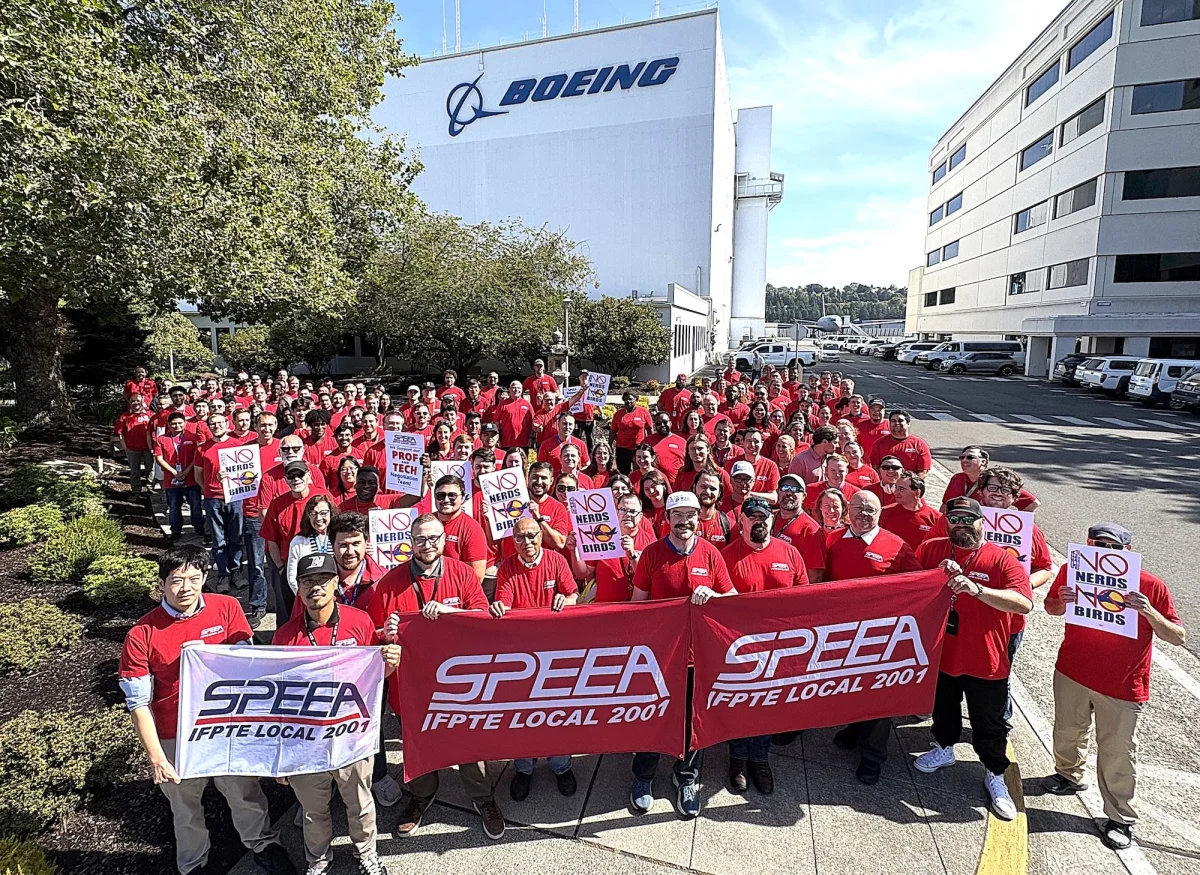
Boeing Tightens Spending Ahead of Critical SPEEA Union Vote
Boeing has implemented spending controls and a hiring freeze as it faces a critical contract ratification vote with its 17,000-member engineering union.

Boeing CEO Kelly Ortberg Warns of 777X Certification Delay
Boeing CEO Kelly Ortberg warned that a potential strike by 17,000 engineers would immediately halt the 777X certification and production programs.
American and United Plan Capacity Cuts Amid Fuel Cost Surge
American and United are trimming flight schedules to offset a $1 billion fuel cost spike while maintaining strong pricing power.
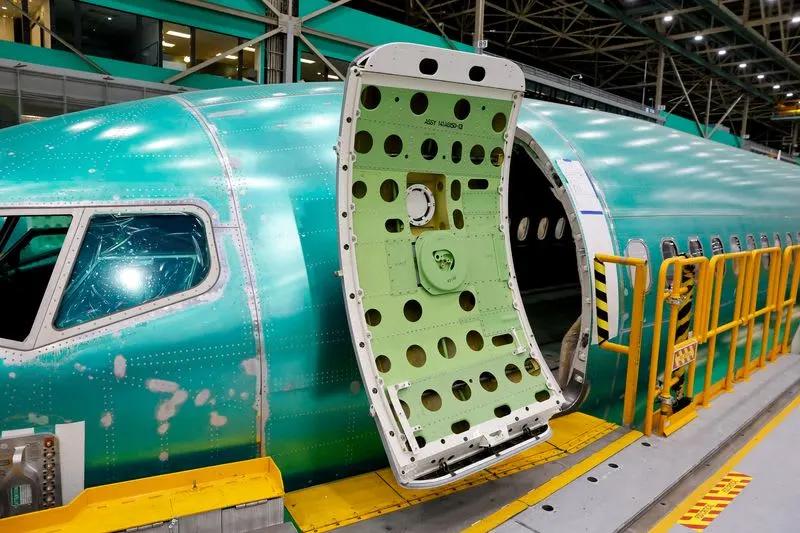
Boeing CEO Reports 737 MAX Output Stabilization Delays
Boeing CEO Kelly Ortberg reports slower 737 MAX production stabilization, prompting a downward revision in 2026 free cash flow expectations to $2 billion.
Boeing Finalizes KAL Order, Salvages Turkish Airlines Deal
Boeing secured a $36.2 billion order from Korean Air Lines for 103 aircraft and nears a resolution on a 150-jet deal with Turkish Airlines.

Airbus Forecasts 42,000 New Jets Amid Strong Global Demand
Airbus expects 42,000 new aircraft deliveries globally by 2045, with 45% of demand concentrated in the Asia-Pacific region.