American and United Plan Capacity Cuts Amid Fuel Cost Surge

Co-Founder & CEOAviation News Editor delivering trusted coverage across the global aviation industry.
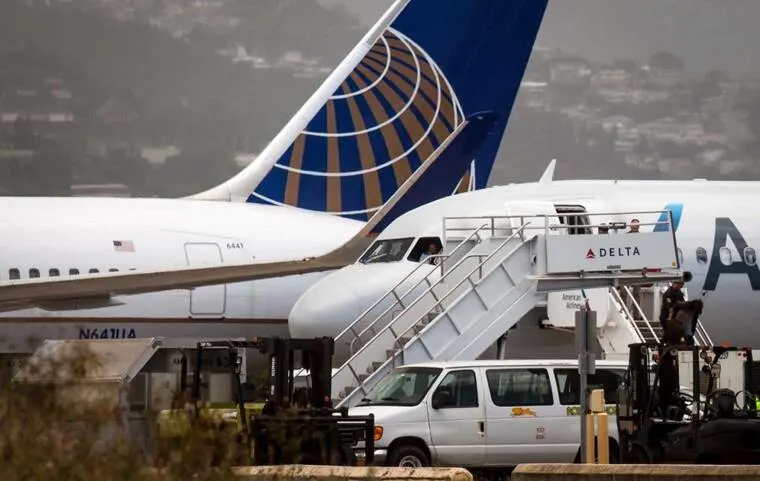
American and United are trimming flight schedules to offset a $1 billion fuel cost spike while maintaining strong pricing power.
Key Takeaways
- •American Airlines forecasts 16-19% revenue growth for Q3 2026.
- •Rising fuel costs add $1 billion to American's Q4 expenses.
- •United Airlines is canceling underperforming December flights.
- •Carriers are prioritizing profitability over maintaining total market share.
Capacity Management in Response to Fuel Volatility
American Airlines and United Airlines are preparing to implement Airline capacity cuts as rising Jet fuel price impact pressures carrier margins. Executives from both airlines confirmed at the Morgan Stanley 14th Annual Laguna Conference on September 16, 2026, that they are reassessing less-profitable routes to protect profitability. This shift follows a significant surge in fuel costs, which has forced a strategic pivot toward margin preservation over market share.
American Airlines Q4 forecast indicates that a roughly $1 per gallon increase in fuel prices since July will add approximately $1 billion to its fourth-quarter expenses. According to American’s Chief Financial Officer Devon May, every 1-cent fluctuation in fuel prices impacts the carrier's quarterly operating costs by about $10 million. To mitigate this, the airline intends to adjust capacity throughout the remainder of the year.
United Airlines Schedule Adjustments and Strategy
United Airlines is similarly recalibrating its network to maintain financial health. Chief Financial Officer Michael Leskinen confirmed that the carrier has already removed specific underperforming flights from its December schedule. The airline is evaluating further United Airlines schedule adjustments for the first quarter and into 2027 if fuel costs remain elevated. Leskinen emphasized that the carrier's primary objective is to maximize profitability and free cash generation rather than maintaining market share.
Despite the cost pressures, both airlines report that passenger demand remains resilient. American Airlines CEO Robert Isom stated that the carrier expects third-quarter revenue to grow by 16% to 19% compared to the same period last year. Isom noted that the airline has successfully recaptured a significant portion of the higher fuel expenses through pricing, and he expects these revenue gains to remain durable across both domestic and international markets.
Historical Context and Industry Trends
The current industry response mirrors historical patterns of capacity management during geopolitical fuel shocks. In 2008, when crude oil reached $147 per barrel, major carriers aggressively slashed capacity and grounded fuel-inefficient aircraft to survive. Similarly, during the 2022 fuel price spike following the Russian invasion of Ukraine, airlines successfully utilized strong demand to pass costs onto consumers through higher fares while trimming marginal routes.
While airline leadership maintains that these cuts are a necessary response to market economics, some consumer advocates argue that carriers use such volatility as a pretext to constrain supply and sustain higher ticket prices. Nevertheless, the current data suggests that the industry's focus remains on structural profitability, with capacity discipline serving as a primary tool to offset input cost volatility.
The Financial Math of Fuel Exposure
| Metric | American Airlines Impact |
|---|---|
| Q4 Fuel Cost Runup | ~$1 Billion |
| Cost Sensitivity | $10 Million per 1-cent fuel change |
| Q3 Revenue Growth Forecast | 16% to 19% vs 2025 |
Timeline for Network Realignments
American Airlines has confirmed it will implement capacity reductions during the late fourth quarter of 2026. Looking further ahead, United Airlines is expected to initiate additional flight schedule adjustments and potential route suspensions in the first quarter of 2027, provided fuel prices do not stabilize. These actions reflect a broader industry trend of proactive capacity management to navigate the current fiscal environment.
Why This Matters for Stakeholders
For legacy airline passengers, these adjustments likely mean reduced flight frequencies and fewer non-stop options on marginal or off-peak routes. Furthermore, corporate travel departments should anticipate sustained upward pressure on airfares as airlines continue to pass the $1 billion fuel cost increase onto the market. For investors, the focus remains on the carriers' ability to maintain free cash generation despite the ongoing fuel shock, signaling a shift toward disciplined, margin-focused operational strategies.
Frequently Asked Questions
- Why are American and United reducing their flight capacity?
- The carriers are trimming capacity to protect profitability and offset a significant surge in jet fuel costs, which has added approximately $1 billion to American Airlines' fourth-quarter expenses.
- How do American Airlines and United Airlines plan to manage rising fuel expenses?
- Both airlines are focusing on maximizing profitability rather than market share by removing underperforming routes and increasing ticket prices to recover higher operating costs.
Stay ahead of the airline industry with commercial aviation news from omniflights.com. Discover how innovation is shaping aviation through aircraft systems, avionics, and digital tools at omniflights.com/technology.
Written by Hardik Vishwakarma
Co-Founder & Aviation News Editor leading initiatives that improve trust and visibility across the global aviation industry. Covers airlines, airports, safety, and emerging technology.
Visit ProfileYou Might Also Like
Discover more aviation news based on similar topics
Boeing CEO Kelly Ortberg Warns of 777X Certification Delay
Boeing CEO Kelly Ortberg warned that a potential strike by 17,000 engineers would immediately halt the 777X certification and production programs.
Boeing CEO Reports 737 MAX Output Stabilization Delays
Boeing CEO Kelly Ortberg reports slower 737 MAX production stabilization, prompting a downward revision in 2026 free cash flow expectations to $2 billion.
Boeing Finalizes KAL Order, Salvages Turkish Airlines Deal
Boeing secured a $36.2 billion order from Korean Air Lines for 103 aircraft and nears a resolution on a 150-jet deal with Turkish Airlines.
Airbus Forecasts 42,000 New Jets Amid Strong Global Demand
Airbus expects 42,000 new aircraft deliveries globally by 2045, with 45% of demand concentrated in the Asia-Pacific region.

Vietjet to Lease 22 Aircraft in New U.S.-Vietnam Deal
Vietjet plans to lease 17 Boeing 737s and 5 Airbus A321neos to expand its fleet ahead of a scheduled announcement during a diplomatic visit.

Air India Board Meets Amid Leadership Transition in Mumbai
Air India's board met in Mumbai to finalize a leadership transition as Tewolde Gebremariam takes over as CEO and MD to lead the airline's turnaround.