USO Sightings Near U.S. Coasts Reach 9,000, Data Shows

Co-Founder & CEOAviation News Editor delivering trusted coverage across the global aviation industry.

Over 9,000 Unidentified Submerged Objects have been reported near U.S. coasts, sparking debate over potential security risks and transmedium technology.
Key Takeaways
- •Over 9,000 USO sightings logged near U.S. coasts since August 2025.
- •Pentagon AARO UAP office investigates anomalies without confirmed alien origin.
- •Tim Gallaudet USO testimony highlights concerns over transmedium security risks.
- •Tic-Tac UFO encounter catalyzed modern Department of Defense UAP task forces.
Rising Reports of Unidentified Submerged Objects
Since August 2025, a civilian reporting platform known as the Enigma UFO app has logged more than 9,000 sightings of mysterious objects near U.S. coastlines and major bodies of water. These reports highlight a growing public and military interest in Unidentified Submerged Objects (USO), a subset of the broader Unidentified Anomalous Phenomena (UAP) category. These anomalies are frequently characterized by their ability to transition between air and water environments at high speeds, a capability that continues to challenge existing aerospace and maritime tracking systems.
The Military Perspective on Transmedium Anomalies
The most significant data regarding these phenomena stems from military encounters, most notably the 2004 Tic-Tac UFO encounter involving Cmdr. David Fravor. While flying a Boeing F/A-18F Super Hornet approximately 100 miles off the coast of San Diego, Fravor observed a 45-foot-long, wingless object that exhibited instantaneous acceleration. This incident, later corroborated by infrared and visible light sensor data, served as a primary catalyst for the creation of the All-domain Anomaly Resolution Office (AARO) within the Department of Defense. Retired Rear Adm. Tim Gallaudet has testified before the U.S. House Committee on Oversight and Accountability regarding these encounters, arguing that the physics-defying maneuvers observed in incidents like the 2015 'Go Fast' video suggest a level of technology currently beyond human engineering.
Technical Comparison: Super Hornet vs. Anomalous Craft
| Metric | Boeing F/A-18F Super Hornet | Observed 'Tic-Tac' UAP |
|---|---|---|
| Propulsion | Twin turbofan engines (thermal) | No visible exhaust or surfaces |
| Flight Environment | Airborne only | Transmedium (air and water) |
| Acceleration | Conventional (Mach 1.6 max) | Instantaneous (breaks sensor lock) |
Official Regulatory Stance and Skepticism
Despite the concerns raised by retired military personnel, current government officials maintain a cautious approach. AARO Director Jon Kosloski has stated that there is no verifiable evidence linking these phenomena to extraterrestrial technology. In some cases, such as the October 2024 'Orbs Over the Pond' video, the Pentagon attributed the sighting to 'sunlight backscattering' from reflected snow, though this assessment carries 'low confidence.' This tension between raw sensor data and natural-phenomena explanations remains a central challenge for investigators tasked with filtering genuine security threats from atmospheric noise.
Analyzing the Security Implications
The surge in Pentagon AARO UAP reporting protocols reflects a structural shift in how the military manages airspace deconfliction. The trend of Tim Gallaudet USO advocacy emphasizes that transmedium objects represent a potential blind spot in maritime security. Historically, the 2004 Nimitz encounter and the 2015 'Go Fast' videos established a precedent for declassifying sensor data, which has since accelerated the public debate. The analytical trajectory suggests that as Enigma UFO app data becomes more integrated with official reporting, the pressure on the Department of Defense to reconcile these high-speed anomalies with conventional aerospace physics will continue to intensify.
Next Steps for AARO Investigations
The All-domain Anomaly Resolution Office is currently tasked with standardizing reporting procedures for military personnel who encounter these phenomena. Future milestones include the systematic declassification of historical records, as mandated by Congress, to provide greater transparency into the nature of these coastal anomalies. Analysts expect that ongoing upgrades to radar and infrared sensor suites will be required to maintain persistent tracking of objects that demonstrate such extreme kinematic performance.
Why This Matters for Aviation Safety
For the aviation and maritime sectors, the primary concern is the presence of untracked objects operating within restricted training ranges. The ability of these craft to perform right-angle turns and maintain high speeds across the air-water interface creates significant safety risks for pilots and naval operators. Understanding whether these objects represent advanced adversarial technology or natural phenomena is critical for maintaining robust airspace security and mitigating collision risks in high-traffic coastal corridors.
Frequently Asked Questions
- What is the difference between a UAP and a USO?
- A UAP, or Unidentified Anomalous Phenomena, is the government's broad designation for unexplained objects in the air, space, or water. A USO, or Unidentified Submerged Object, specifically refers to anomalies detected underwater or those observed transitioning between the air and the sea.
- Has the Pentagon confirmed the existence of extraterrestrial craft?
- No. Jon Kosloski, the director of the All-domain Anomaly Resolution Office (AARO), has stated that there is no verifiable evidence linking UAP or USO sightings to extraterrestrial technology or non-human intelligence.
Visit omniflights.com for the latest commercial aviation news and airline industry updates. For airline finances, mergers, and industry strategy, visit the Business category at omniflights.com/business.
Written by Hardik Vishwakarma
Co-Founder & Aviation News Editor leading initiatives that improve trust and visibility across the global aviation industry. Covers airlines, airports, safety, and emerging technology.
Visit ProfileYou Might Also Like
Discover more aviation news based on similar topics

Families Demand DCA Midair Collision Safety Reforms
Families of 67 victims from the 2025 DCA midair collision are pressing Congress for mandatory ADS-B In technology to prevent future aviation tragedies.

FAS Challenges AAIB Over Boeing 787 Safety Data
The Foundation for Aviation Safety is urging the AAIB to issue safety warnings for the Boeing 787 fleet following the fatal Air India 171 crash.
NTSB Safety Recommendations Lag Amid 6 Monthly Near-Misses
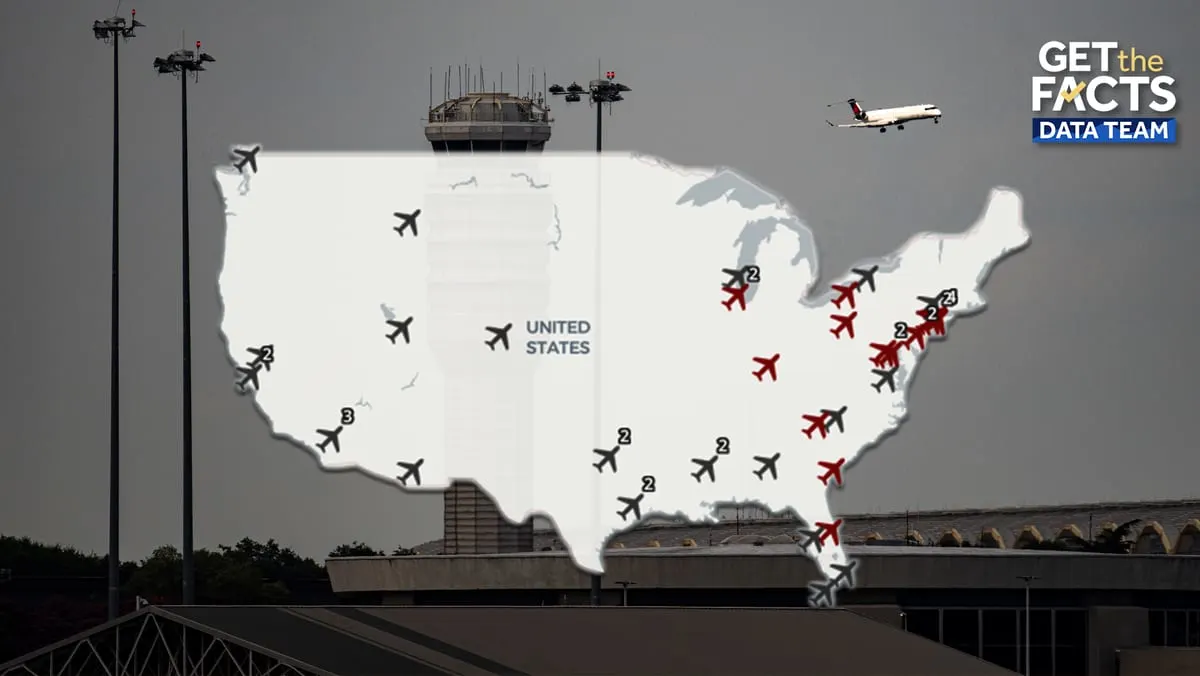
Approximately 6 near-miss incidents occur monthly at U.S. airports as 270 NTSB safety recommendations remain unaddressed by federal regulators.

NTSB Rejects FAA Safety Responses After 67-Fatality Crash
The NTSB labeled 11 FAA responses to 2025 DCA mid-air collision recommendations as unacceptable, citing the lack of a mandatory ADS-B In requirement.
EASA Orders Urgent Airbus A380 Wing Spar Inspections
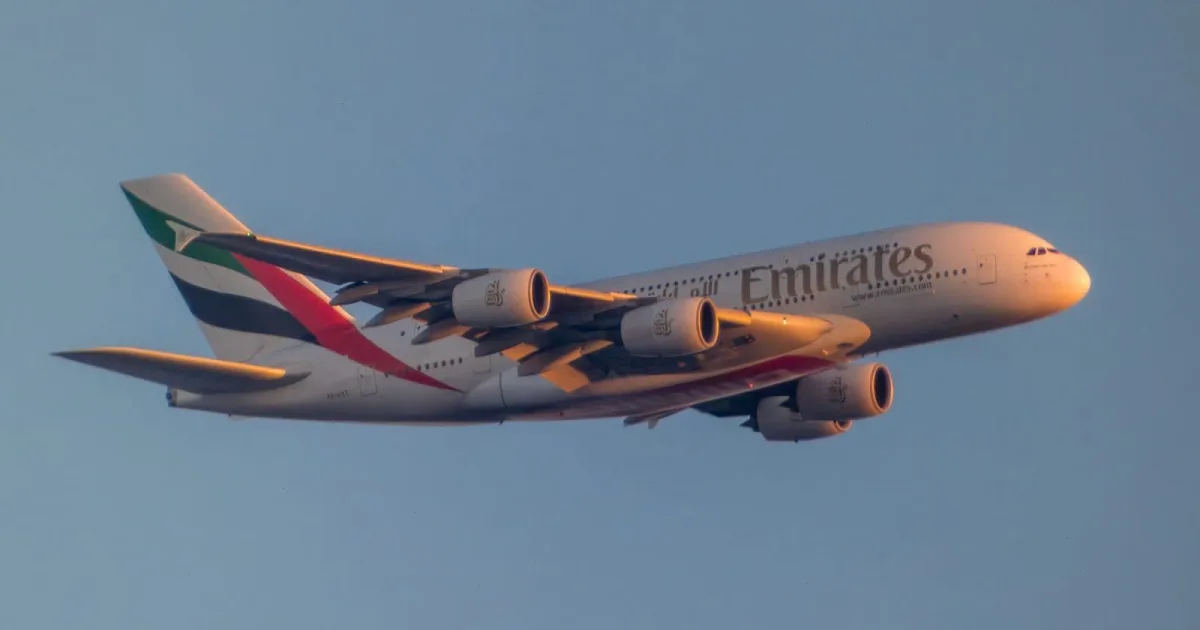
The EASA ordered urgent inspections on 16 Airbus A380s after discovering wing spar cracks that could compromise structural integrity.
Ryanair Flight RK514 Diverts to Birmingham After Emergency
Ryanair flight RK514 diverted to Birmingham Airport on September 13, 2026, following a medical emergency involving a passenger.