US Removes Sanctions on Fly Baghdad and 2 Boeing 737s

Aviation News Editor & Industry AnalystAviation News Editor & Industry Analyst delivering clear coverage for a worldwide audience.

The US Treasury removed Fly Baghdad and 2 of its Boeing 737s from the SDN sanctions list following an administrative review.
Key Takeaways
- •US Treasury removes Fly Baghdad and two Boeing 737s from the SDN list.
- •Airline was originally sanctioned in January 2024 over IRGC support claims.
- •CEO Basheer Abdulkadhim Alwan Al-Shabbani remains under active US sanctions.
- •Delisting follows an internal administrative review and behavioral changes.
The US Department of the Treasury has announced the Fly Baghdad sanctions removal as part of a recent OFAC SDN list update, unblocking the carrier's operations. This administrative decision, which does not represent a shift in broader US Treasury Iran policy, removes the Iraqi commercial airline and two of its aircraft from the Specially Designated Nationals (SDN) list. The action restores the carrier's ability to access international financial networks and lease commercial aircraft.
The Operational Relief for Iraq Express
The removal of Fly Baghdad Airlines (also known as Iraq Express) from the SDN list provides immediate operational relief for the Baghdad-based carrier. Originally sanctioned in January 2024 over allegations of providing logistical support to the Islamic Revolutionary Guard Corps (IRGC) Quds Force, the airline has faced severe constraints, including frozen assets, restricted airspace access, and an inability to procure Western aircraft parts. While the delisting allows the airline to resume standard commercial leasing and international transactions, the regulatory relief is highly targeted, leaving the airline's executive leadership under federal restrictions.
Core Facts and the Scope of the Delisting
According to official records from the Office of Foreign Assets Control (OFAC), the delisting action specifically applies to the corporate entity of Fly Baghdad and two of its Boeing 737 narrowbody aircraft, bearing registrations YI-BAF and YI-BAN. The airline was originally designated on January 22, 2024, under executive authorities targeting proliferators of weapons of mass destruction and their supporters. OFAC officials noted that the removal followed an extensive internal administrative reconsideration process and demonstrated behavioral changes by the airline.
However, the regulatory relief is not absolute. The Chief Executive Officer of Fly Baghdad, Basheer Abdulkadhim Alwan Al-Shabbani, remains on the SDN list and continues to face full US sanctions. A Treasury official, speaking on the condition of anonymity, emphasized that the decision "is not indicative of any shift in US policy toward the Government of Iran, the Islamic Revolutionary Guard Corps-Quds Force, any designated terrorist organisation, or any person who supports or acts on behalf of any of these."
This regulatory development occurs alongside broader geopolitical maneuvers in the Middle East. US Treasury Secretary Scott Bessent stated that a diplomatic understanding could be reached within days to reopen the Strait of Hormuz, a critical maritime and economic transit corridor. Concurrently, Iranian Foreign Ministry spokesperson Esmaeil Baghaei confirmed that bilateral talks between Iran and Oman have progressed toward establishing a safe commercial shipping route through the strait. Baghaei indicated that the two nations have reached an understanding on geographical coordinates and are finalising a joint statement, though he attributed the corridor's instability to US and Israeli military actions.
Historical Precedents in Aviation Sanctions
The use of targeted sanctions delisting as a regulatory lever has historical precedents in the region. In October 2017, the US government lifted long-standing economic sanctions on Sudan Airways, removing the national carrier from the OFAC SDN list after decades of isolation. That precedent resulted in a theoretical opening for the airline to modernize its fleet, though subsequent economic instability in Sudan limited the practical benefits of the delisting. For Fly Baghdad, the current situation contrasts with the Sudanese precedent because the Iraqi carrier operates in a highly competitive, privately-driven regional low-cost market, meaning the restoration of leasing capabilities could yield much faster commercial recovery.
The broader aviation industry trend shows that airlines operating in volatile geopolitical environments face high risk-premium fluctuations. Airspace closures and sanctions compliance costs have historically forced regional carriers to reroute flights, increasing fuel burn and operational overhead. A stabilized Strait of Hormuz and eased regional tensions could significantly lower crude oil prices and reduce war-risk insurance premiums for commercial operators, which would lower overall jet fuel and insurance costs across the Middle East.
The Operational Impact of SDN Delisting
From an operational perspective, being placed on the OFAC SDN list is an existential threat to a commercial airline. Because global aircraft leasing, maintenance, repair, and overhaul (MRO) networks, and financial clearinghouses heavily rely on US-dollar transactions and US-manufactured components, an SDN designation effectively grounds international operations. By removing Fly Baghdad and its two Boeing 737s from the list, OFAC has cleared the legal hurdles preventing Western lessors and maintenance providers from servicing the carrier.
However, because CEO Basheer Abdulkadhim Alwan Al-Shabbani remains sanctioned, financial institutions will likely exercise extreme caution. Compliance departments at major global banks will require strict ring-fencing of the airline's financial transactions to ensure no funds or economic resources benefit the sanctioned executive. This operational reality suggests that while Fly Baghdad can technically resume aircraft procurement and international flights, its banking relationships will remain highly complex and subject to continuous auditing.
Compliance Monitoring and Strait of Hormuz Negotiations
The immediate timeline for Fly Baghdad involves re-establishing relationships with regional civil aviation authorities and international financial institutions. The carrier is expected to begin auditing its internal compliance structures to satisfy international banking standards.
On the geopolitical front, the proposed maritime agreement between Iran and Oman regarding the Strait of Hormuz is expected to undergo technical, legal, and environmental reviews by Iranian authorities. Treasury Secretary Scott Bessent's projection of a potential breakthrough "within days" suggests that high-level diplomatic engagements will continue throughout the month. However, Iranian spokesperson Esmaeil Baghaei cautioned that a final agreement remains contingent on "certain third parties" not hindering the process, indicating that the security situation in the Gulf remains fluid.
Why Sanctions Relief Matters for Iraqi Civil Aviation
This development signals that OFAC maintains a functional administrative path for sanctions removal when behavioral changes or organizational restructurings are demonstrated. For the broader Middle Eastern aviation market, the potential reopening of the Strait of Hormuz and the de-escalation of regional tensions represent a path toward lowering war-risk insurance premiums. For passengers and regional operators, a stabilized regulatory and airspace environment will reduce flight disruptions and support the growth of low-cost transit networks across the region.
Frequently Asked Questions
- Why did the US remove Fly Baghdad from its sanctions list?
- The US Office of Foreign Assets Control removed Fly Baghdad after conducting an internal administrative reconsideration process, indicating that the decision followed behavioral changes by the airline.
- Does the sanctions removal apply to Fly Baghdad's leadership?
- No. While the airline and two of its Boeing 737 aircraft were removed from the Specially Designated Nationals list, Fly Baghdad's Chief Executive Officer, Basheer Abdulkadhim Alwan Al-Shabbani, remains under active US sanctions.
- Which aircraft were affected by the OFAC delisting?
- The delisting specifically applied to two Boeing 737 narrowbody aircraft registered under the tail numbers YI-BAF and YI-BAN.
Get breaking commercial aviation news and expert airline analysis at omniflights.com. Discover how innovation is shaping aviation through aircraft systems, avionics, and digital tools at omniflights.com/technology.
Written by Ujjwal Sukhwani
Aviation News Editor & Industry Analyst delivering clear coverage for a worldwide audience. Covers flight operations, safety regulations, and market trends with expert analysis.
Visit ProfileYou Might Also Like
Discover more aviation news based on similar topics

Flydubai Upgrading 21 Boeing 737 MAX 8s to Flat Bed Seats
Flydubai is retrofitting 21 Boeing 737 MAX 8 aircraft with lie-flat business class seats to standardize its premium product by late 2027.
Emirates Winter Booking Momentum Grows Amid Fleet Expansion
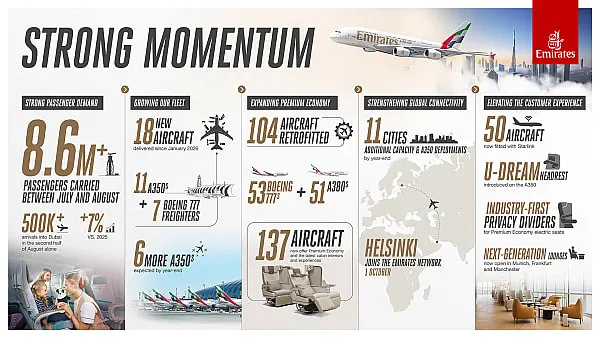
Emirates carried 8.6 million passengers this summer and enters winter with strong demand as it accelerates fleet retrofits and network growth.
Air Arabia Consortium Gains AOC for New Dammam Budget Airline
A Saudi GACA-led consortium including Air Arabia has secured an AOC to launch a new budget airline based at Dammam's King Fahd International Airport.
Turkish Airlines Exits Luanda as Angola Hub Struggles
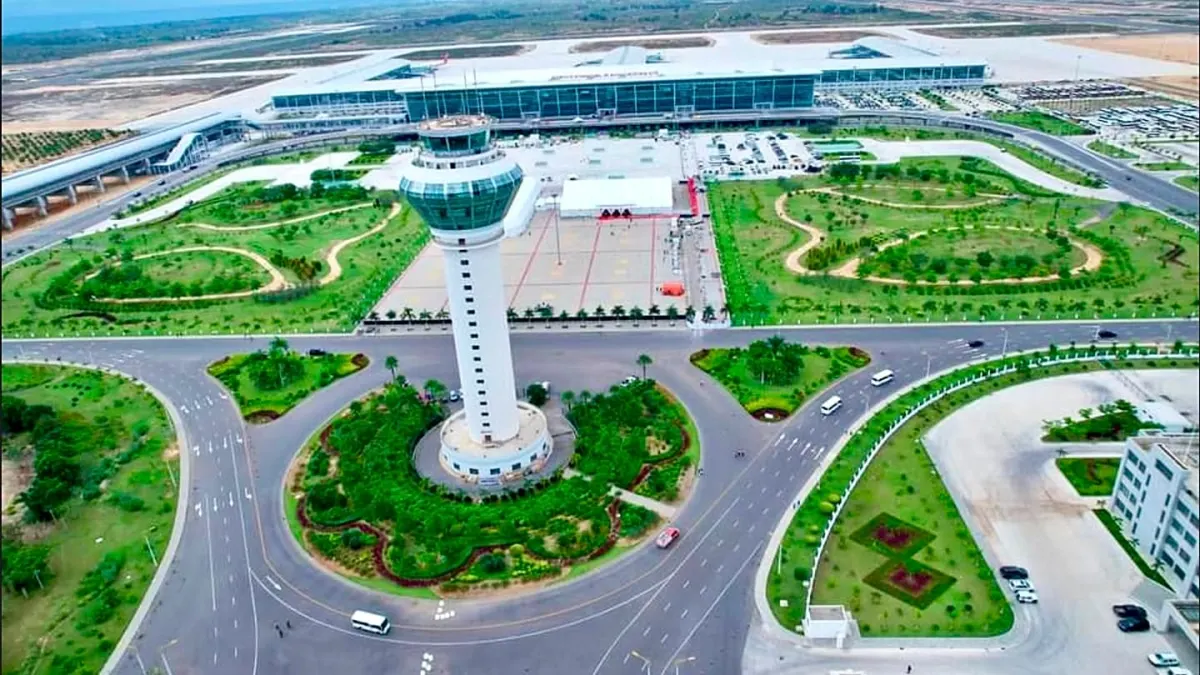
Turkish Airlines dropped its Luanda route as Angola's new airport struggles to attract traffic, handling only 756,028 passengers in 2025.

Red Sea Airlines Leases Two 737 MAX 8s for 2027 Expansion
Red Sea Airlines signed a lease for two Boeing 737 MAX 8 aircraft from SMBC Aviation Capital, arriving in 2027 to support its 14-aircraft fleet goal.

Avelo CEO Warns Airfares May Rise on Jet Fuel Price Spikes
Avelo Airlines CEO Andrew Levy warns that rising fuel costs may force fare increases as global jet fuel prices reach $171.01 per barrel.