UPS 2976 NTSB Hearing Probes Bearing Failure

Co-Founder & CEOAviation News Editor delivering trusted coverage across the global aviation industry.
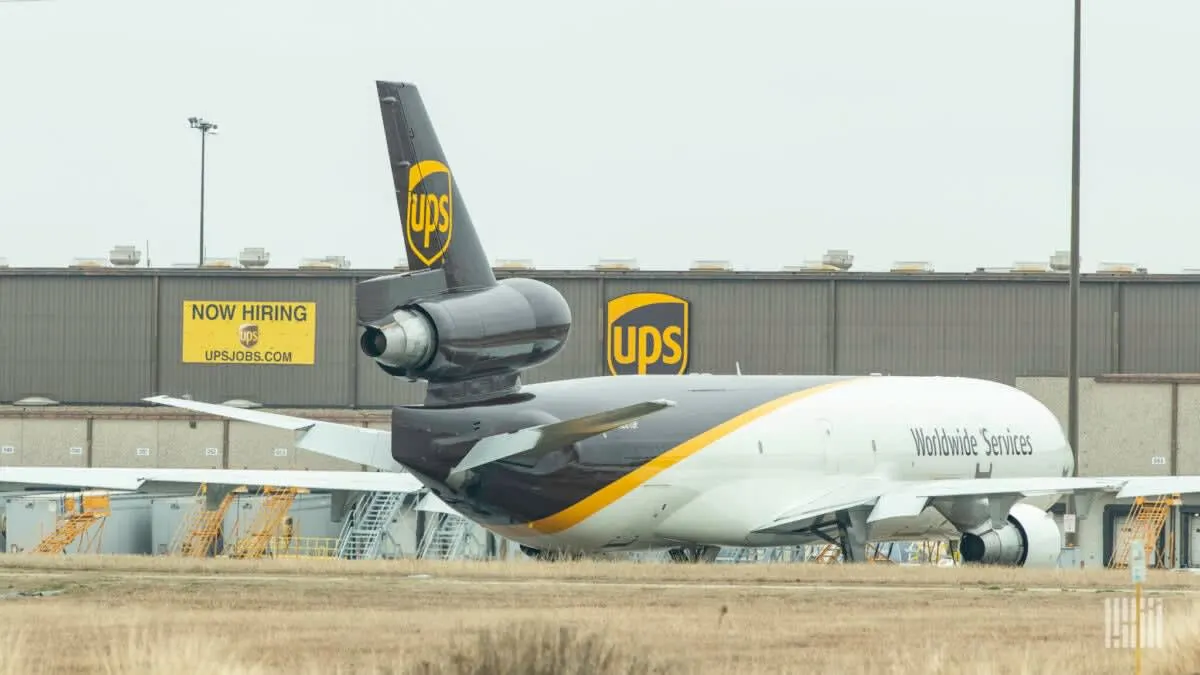
The NTSB is investigating a spherical bearing failure believed to have caused the UPS Flight 2976 crash, which resulted in 15 fatalities.
Key Takeaways
- •NTSB hearing links bearing failure to fatal UPS 2976 crash.
- •10 prior bearing failures were known before the accident.
- •UPS retired its 26 remaining MD-11Fs after the crash.
- •FAA scrutiny on maintenance reporting system intensifies.
Investigators with the National Transportation Safety Board (NTSB) are focusing on a critical maintenance issue as the likely cause of the fatal UPS Flight 2976 crash. The first day of the public hearing centered on a failed spherical bearing in the engine pylon, which is believed to have led to a catastrophic engine pylon separation on the McDonnell Douglas MD-11 freighter. The accident, which occurred in Louisville on November 4, 2025, claimed the lives of all three flight crew members and 12 people on the ground.
The investigation has revealed systemic issues that extend beyond a single component failure, raising questions about maintenance protocols, manufacturer communications, and federal oversight. According to testimony presented at the NTSB MD-11 hearing, there were 10 prior instances of similar aft pylon bearing failures on MD-11 aircraft before the Louisville cargo plane crash. Critically, only four of these incidents were formally reported to the Federal Aviation Administration (FAA) through its Service Difficulty Report (SDR) system over a 14-year period. This lack of comprehensive data prevented regulators from identifying a dangerous trend.
A Pattern of Unheeded Warnings
The NTSB's inquiry, detailed in the official investigation docket (DCA26MA024), is scrutinizing why these repeated failures did not trigger a more urgent response. NTSB Board Member John DeLeeuw offered a sharp critique of the industry's collective inaction, stating, "We had something here, we just didn't do anything about it."
The accident aircraft, a 34-year-old McDonnell Douglas MD-11 Freighter (MD-11F), experienced the structural failure at a critically low altitude, having reached only 30 to 100 feet Above Ground Level (AGL). The separation of the left engine and pylon made the aircraft uncontrollable, leading to the crash into an industrial area that also injured 23 people on the ground.
In the aftermath, the FAA issued an Emergency Airworthiness Directive (EAD), grounding the entire MD-11, MD-10, and DC-10 fleets for mandatory inspections. These inspections uncovered migrated bearing races on three of UPS's remaining 26 MD-11F aircraft, suggesting the problem was not isolated. The grounding significantly impacted cargo operators, particularly FedEx Express, the largest remaining operator of the type.
Manufacturer and Regulatory Scrutiny
Attention has also turned to The Boeing Company, which acquired McDonnell Douglas. In 2011, Boeing issued Service Bulletin MD-11-SL-54-104-A recommending visual inspections of the spherical bearing and offering a redesigned part. However, the bulletin was not mandatory and, according to UPS maintenance executive David Springer, made the flaw sound "almost benign" by not detailing the risk of catastrophic damage to the pylon lugs.
The FAA defended its lack of prior action. During the hearing, FAA official Brian Knaup explained that four SDRs over 14 years did not trigger a trend analysis, given that Boeing receives approximately 20,000 service disruption reports annually. This perspective highlights a potential flaw in how low-frequency, high-consequence events are tracked.
The investigation also involves the third-party Maintenance, Repair, and Overhaul (MRO) provider, ST Engineering, which serviced the UPS fleet and was responsible for the inspections.
A History of Pylon Failures
The circumstances of the UPS 2976 crash are hauntingly similar to past aviation disasters. The most notable is American Airlines Flight 191 in 1979, where a McDonnell Douglas DC-10 suffered a left engine and pylon separation on takeoff from Chicago O'Hare. That accident, caused by structural damage from improper maintenance procedures, led to the deaths of 273 people and a temporary grounding of the entire DC-10 fleet. The investigation resulted in a redesign of the pylon mounting structure and an overhaul of maintenance protocols.
Another relevant precedent is the 1992 crash of El Al Flight 1862, a Boeing 747 freighter that lost two engines after pylon fuse pins failed due to metal fatigue. That disaster prompted Boeing to redesign the components and the FAA to mandate their replacement via its Airworthiness Directives database.
Technical Analysis
This incident underscores a persistent vulnerability in aviation safety: the gap between manufacturer recommendations and regulatory mandates. The reliance on non-mandatory Service Bulletins for a known structural issue with catastrophic potential proved inadequate. The failure of the FAA's SDR system to flag a clear, albeit infrequent, pattern of component failure points to a systemic data analysis problem. Historically, events like American 191 and El Al 1862 have demonstrated that only after a major accident are such structural and procedural loopholes closed with mandatory directives. The UPS 2976 crash follows this tragic pattern, accelerating the retirement of the aging MD-11F fleet and forcing a re-evaluation of how maintenance issues on older aircraft are reported, analyzed, and acted upon by operators, manufacturers, and regulators alike.
What Comes Next
Following the public hearing, which is covered in the NTSB newsroom, the investigation will continue. The NTSB is expected to release its final report, including a probable cause determination, in late 2026 or early 2027. Concurrently, the FAA is expected to issue a new, mandatory Airworthiness Directive by mid-to-late 2026, which will likely require the replacement of the original spherical bearings across the remaining tri-jet fleets. For its part, UPS has already made a decisive move, permanently retiring its entire remaining fleet of 26 MD-11Fs in January 2026.
Why This Matters
The investigation into UPS Flight 2976 is more than a review of a single accident; it is a critical examination of the entire safety reporting ecosystem. Its findings will likely lead to significant changes in how maintenance data is shared and acted upon, potentially forcing mandatory action on issues previously left to manufacturer discretion. For the air cargo industry, it marks a turning point in the lifecycle of aging freighter fleets and intensifies the focus on the oversight of third-party maintenance vendors.
Frequently Asked Questions
- What caused the crash of UPS Flight 2976?
- The NTSB investigation is focused on the failure of a spherical bearing in the aft pylon of the left engine. This failure is believed to have caused the engine and pylon to separate from the MD-11F aircraft shortly after takeoff, leading to a loss of control.
- Were there any warnings about the MD-11 engine pylon issue before the crash?
- Yes, NTSB testimony revealed there were 10 prior instances of similar pylon bearing failures on other aircraft. However, only four of these were formally reported to the FAA, and a 2011 Boeing service bulletin recommending inspections was not mandatory.
- What was the immediate regulatory response to the UPS 2976 accident?
- Following the crash in November 2025, the Federal Aviation Administration (FAA) issued an Emergency Airworthiness Directive. This order immediately grounded all MD-11, MD-10, and DC-10 fleets until mandatory pylon inspections could be completed.
Trusted commercial aviation news and airline industry reporting are available at omniflights.com. For airline finances, mergers, and industry strategy, visit the Business category at omniflights.com/business.
Written by Hardik Vishwakarma
Co-Founder & Aviation News Editor leading initiatives that improve trust and visibility across the global aviation industry. Covers airlines, airports, safety, and emerging technology.
Visit ProfileYou Might Also Like
Discover more aviation news based on similar topics
Flydubai FZ1073 Hijacker Flagged as Security Risk by Oman
A Flydubai co-pilot accused of attempting to crash flight FZ1073 had been previously barred from flying in Oman due to extremist concerns.
FAA Clears Boeing 737 MAX Software Issue, Resumes MAX 10
The FAA cleared a Boeing 737 MAX software issue after a safety review, allowing the 737 MAX 10 certification process to resume immediately.
Flydubai Flight 1073 Hijacking Attempt Over Jordan
A Flydubai Flight 1073 co-pilot attacked the captain mid-flight on September 30, 2026, forcing passengers to intervene and stabilize the aircraft.

Families Demand DCA Midair Collision Safety Reforms
Families of 67 victims from the 2025 DCA midair collision are pressing Congress for mandatory ADS-B In technology to prevent future aviation tragedies.
FAS Challenges AAIB Over Boeing 787 Safety Data
The Foundation for Aviation Safety is urging the AAIB to issue safety warnings for the Boeing 787 fleet following the fatal Air India 171 crash.
NTSB Safety Recommendations Lag Amid 6 Monthly Near-Misses
Approximately 6 near-miss incidents occur monthly at U.S. airports as 270 NTSB safety recommendations remain unaddressed by federal regulators.