TSB Investigates Cessna 172 Flight School Crash at Pitt Meadows Airport

Co-Founder & CEOAviation News Editor delivering trusted coverage across the global aviation industry.
The TSB has dispatched investigators to a Cessna 172 crash at Pitt Meadows Airport that injured a pilot during a training flight on Monday, March 30.
Key Takeaways
- •Dispatched an investigation team to Pitt Meadows Airport (YPK) following a training flight crash.
- •Involved a Cessna 172N aircraft operated by a local flight school on March 30, 2026.
- •Resulted in non-life-threatening injuries to the pilot, the sole occupant.
- •Focuses on flight training safety protocols at a high-traffic general aviation facility.
The Transportation Safety Board of Canada (TSB) has launched an investigation into an accident involving a Cessna 172N aircraft at Pitt Meadows Regional Airport (YPK) on Monday, March 30, 2026. The aircraft, operated by a local flight school, crashed while conducting training circuits at the general aviation facility located east of Vancouver. The pilot, who was the sole occupant, sustained non-life-threatening injuries.
The incident places a focus on general aviation and flight training safety protocols at one of British Columbia's busiest regional airports. According to Statistics Canada, Pitt Meadows Regional Airport recorded more than 10,000 aircraft movements in January 2026, a volume largely driven by flight schools and private operators. The investigation by the TSB, an independent federal agency, will seek to determine the sequence of events and contributing factors to advance transportation safety, without assigning fault or liability.
Incident Details and Response
Emergency crews were dispatched to the airport following the crash. Brian Twaites, a paramedic public information officer for British Columbia Emergency Health Services (BCEHS), confirmed the medical response. "Paramedics provided emergency medical care to one patient who was transported in serious, but stable condition to hospital," Twaites stated. The aircraft came to a rest at the end of the outer runway, Runway 26 Right.
Guy Miller, the CAO and general manager for Pitt Meadows Regional Airport, confirmed details about the operation. He noted that the aircraft was owned by a flight school and emphasized that "there was no threat to public safety." The crash resulted in the temporary closure of Runway 26 Right to allow TSB investigators access to the site and to facilitate wreckage removal. The aircraft was operating under the control of Nav Canada at the time of the incident.
Stakeholder and Operational Impact
The accident has direct consequences for several key stakeholders. The flight school involved may face a temporary grounding of its Cessna 172N aircraft pending internal and regulatory reviews. For airport operations at YPK, the temporary closure of a primary runway required rerouting of air traffic, impacting the high volume of training and private flights. The most significant impact was on airport operations, rated as high severity due to the runway closure. Nav Canada's involvement is considered low severity, but its air traffic control audio and radar data will be a critical part of the TSB's review to analyze the instructions and sequencing provided to the pilot prior to the crash.
Cessna 172N vs Piper PA-28-161
The Cessna 172 is one of the most common flight training aircraft in the world. Its operational characteristics are often compared to other popular trainers like the Piper PA-28 series. The specific model involved was a Cessna 172N.
| Metric | Cessna 172N | Piper PA-28-161 Warrior II |
|---|---|---|
| Capacity | 4 seats | 4 seats |
| Engine | Lycoming O-320-H2AD (160 hp) | Lycoming O-320-D3G (160 hp) |
| Cruise Speed | 122 ktas | 127 ktas |
What Comes Next
The Transportation Safety Board of Canada team on site will gather information, document the wreckage, and interview the pilot and any witnesses. The investigation will also include a review of aircraft maintenance records, pilot training history, and air traffic control communications. Based on standard TSB timelines, the release of an initial investigation assessment is expected in the second quarter of 2026. This initial report will provide a summary of the facts but will not contain a full analysis or final conclusions, which will be published in a final report at a later date.
Why This Matters
This investigation highlights the inherent risks in flight training and the importance of robust safety management systems at busy general aviation airports. The findings from the TSB investigation could influence flight training procedures, air traffic control protocols for training circuits, and emergency response plans at regional airports across Canada. For the broader aviation community, it serves as a critical reminder of the continuous need for vigilance in pilot training and airport operations.
Access up-to-date commercial aviation news and airline industry developments via omniflights.com. Track policy changes, airspace rules, and global aviation governance in the Regulatory category at omniflights.com/regulatory.

Written by Hardik Vishwakarma
Co-Founder & Aviation News Editor leading initiatives that improve trust and visibility across the global aviation industry. Covers airlines, airports, safety, and emerging technology.
Visit ProfileYou Might Also Like
Discover more aviation news based on similar topics

Flydubai FZ1073: Co-pilot Used Axe in Hijacking Attempt
A co-pilot on Flydubai Flight FZ1073 attacked the captain with a crash axe, triggering an attempted hijacking investigation by the UAE authorities.

FlyDubai FZ1073 Co-Pilot Had Prior Extremism Concerns
FlyDubai flight FZ1073 co-pilot Hamam Al-Hammami, who attacked his captain with an ax, was previously barred from Oman Air for extremist views.

Flydubai FZ1073: Pilot Attempted Terrorist Act, UAE Says
Flydubai flight FZ1073 was targeted in an attempted terrorist act by co-pilot Hamam al-Hammami, who was subdued by the captain during the flight.
Flydubai FZ1073 Cockpit Attack: Inside the Terror Attempt
Flydubai flight FZ1073 diverted to Tabuk after co-pilot Hamam al-Hammami attacked Captain Smit Machchhar in a confirmed terrorist act.
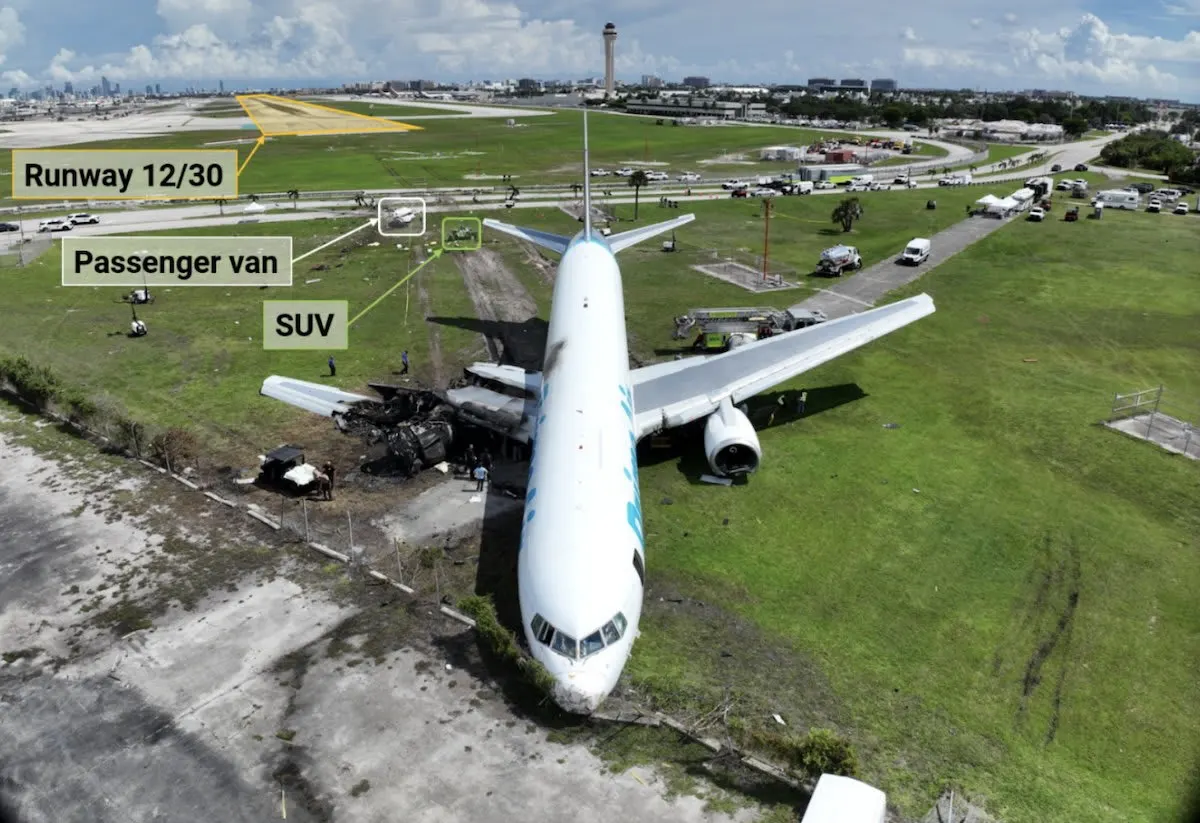
21 Air 767 Crash: NTSB Report Details Fatal MIA Overrun
The NTSB preliminary report on the 21 Air 767 crash at Miami International Airport confirms five ground fatalities following a late, high-speed landing.
Flydubai FZ1073 Hijacker Flagged as Security Risk by Oman
A Flydubai co-pilot accused of attempting to crash flight FZ1073 had been previously barred from flying in Oman due to extremist concerns.