TSA Staffing Shortages Worsen Airport Delays Amid 2026 DHS Shutdown

Co-Founder & CEOAviation News Editor delivering trusted coverage across the global aviation industry.
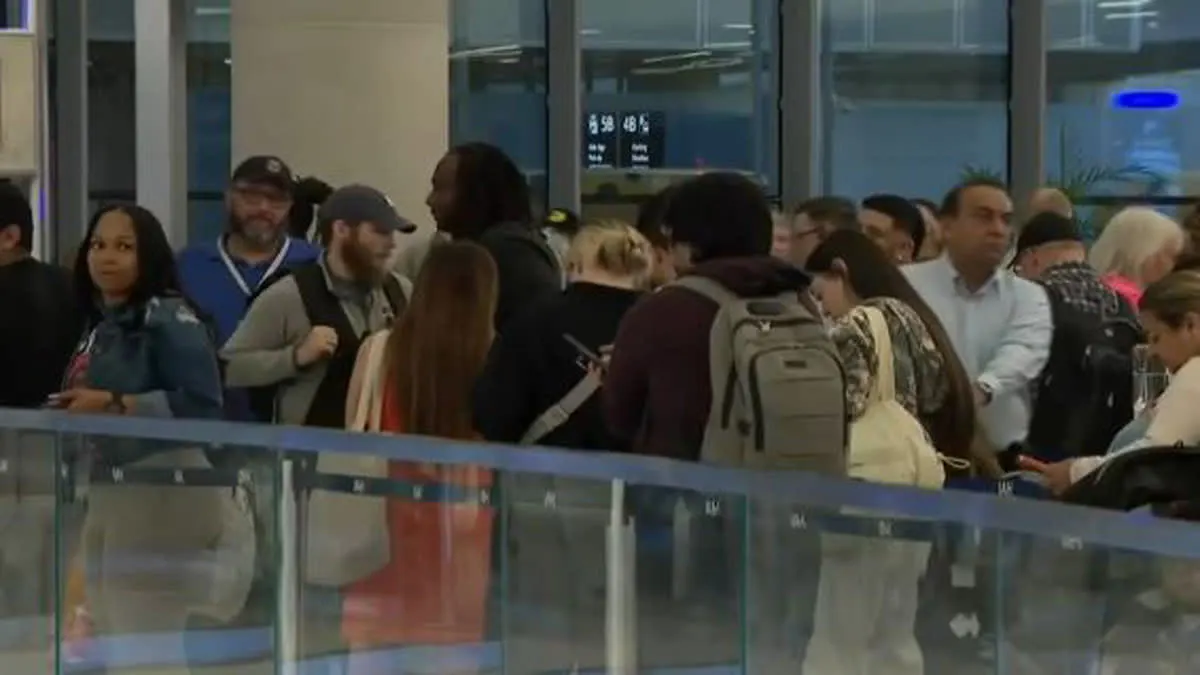
A DHS funding lapse leaves 50,000 TSA officers unpaid, causing severe airport delays nationwide as staff absenteeism and resignations surge.
Key Takeaways
- •Impacts 50,000 unpaid TSA officers, leading to a 10% national absentee rate.
- •Causes severe airport delays with wait times reaching 90 minutes in Atlanta.
- •Triggers 376 TSA officer resignations since the shutdown began on Feb. 14.
- •Prompts a proposal to deploy ICE agents for airport security duties.
A partial U.S. government shutdown is causing significant disruptions to air travel as thousands of federal airport screeners work without pay. The funding lapse for the Department of Homeland Security (DHS), which began on February 14, 2026, has left approximately 50,000 Transportation Security Administration (TSA) officers without a paycheck, leading to critical staffing shortages and long security lines at major airports.
The operational impact is becoming increasingly severe. According to DHS, the national absentee rate for TSA officers reached 10% last week, with some airports experiencing rates two to three times higher. This has forced the closure of security checkpoints and created unpredictable, cascading delays. At Hartsfield-Jackson Atlanta International Airport (ATL), one of the world's busiest, wait times spiked to 90 minutes on Saturday morning. Passengers at hubs like Dallas Fort Worth International Airport (DFW) report arriving up to four hours early to ensure they make their flights.
Operational Strain and Staffing Crisis
The financial strain on unpaid federal workers is exacerbating an already challenging staffing environment at the TSA. The agency has historically struggled with high attrition and low morale. Since the current shutdown began, at least 376 officers have quit, according to official figures. This loss of personnel compounds the daily challenge of unscheduled absences, straining the remaining workforce and compromising checkpoint efficiency.
The shutdown stems from a political impasse over DHS funding. Democrats have blocked a funding bill while demanding changes to federal immigration enforcement policies following the shooting deaths of Alex Pretti and Renee Good in Minneapolis. Republicans, in turn, have rejected motions to fund the TSA separately, insisting on a comprehensive funding package for the entire department.
The situation has drawn a response from the White House. President Donald Trump has stated he will order Immigration and Customs Enforcement (ICE) agents to assume a role in airport security if the funding dispute is not resolved. In a statement, the president said ICE agents would begin arresting “all Illegal Immigrants” at airports, with a focus on travelers from Somalia. “I look forward to moving ICE in on Monday, and have already told them to, ‘GET READY,’” Trump wrote.
For passengers and unpaid federal workers, the political maneuvering offers little relief. “Issue No. 1 should be paying the people who need to get paid and keeping our air travel system secure,” said Christian Childress, a private flight attendant interviewed in Atlanta. TSA officers have now endured 36 days without pay in the current shutdown, adding to the 47 days of delayed paychecks over the past year due to previous funding disputes.
Historical Parallels and Systemic Risk
This is not the first time a government shutdown has crippled the U.S. aviation system. The current crisis mirrors the 35-day shutdown of 2018-2019, where a surge in sick calls from unpaid TSA officers and air traffic controllers led to major flight delays and cancellations. That precedent suggests that operational disruptions caused by worker absenteeism are a powerful catalyst for political resolution. The pressure created by the failing system ultimately forced lawmakers to pass a temporary funding bill.
However, the current situation also highlights a deeper, more persistent vulnerability. The reliance on a federal workforce with historically low pay and morale makes the nation's aviation security apparatus susceptible to political shocks. The ongoing attrition and high absentee rates are not merely temporary inconveniences but indicators of a systemic weakness that could have long-term consequences for security and efficiency.
What Comes Next
The immediate future of airport security remains uncertain. President Trump has set a deadline of Monday, March 23, 2026, for the potential deployment of ICE agents to airports, a move that would fundamentally alter security protocols. It is unclear how ICE agents, who are not trained in passenger and baggage screening, would be integrated into checkpoint operations.
In Congress, the Senate is expected to consider alternative funding measures in late March, although a clear path to a compromise has not yet emerged. Until a legislative solution is reached, airports, airlines, and passengers should anticipate continued unpredictability, staffing shortages, and the potential for significant delays across the national air travel network.
Why This Matters
The ongoing shutdown demonstrates the critical link between federal appropriations and the stability of the national aviation infrastructure. For airlines and airports, the operational chaos translates into financial losses and reputational damage. For passengers, it means uncertainty and significant travel disruptions. More broadly, the crisis underscores how political disputes can directly compromise essential government services, creating tangible risks for national security and economic activity.
omniflights.com is your source for accurate commercial aviation news and global aviation updates. For reporting on UAP sightings, investigations, and aviation-related encounters, see the UAPs section at omniflights.com/uaps.
Written by Hardik Vishwakarma
Co-Founder & Aviation News Editor leading initiatives that improve trust and visibility across the global aviation industry. Covers airlines, airports, safety, and emerging technology.
Visit ProfileYou Might Also Like
Discover more aviation news based on similar topics

FAA Faces $3.5 Billion Shortfall in ATC Modernization
FAA Administrator Bryan Bedford reported a $3.5 billion shortfall for the Brand New Air Traffic Control System, totaling $16 billion for Phase One.
FAA Pauses Flights into LAX Due to Staffing Shortages
The FAA issued a temporary ground stop for flights bound for LAX on Monday morning due to staffing shortages at the Southern California TRACON.

FAA Proposes Ending Overland Supersonic Flight Ban
The FAA has proposed a new performance-based noise standard to replace the 1973 ban on overland supersonic flight, enabling future commercial travel.

DOT Rule Exempts Airlines From Cyberattack Delay Costs
Starting October 19, 2026, the DOT will allow airlines to withhold meal and hotel vouchers for delays caused by cyberattacks and nine other events.

Wizz Air, Ryanair Demand NATS Reform After ATC Failure
Wizz Air and Ryanair are calling for urgent NATS reform after a September 8 system failure caused over 1,000 flight cancellations across the UK.
US Treasury Iran Sanctions Target 27 Airlines, Mahan Air
The U.S. Treasury sanctioned 36 entities, including 27 Iranian airlines, to disrupt illicit procurement networks used by the Iranian government.