Teruel Airport Becomes Hub for Aircraft Grounded by Gulf Conflict

Co-Founder & CEOAviation News Editor delivering trusted coverage across the global aviation industry.

Qatar Airways has relocated approximately 20 wide-body jets to Spain's Teruel Airport due to airspace closures from escalating conflict in the Gulf.
Key Takeaways
- •Relocated approximately 20 wide-body jets, including A380s and 787s, to Teruel, Spain.
- •Utilizes Teruel Airport's 250-aircraft capacity due to Gulf region airspace closures.
- •Highlights a growing trend of using specialized MRO hubs as strategic havens during crises.
- •Mirrors actions from the COVID-19 pandemic when the airport stored 140 aircraft.
Escalating geopolitical conflict in the Gulf region has forced major carriers to enact immediate and significant strategic fleet adjustments. Qatar Airways has relocated approximately 20 wide-body aircraft to Teruel Airport (TEV) in Spain, establishing the facility as a critical safe haven amid widespread airspace closures. The move underscores the growing importance of specialized industrial airports for preserving high-value assets during periods of global instability.
The relocation involves a mix of the airline's long-haul fleet, including Airbus A380s, A350s, and Boeing 787s. These aircraft were ferried to Teruel throughout late March 2026 as routes over the Middle East became untenable. For stakeholders like Qatar Airways, the decision forces a reduction in network capacity and incurs substantial costs associated with storage and eventual reactivation. Conversely, for the airport's primary operator, Tarmac Aerosave, the influx represents a surge in demand for its Maintenance, Repair, and Overhaul (MRO) and long-term storage services. Passengers are also directly impacted, facing flight cancellations and significant reroutings as carriers are forced to ground portions of their fleets.
Teruel's Strategic Advantage
Teruel Airport, also known as Plataforma Aeroportuaria-Teruel (PLATA), is uniquely positioned to handle such large-scale storage demands. Certified by the Agencia Estatal de Seguridad Aérea (AESA), Spain's aviation safety agency, it operates primarily as an industrial hub rather than a passenger airport. This focus allows for uncongested, large-scale aircraft parking and heavy maintenance without the logistical constraints of commercial traffic.
According to official data from the airport, the facility spans 550 hectares and has a long-term storage capacity for at least 250 aircraft. Its dry climate is ideal for preserving aircraft structures and systems, mitigating corrosion and environmental damage during deep storage. Tarmac Aerosave has recently expanded its capabilities at the site, investing in a €15 million hangar capable of fully enclosing a single Airbus A380 or four A320-family jets, further enhancing its MRO offerings.
Alejandro Ibrahim, General Manager of Teruel Airport, commented on the situation, stating that companies are actively revising fleets and routes to find safer parking, positioning Europe and Teruel specifically as a "refuge" for global air transport. A spokesperson for Qatar Airways confirmed the move, describing it as a temporary measure in response to "exceptional regional circumstances" and affirming that the aircraft will be returned to service once flight operations can safely normalize.
A Proven Haven for Grounded Fleets
This is not the first time Teruel has served as a critical overflow facility for the global airline industry. During the COVID-19 pandemic, which saw thousands of aircraft grounded worldwide, Teruel Airport hosted approximately 140 aircraft. That event solidified its reputation and accelerated its expansion as Europe's premier aircraft boneyard and preservation center. The current situation mirrors the logistical challenges of the pandemic, reinforcing the industry trend of relying on specialized MRO hubs as strategic assets.
The precedent set by other geopolitical events, such as the closure of Russian airspace in February 2022, also highlights this dynamic. That closure forced airlines to reroute Euro-Asian flights, rendering certain wide-body aircraft economically unviable on the longer, less efficient routes and leading to their grounding. These historical events demonstrate a clear pattern: sudden airspace restrictions compel immediate and costly fleet management decisions by international carriers.
A380 vs 787: Relocated Wide-body Specifications
| Metric | Airbus A380-800 | Boeing 787-9 |
|---|---|---|
| Typical Seating Capacity | 525 (3-class) | 290 (2-class) |
| Maximum Range | 15,200 km | 14,010 km |
| Length | 72.72 m | 63.0 m |
What Comes Next
The timeline for returning the stored Qatar Airways fleet to active service remains uncertain. According to the airline and civil aviation authorities, any reactivation is entirely dependent on the de-escalation of conflict in the Gulf and the subsequent reopening of critical airspace. Until then, the aircraft will remain in a state of preservation at Teruel, undergoing regular maintenance cycles managed by Tarmac Aerosave to ensure they are ready for a swift return to service when conditions permit.
Why This Matters
The mass relocation of a modern wide-body fleet to a storage facility highlights the profound impact of geopolitical instability on airline network operations. It demonstrates a critical shift in strategic fleet management, where specialized industrial airports like Teruel are no longer just for end-of-life aircraft but are essential infrastructure for preserving active, high-value assets during crises. This trend suggests that resilience for global airlines now depends as much on access to secure parking and MRO facilities as it does on fuel hedging or route planning.
Stay ahead of the airline industry with commercial aviation news from omniflights.com. Get the latest updates on major hubs, regional terminals, and airport operations via the Airports section at omniflights.com/airports.
Written by Hardik Vishwakarma
Co-Founder & Aviation News Editor leading initiatives that improve trust and visibility across the global aviation industry. Covers airlines, airports, safety, and emerging technology.
Visit ProfileYou Might Also Like
Discover more aviation news based on similar topics
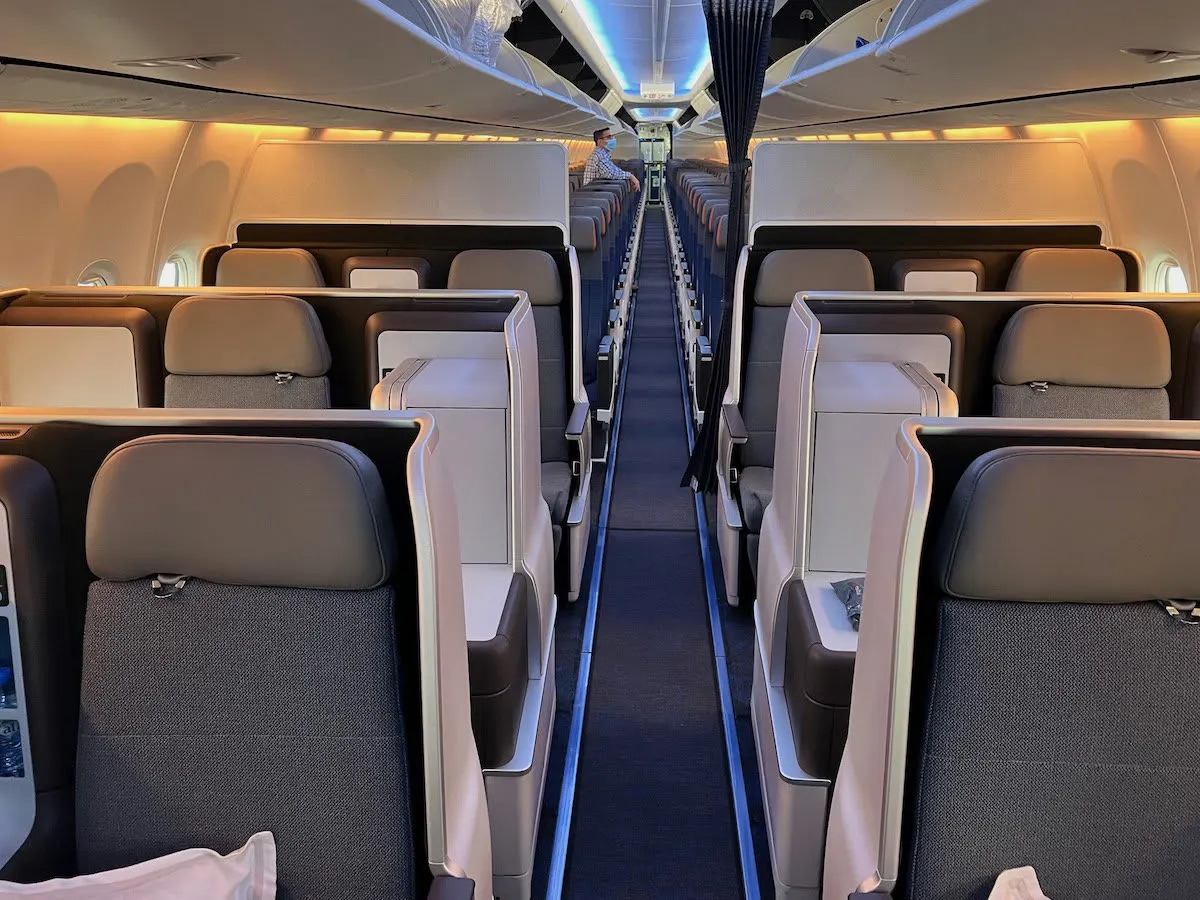
Flydubai Upgrading 21 Boeing 737 MAX 8s to Flat Bed Seats
Flydubai is retrofitting 21 Boeing 737 MAX 8 aircraft with lie-flat business class seats to standardize its premium product by late 2027.
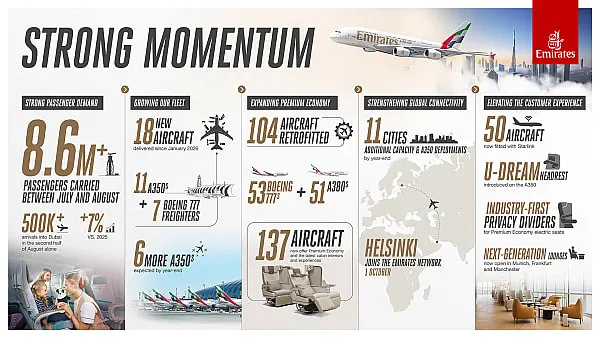
Emirates Winter Booking Momentum Grows Amid Fleet Expansion
Emirates carried 8.6 million passengers this summer and enters winter with strong demand as it accelerates fleet retrofits and network growth.
Air Arabia Consortium Gains AOC for New Dammam Budget Airline
A Saudi GACA-led consortium including Air Arabia has secured an AOC to launch a new budget airline based at Dammam's King Fahd International Airport.
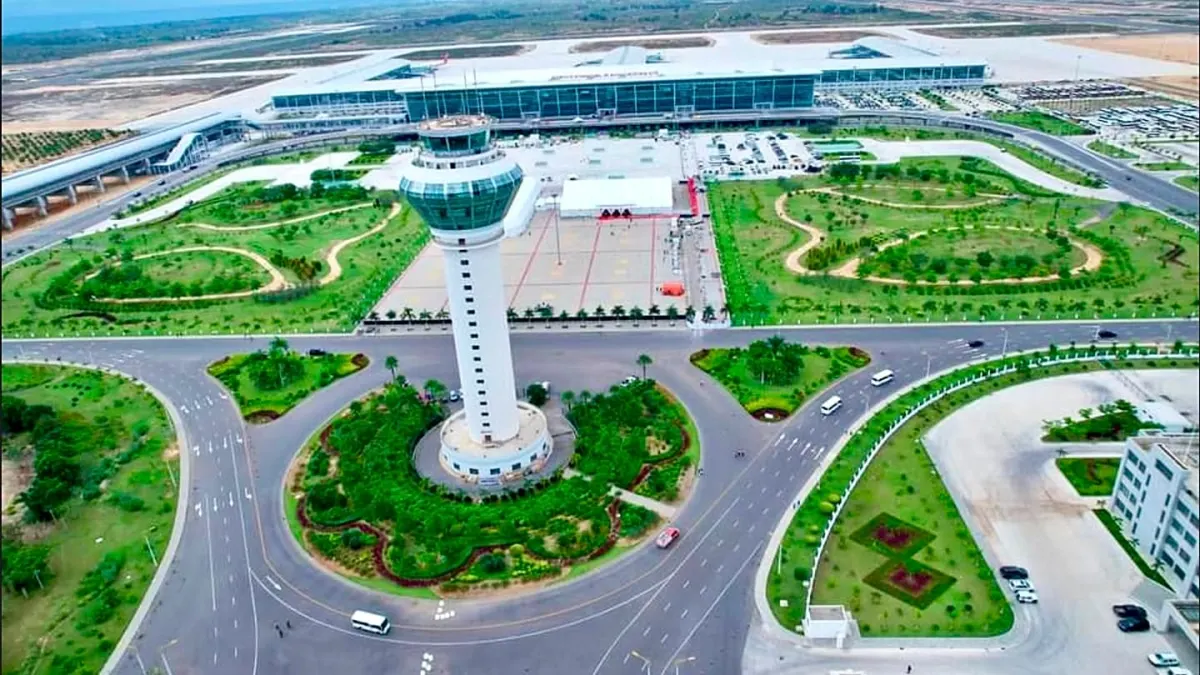
Turkish Airlines Exits Luanda as Angola Hub Struggles
Turkish Airlines dropped its Luanda route as Angola's new airport struggles to attract traffic, handling only 756,028 passengers in 2025.

Red Sea Airlines Leases Two 737 MAX 8s for 2027 Expansion
Red Sea Airlines signed a lease for two Boeing 737 MAX 8 aircraft from SMBC Aviation Capital, arriving in 2027 to support its 14-aircraft fleet goal.
Avelo CEO Warns Airfares May Rise on Jet Fuel Price Spikes
Avelo Airlines CEO Andrew Levy warns that rising fuel costs may force fare increases as global jet fuel prices reach $171.01 per barrel.