Qantas A350-1000ULR Completes Maiden Test Flight

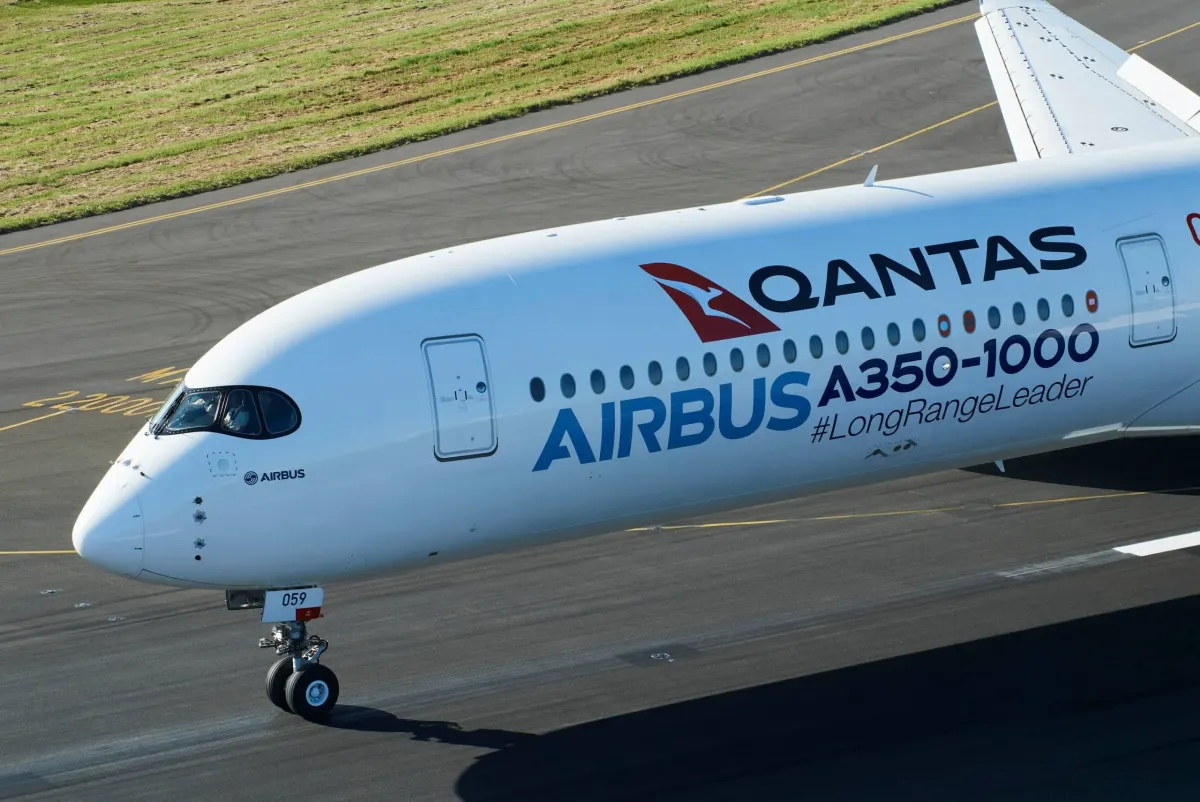
The first Qantas A350-1000ULR has completed its maiden test flight, marking a key milestone for the airline's 22-hour Project Sunrise nonstop routes.
Key Takeaways
- •Qantas A350-1000ULR completed its maiden test flight in June 2026.
- •The aircraft features a 20,000-litre Rear Centre Tank for 9,700 nm range.
- •Qantas will limit seating to 238 passengers to optimize range and yield.
- •First aircraft delivery is confirmed for April 2027 following supply delays.
Maiden Flight Success for Project Sunrise
Qantas has reached a critical milestone in its Project Sunrise initiative, with the first custom-built Airbus A350-1000ULR (Ultra Long Range) successfully completing its maiden test flight. The aircraft departed from Toulouse and conducted a series of systems evaluations over a flight duration of exactly 3 hours and 43 minutes. This flight serves as the formal initiation of a two-month certification campaign overseen by the EASA (European Union Aviation Safety Agency), which is focused on validating the aircraft's modified fuel architecture and safety systems before commercial service begins.
Technical Specifications and Range
The A350-1000ULR is engineered to facilitate ultra long haul flights, including the highly anticipated Sydney to London nonstop service. To achieve this, the aircraft features an additional 20,000-litre Rear Centre Tank (RCT), which extends the maximum range to approximately 9,700 nautical miles. This represents an increase of about 1,000 nm over the standard A350-1000 variant. The structural modifications have resulted in a Maximum Take-Off Weight (MTOW) of 322 tonnes. According to Airbus official specifications, these enhancements are essential for maintaining the endurance required for 22-hour continuous operations.
Cabin Design and Operational Strategy
To ensure economic viability on these routes, Qantas has opted for a premium-heavy configuration. The aircraft will be limited to 238 seats across four classes, allowing for a dedicated 'Wellbeing Zone' and specialized circadian lighting systems designed to mitigate the physiological impacts of long-duration travel. By dedicating over 40% of the cabin to premium seating, the airline aims to maximize yield per flight, offsetting the inherent fuel consumption penalties associated with carrying the massive fuel load necessary for such distances. Detailed information on these configurations is available via the Qantas Project Sunrise official portal.
Regulatory and Labor Considerations
Operationalizing 22-hour flights requires strict adherence to a Fatigue Risk Management System (FRMS). The CASA (Civil Aviation Safety Authority) is currently scrutinizing Qantas' proposed duty rosters, which exceed standard 18-to-20 hour limits. The AIPA (Australian and International Pilots Association) continues to engage with the airline regarding the safety implications of these unprecedented duty periods. Regulatory compliance is further supported by the EASA Type Certificate Data Sheet, which outlines the specific certification requirements for the A350 series.
A350-1000ULR vs Standard A350-1000: Key Specifications
| Metric | A350-1000ULR | Standard A350-1000 |
|---|---|---|
| Maximum Range | 9,700 nm | 8,700 nm |
| Fuel Capacity | +20,000L (RCT) | Standard 156,000L |
| Typical Seating | 238 seats | 350+ seats |
| MTOW | 322 tonnes | 319 tonnes |
The Evolution of Ultra-Long-Haul
Project Sunrise represents the latest evolution in point-to-point aviation, following historical precedents like the Qantas 'Double Sunrise' Catalina flights of the 1940s and the modern success of Singapore Airlines' long-haul operations. This development signifies a broader industry shift toward bypassing traditional mega-hubs in favor of direct connectivity. While the model offers significant time savings for passengers, the operational complexity remains high. The reliance on the Rolls-Royce Trent XWB-97 engine program ensures that the aircraft can maintain peak performance over 22-hour duty cycles. As the industry moves toward these extreme ranges, the success of the A350-1000ULR will likely serve as a benchmark for future widebody utilization and cabin design standards.
Delivery and Launch Timeline
Following the completion of the flight test certification, which is expected by August 2026, the project will move into final interior fit-outs and pilot training. While original projections targeted a 2026 entry into service, supply chain challenges have shifted the first delivery of the A350-1000ULR to April 2027. Qantas anticipates the inaugural commercial Project Sunrise flight to commence in mid-to-late 2027, pending final regulatory approvals.
Why This Matters for Global Aviation
For the aviation industry, the success of Project Sunrise signals a fundamental change in how airlines approach long-haul network planning. By proving the viability of 22-hour nonstop flights, Qantas is challenging existing limitations on crew duty and aircraft endurance. This shift positions the A350-1000ULR as a critical asset for high-yield market segments where passengers prioritize time-efficiency over transit-based travel alternatives.
Frequently Asked Questions
- What is the maximum range of the Qantas A350-1000ULR?
- The Airbus A350-1000ULR is capable of reaching a maximum range of approximately 9,700 nautical miles, which is about 1,000 nautical miles further than the standard A350-1000 variant.
- Why is the A350-1000ULR cabin configured for only 238 seats?
- The aircraft is limited to 238 seats to save weight for the massive fuel load required for 22-hour flights and to prioritize high-yield premium seating, which ensures the economic viability of ultra-long-haul routes.
Get breaking commercial aviation news and expert airline analysis at omniflights.com. For airline finances, mergers, and industry strategy, visit the Business category at omniflights.com/business.

Written by Hardik Vishwakarma
Co-Founder & Aviation News Editor leading initiatives that improve trust and visibility across the global aviation industry. Covers airlines, airports, safety, and emerging technology.
Visit ProfileYou Might Also Like

Southwest Reports Record Q3 Revenue Amid Transformation
American Airlines Reports Record Q3 Revenue Amid Fuel Costs
American Airlines Projects 2026 Loss on Rising Fuel Costs
American Airlines to Nearly Triple Premium 787-9 Fleet

Airline Shares Rise Following United Revenue Guidance