Philippine Airlines Orders 18 Engines for A350-1000 Fleet

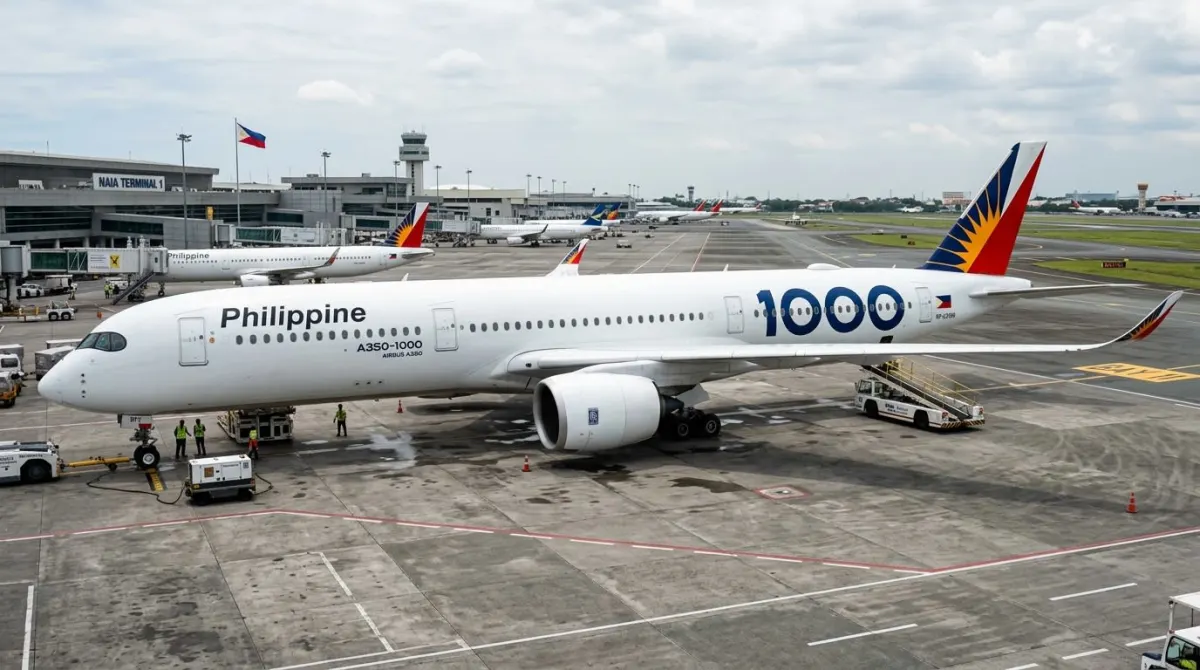
PAL signed an agreement for 18 Rolls-Royce Trent XWB-97 engines to power nine additional Airbus A350-1000 widebody aircraft.
Key Takeaways
- •Philippine Airlines signs MoU for 18 Rolls-Royce Trent XWB-97 engines.
- •New engines will power nine additional Airbus A350-1000 widebody jets.
- •TotalCare service contract provides PAL with predictive maintenance.
- •Deliveries of the second batch of nine aircraft are expected by 2036.
The Philippine Airlines A350-1000 order expansion has advanced with a new commitment for Rolls-Royce Trent XWB-97 engines to support PAL long-haul fleet modernization efforts. The carrier signed a Memorandum of Understanding (MoU) with Rolls-Royce at the Farnborough Airshow 2026 for 18 Trent XWB-97 engines to power nine additional Airbus A350-1000 widebody aircraft. This deal, backed by a comprehensive Rolls-Royce TotalCare contract, effectively doubles the airline's commitment to the platform.
This fleet expansion represents a significant capacity push for the Philippine flag carrier as it targets high-demand transpacific routes and European destinations. By securing these high-thrust powerplants, the airline guarantees operational continuity and fuel-efficiency gains over its older widebody aircraft. The integration of the long-term service agreement also shifts the financial and operational risks of engine maintenance directly back to the manufacturer, ensuring predictable operating costs during a period of volatile global supply chains.
Core Agreement Details and Fleet Backlog
Under the terms of the preliminary agreement, PAL (Philippine Airlines) will acquire 18 of the high-thrust turbofans to power its incoming widebody fleet. According to Rolls-Royce's engine announcement, the agreement incorporates the TotalCare service package, which provides PAL with state-of-the-art engine health monitoring, predictive maintenance capabilities, and transferred time-on-wing risk.
The engines will power nine newly ordered A350-1000 (Airbus A350-1000) aircraft, as detailed in Airbus's fleet expansion announcement. This brings the carrier's total backlog for the largest A350 variant to 18 aircraft.
Lucio Tan III (Lucio C. Tan III), President and Chief Operating Officer of PAL Holdings, stated that the investment in the A350-1000 and Trent XWB (Trent Extra Wide Body) engines will define the airline's flagship long-haul operations for years to come. Tan emphasized that the TotalCare agreement ensures cost predictability and maximizes fleet availability. Rob Watson, President of Civil Aerospace at Rolls-Royce, highlighted that the Trent XWB-97 has been the company's best-selling engine over the past 18 months, citing its proven efficiency and operational reliability.
From a regulatory standpoint, the Trent XWB-97 engines are certified to operate on a 50% Sustainable Aviation Fuel (SAF) blend under current guidelines from the EASA (European Union Aviation Safety Agency) and the FAA (Federal Aviation Administration). This capability positions PAL to comply with tightening international carbon emissions mandates.
For Rolls-Royce Civil Aerospace, this transaction secures highly valuable, long-term aftermarket service revenue and operational data. For PAL's flight operations, the transfer of maintenance risk to the OEM (original equipment manufacturer) provides critical protection against unplanned aircraft-on-ground events.
Context and Regional Fleet Trends
The Asia-Pacific region is experiencing a notable wave of widebody fleet modernization. Airlines are systematically phasing out older, less efficient twin-aisle aircraft in favor of next-generation twin-engine platforms to optimize fuel burn on ultra-long-haul routes.
This current agreement builds directly upon PAL's historical procurement strategy. In June 2023, the airline placed its initial order for nine Airbus A350-1000s powered by Trent XWB-97 engines. The July 2026 announcement effectively doubles this commitment, cementing the A350-1000 as the definitive flagship of the airline's long-haul network.
Rolls-Royce Trent XWB-97 vs. Rolls-Royce Trent XWB-84: Technical Specifications
The Trent XWB-97 is specifically optimized for the larger payload and range requirements of the A350-1000, distinguishing it from its smaller sibling used on the A350-900.
| Metric | Rolls-Royce Trent XWB-97 | Rolls-Royce Trent XWB-84 |
|---|---|---|
| Maximum Thrust | 97,000 lbf | 84,000 lbf |
| Aircraft Application | Airbus A350-1000 (exclusive) | Airbus A350-900 |
The Economics of High-Thrust Widebody Turbofans
This fleet expansion highlights the structural shift toward ultra-efficient, high-thrust turbofans in long-haul network planning. The Trent XWB-97, delivering 97,000 lbf of thrust, allows the A350-1000 to operate at maximum takeoff weight on demanding transpacific routes from Manila to North America. By doubling its commitment to this specific engine-airframe combination, PAL capitalizes on fleet commonality, reducing spare parts inventory costs and streamlining flight crew training. Furthermore, the integration of the TotalCare program reflects a broader industry trend where carriers prioritize cost predictability over in-house maintenance capabilities. As global supply chains remain constrained, outsourcing engine lifecycle management to the OEM mitigates the risk of unexpected shop visits and ensures higher fleet utilization rates.
Deliveries and Operational Integration Milestones
The rollout of the expanded widebody fleet will occur in distinct phases over the next decade:
- 2025 to 2028: Delivery of PAL's first batch of nine Airbus A350-1000 aircraft is confirmed to proceed, establishing the initial baseline for the upgraded long-haul fleet.
- 2034 to 2036: Delivery of PAL's second batch of nine Airbus A350-1000 aircraft is expected to take place, completing the carrier's planned long-term widebody expansion.
Why Fleet Commonality Matters for PAL
This transaction secures PAL's competitive positioning on premium long-haul corridors, particularly to North America and Europe. By standardizing its flagship fleet around the Trent XWB-97-powered A350-1000, the airline achieves significant operational efficiencies while shielding itself from volatile maintenance cost cycles. For the broader industry, the deal reinforces the dominant role of comprehensive OEM service contracts in modern fleet management.
Frequently Asked Questions
- Which engine model will power Philippine Airlines' new Airbus A350-1000 fleet?
- The new Airbus A350-1000 fleet will be powered exclusively by Rolls-Royce Trent XWB-97 engines, which deliver up to 97,000 lbf of maximum thrust.
- What maintenance agreement did Philippine Airlines sign with Rolls-Royce?
- Philippine Airlines secured a comprehensive Rolls-Royce TotalCare service contract, which transfers long-term maintenance risks and engine health monitoring to the manufacturer.
- Are the Trent XWB-97 engines certified for Sustainable Aviation Fuel?
- Yes, the Trent XWB-97 engines are certified to operate on a 50% Sustainable Aviation Fuel (SAF) blend under EASA and FAA guidelines.
Get breaking commercial aviation news and expert airline analysis at omniflights.com. From aircraft production to supply chains, commercial aviation manufacturing news is covered at omniflights.com/manufacturing.

Written by Ujjwal Sukhwani
Aviation News Editor & Industry Analyst delivering clear coverage for a worldwide audience. Covers flight operations, safety regulations, and market trends with expert analysis.
Visit ProfileYou Might Also Like

Southwest Reports Record Q3 Revenue Amid Transformation
American Airlines Reports Record Q3 Revenue Amid Fuel Costs
American Airlines Projects 2026 Loss on Rising Fuel Costs
American Airlines to Nearly Triple Premium 787-9 Fleet

Airline Shares Rise Following United Revenue Guidance