Azul to Add Two A321P2F Freighters by End of 2026

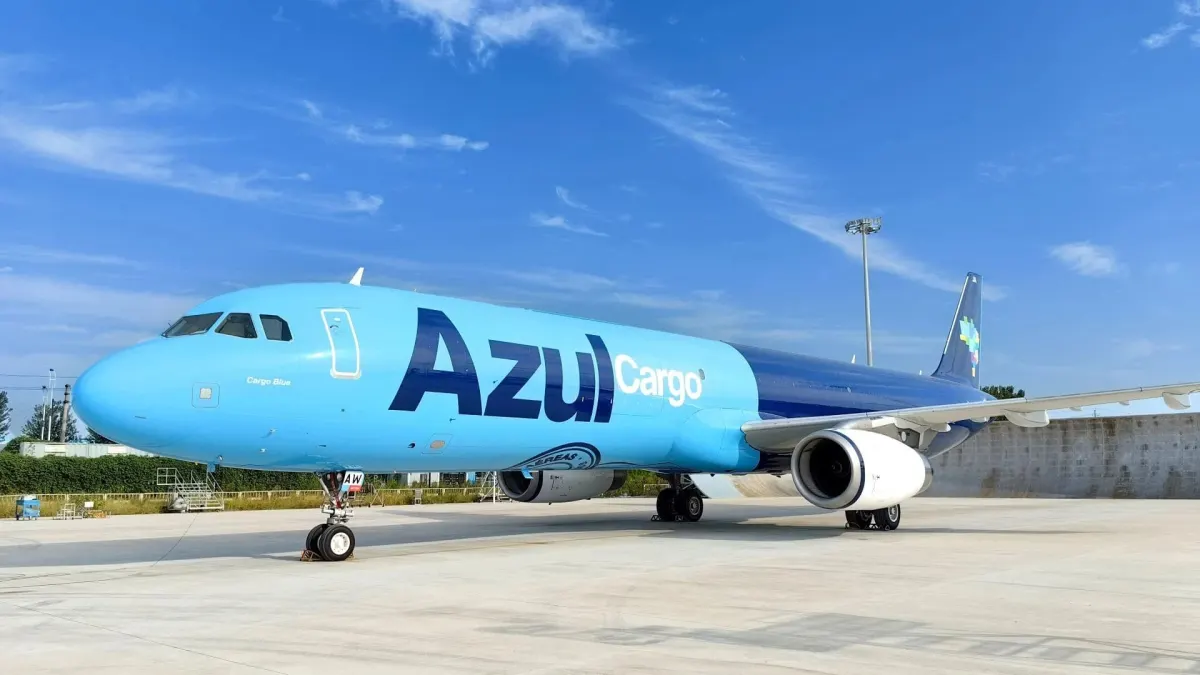
Azul Logística will add two Airbus A321P2F freighters in late 2026, part of a plan to triple its dedicated cargo capacity by 2027.
Key Takeaways
- •Azul Logística will take delivery of two A321P2F freighters in late 2026.
- •Fleet expansion aims to triple dedicated cargo capacity by 2027.
- •New Airbus freighters will replace older Boeing 737-400F aircraft.
- •A321P2F offers 50% more volume than the legacy Boeing freighters.
Brazilian carrier Azul's cargo division, Azul Logística, has finalized plans for a significant cargo fleet expansion with the scheduled addition of two Airbus A321P2F (Airbus A321 Passenger-to-Freighter) aircraft by the end of 2026. The incoming freighters, scheduled for delivery in October and December 2026, represent a critical phase in the carrier's post-restructuring strategy to modernize its fleet and capture a larger share of the growing Latin American e-commerce market. This fleet expansion relies on the highly efficient passenger-to-freighter conversion program to phase out older-generation aircraft.
The transition to the converted Airbus narrowbodies will allow Azul Logística to progressively retire its aging Boeing 737-400F fleet, providing a substantial boost to operational efficiency and freight capacity. By replacing these legacy platforms, the airline plans to triple its dedicated cargo capacity by 2027. This capacity growth is designed to feed Azul's extensive domestic network, which currently operates more than 800 daily flights and processes over 100,000 shipments every single day.
Regulatory Approvals and Fleet Integration
The integration of the A321P2F into Azul's network is supported by a regulatory framework established with Brazil's National Civil Aviation Agency, the ANAC (Agência Nacional de Aviação Civil). ANAC validated the V-STC (Validated Supplemental Type Certificate) for the A321P2F, which was originally developed by conversion specialist Elbe Flugzeugwerke, or EFW. This regulatory clearance allows Azul to import and operate the modified aircraft within Brazilian airspace under the approved STC (Supplemental Type Certificate) guidelines.
According to Azul Logística's fleet expansion plans, the two upcoming aircraft will join an existing fleet of converted Airbus freighters. The carrier has also secured a commercial partnership with Global GSA Group to optimize cargo sales and maximize route performance across its expanding network using advanced data analytics. This partnership represents a medium-severity positive impact for Global GSA Group, which will manage the commercialization of this expanded capacity.
Izabel Reis, Director of Azul Logística, highlighted the operational benefits of the new fleet, stating that the Airbus A321 freighter offers the ideal versatility and size to allow the airline to operate flexibly. Reis noted that replacing their Boeing 737Fs with the A321Fs will result in more sustainable operations and provide a significant boost to intra-Latin American capacity.
A321P2F vs. Boeing 737-400F: Key Specifications
The shift toward narrowbody passenger-to-freighter conversions is a defining trend across Latin American logistics. Airlines in the region are increasingly replacing older Boeing 737 Classic freighters with converted A321P2Fs to achieve better fuel efficiency and higher payload capacities. This development mirrors historical precedents in the region. Between 2021 and 2023, LATAM Cargo executed a similar Boeing 767 BCF (Boeing Converted Freighter) expansion post-bankruptcy restructuring to capitalize on surging e-commerce demand in South America. Azul's current strategy closely follows this trajectory, leveraging fleet renewal to drive revenue growth following its own corporate restructuring.
To understand the operational leap, a direct technical comparison highlights the efficiency gains of the Airbus platform over the legacy Boeing narrowbody:
| Metric | Airbus A321P2F | Boeing 737-400F |
|---|---|---|
| Maximum Payload | ~27 tonnes | ~20 tonnes |
| Main Deck Volume | 212 cubic meters | ~121 cubic meters |
| Fuel Efficiency | 27% lower fuel consumption per tonne | Baseline |
The A321P2F offers up to 50% more volumetric capacity and 39% more payload weight per flight compared to the Boeing 737-400F, allowing Azul to transport larger volumes of e-commerce goods without a proportional increase in trip costs. This transition represents a low-severity negative impact for Boeing's legacy freighter market share in Latin America as operators favor Airbus conversions.
The Efficiency Curve in Latin American Air Cargo
The transition from the Boeing 737-400F to the Airbus A321P2F represents a broader structural shift in the narrowbody freighter market. As e-commerce delivery timelines tighten across Brazil, operators require aircraft that maximize volume rather than just weight. The A321P2F excels in this regard, offering a containerized lower deck that allows for seamless integration with passenger fleet baggage and cargo handling systems. Historically, legacy operators relied on older narrowbodies with high fuel burn, but rising carbon offset requirements and fuel price volatility are accelerating the retirement of these classic fleets. By adopting the EFW-converted Airbus platform, Azul Logística positions itself to capture high-yield express cargo while lowering its carbon footprint per tonne-kilometer, demonstrating how modern fleet replacement waves are reshaping regional logistics networks.
Expected Fleet Deliveries and Network Milestones
Azul Logística has mapped out a clear timeline for its cargo operations over the next 18 months. The primary milestone is the confirmed delivery of the two additional Airbus A321P2F freighters, which is scheduled for October and December 2026.
Following the integration of these aircraft, the carrier is expected to launch scheduled freighter flights to regional hubs, including Lima (LIM) in Peru and Montevideo (MVD) in Uruguay, by late 2026. Looking further ahead, Azul Logística expects to complete its fleet expansion by the end of 2027, bringing its dedicated cargo fleet to a total of six A321P2F aircraft and successfully tripling its dedicated capacity.
Why Fleet Modernization Matters for Regional Logistics
This fleet expansion signals a maturation of the Brazilian air cargo market, transitioning from legacy, low-utilization freighters to highly efficient, high-frequency logistics platforms. For regional retailers and e-commerce giants, Azul's increased capacity ensures faster transit times across Brazil's vast geography. Ultimately, the move establishes Azul Logística as a formidable competitor in the integrated logistics space, challenging traditional cargo operators through superior fleet economics and domestic network reach.
Frequently Asked Questions
- What is the timeline for Azul Logística's Airbus A321P2F deliveries?
- Azul Logística is scheduled to take delivery of two additional Airbus A321P2F freighters in October and December 2026. The airline plans to expand its dedicated cargo fleet to a total of six A321P2F aircraft by the end of 2027.
- How does the Airbus A321P2F compare to the Boeing 737-400F?
- The Airbus A321P2F offers a maximum payload of approximately 27 tonnes and a main deck volume of 212 cubic meters, compared to the Boeing 737-400F's 20 tonnes and 121 cubic meters. Additionally, the A321P2F provides up to 27% lower fuel consumption per tonne of cargo.
- Which regulatory authority approved the A321P2F for operation in Brazil?
- Brazil's National Civil Aviation Agency, ANAC (Agência Nacional de Aviação Civil), validated the Validated Supplemental Type Certificate (V-STC) for the A321P2F, allowing Azul Logística to operate the converted aircraft.
Stay ahead of the airline industry with commercial aviation news from omniflights.com. For airline finances, mergers, and industry strategy, visit the Business category at omniflights.com/business.

Written by Ujjwal Sukhwani
Aviation News Editor & Industry Analyst delivering clear coverage for a worldwide audience. Covers flight operations, safety regulations, and market trends with expert analysis.
Visit ProfileYou Might Also Like

Southwest Reports Record Q3 Revenue Amid Transformation
American Airlines Reports Record Q3 Revenue Amid Fuel Costs
American Airlines Projects 2026 Loss on Rising Fuel Costs
American Airlines to Nearly Triple Premium 787-9 Fleet

Airline Shares Rise Following United Revenue Guidance