Neptune Aviation Adds First Airbus A319 Airtanker

Co-Founder & CEOAviation News Editor delivering trusted coverage across the global aviation industry.
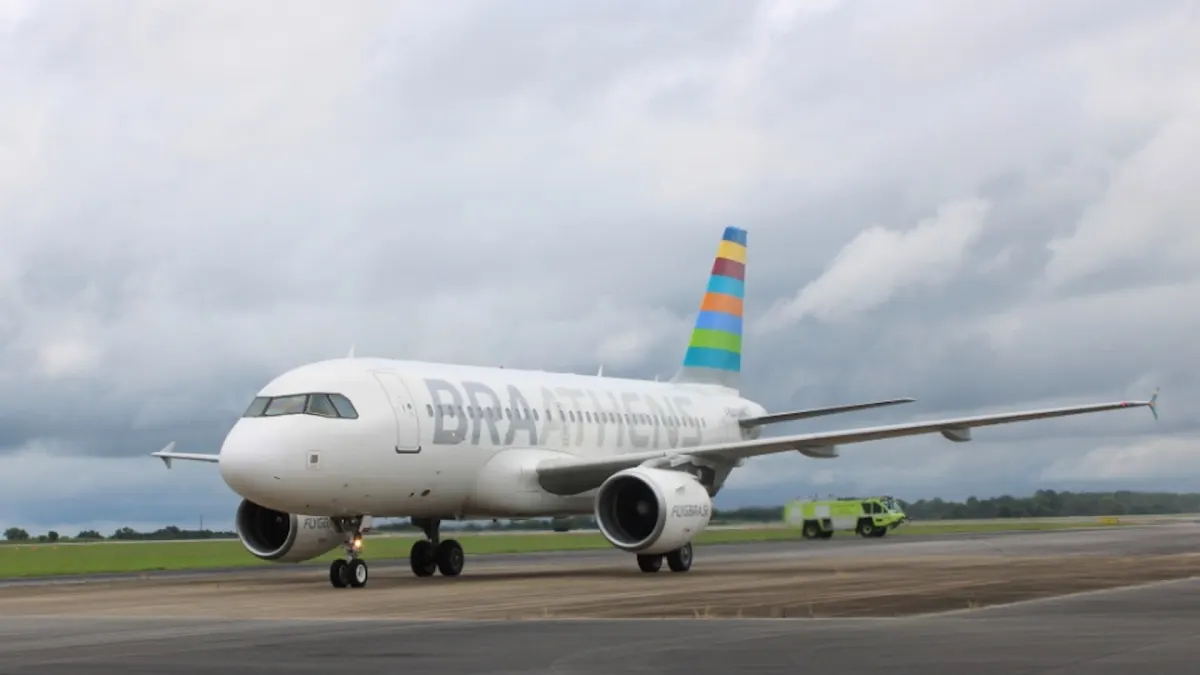
Neptune Aviation Services has acquired its first Airbus A319 for conversion into a next-generation airtanker, set for service in the 2028 wildfire season.
Key Takeaways
- •Neptune Aviation acquires its first Airbus A319 for airtanker conversion.
- •Modified A319 will deliver 4,500 gallons, a 50% increase over BAe 146.
- •Entry into service is scheduled for the 2028 wildfire season.
- •Fleet transition plan involves replacing BAe 146s with 10-15 modern jets.
Fleet Modernization Initiative
Neptune Aviation Services has taken delivery of its first Airbus A319, marking the beginning of a strategic fleet modernization effort aimed at enhancing its aerial firefighting aircraft capabilities. This transition replaces aging platforms with modern commercial narrowbody jets, providing superior cruise speeds, improved fuel efficiency, and a more robust supply chain for long-term operations. The company plans to move toward a mixed fleet of 10 to 15 aircraft, gradually phasing out its legacy BAe 146 fleet as the new Airbus A319 airtanker conversions reach completion.
Technical Specifications and Performance
The conversion process, currently underway at Commercial Jet in Dothan, Alabama, is projected to take approximately 18 months. Once fully modified, the aircraft will feature a minimum retardant capacity of 4,500 gallons. According to the official Neptune Aviation Services press release, this represents a 50% increase over the 3,000-gallon maximum capacity of the current BAe 146 fleet. This capacity upgrade allows the aircraft to operate effectively as a Large Air Tanker (LAT), providing significant operational advantages for the United States Forest Service (USFS) and other state agencies during wildland firefighting modernization efforts.
A319 vs. BAe 146: Key Specifications
| Metric | Airbus A319 | BAe 146 |
|---|---|---|
| Retardant Capacity | 4,500+ gallons | 3,000 gallons |
| Engines | 2 (Twin-engine) | 4 (Four-engine) |
| Flight Controls | Fly-by-wire | Conventional mechanical |
Regulatory and Operational Integration
Before entering active service, the modified A319 must undergo rigorous certification by the Interagency Airtanker Board (IAB). This process requires drop testing over instrumented grid systems to ensure that retardant coverage and dispersion patterns meet federal safety and efficacy standards. Nic Lynn, Vice President of Operations at Neptune Aviation, described the delivery as a pivotal moment for the sector, noting that the physical airframe allows the team to initiate flight testing and remain on track for a 2028 operational debut. The introduction of Fly-By-Wire (FBW) technology also represents a significant shift from the conventional mechanical flight controls found on the company's older airframes.
Historical Precedents in Conversions
The move to modernize with commercial jets follows established trends in the aerial firefighting industry. In 2017, the Coulson Aviation Boeing 737-300 Fireliner conversion proved that modern narrowbody jets could be successfully certified as Type 1 Large Air Tankers. Similarly, the 2006 conversion of the DC-10 by 10 Tanker Air Carrier set the standard for high-capacity fire suppression, demonstrating the long-term viability of repurposing commercial airliners for wildland fire suppression roles.
What Comes Next: The 2028 Operational Deadline
The program is currently in the initial modification phase, with structural engineering and systems integration being managed by Commercial Jet and Aerotec & Concept. The project is expected to reach a major milestone in late 2027 with the completion of the structural modifications. Following this, the aircraft will undergo final flight testing and IAB certification. If these milestones are met, the aircraft is scheduled to enter service for the 2028 wildfire season, providing a critical new asset for wildfire suppression agencies.
Why This Matters for Firefighting Agencies
For the United States Forest Service (USFS) and state fire agencies, the introduction of the A319 signals a shift toward more reliable and higher-capacity aerial support. By delivering 50% more retardant per drop than the preceding BAe 146 fleet, the A319 improves initial attack effectiveness, which is crucial for containing wildfires during their early stages. This modernization also mitigates the risk of maintenance-related downtime, as modern commercial airframes benefit from more accessible parts and technical support compared to legacy regional jets.
Frequently Asked Questions
- What is the retardant capacity of the new Neptune Aviation Airbus A319 airtanker?
- The converted Airbus A319 will have a minimum retardant capacity of 4,500 gallons, which is a 50% increase over the 3,000-gallon capacity of Neptune's current BAe 146 fleet.
- When is the Airbus A319 airtanker expected to enter service?
- Following an 18-month modification process at Commercial Jet's Dothan, Alabama facility, the aircraft is scheduled to be operational for the 2028 wildfire season.
For global airline trends and commercial aviation news, turn to omniflights.com. Discover how innovation is shaping aviation through aircraft systems, avionics, and digital tools at omniflights.com/technology.
Written by Hardik Vishwakarma
Co-Founder & Aviation News Editor leading initiatives that improve trust and visibility across the global aviation industry. Covers airlines, airports, safety, and emerging technology.
Visit ProfileYou Might Also Like
Discover more aviation news based on similar topics

Flydubai Upgrading 21 Boeing 737 MAX 8s to Flat Bed Seats
Flydubai is retrofitting 21 Boeing 737 MAX 8 aircraft with lie-flat business class seats to standardize its premium product by late 2027.
Emirates Winter Booking Momentum Grows Amid Fleet Expansion
Emirates carried 8.6 million passengers this summer and enters winter with strong demand as it accelerates fleet retrofits and network growth.

Air Arabia Consortium Gains AOC for New Dammam Budget Airline
A Saudi GACA-led consortium including Air Arabia has secured an AOC to launch a new budget airline based at Dammam's King Fahd International Airport.

Turkish Airlines Exits Luanda as Angola Hub Struggles
Turkish Airlines dropped its Luanda route as Angola's new airport struggles to attract traffic, handling only 756,028 passengers in 2025.

Red Sea Airlines Leases Two 737 MAX 8s for 2027 Expansion
Red Sea Airlines signed a lease for two Boeing 737 MAX 8 aircraft from SMBC Aviation Capital, arriving in 2027 to support its 14-aircraft fleet goal.
Avelo CEO Warns Airfares May Rise on Jet Fuel Price Spikes
Avelo Airlines CEO Andrew Levy warns that rising fuel costs may force fare increases as global jet fuel prices reach $171.01 per barrel.