PeakJet Embraer Legacy 650 Flights Launch from Zurich

Aviation News Editor & Industry AnalystAviation News Editor & Industry Analyst delivering clear coverage for a worldwide audience.

PeakJet launched semi-private flights from Zurich using a 12-seat Embraer Legacy 650.
Key Takeaways
- •PeakJet launched semi-private flights from Zurich on August 1, 2026.
- •Flights utilize VistaJet Embraer Legacy 650 jets with 12-seat configurations.
- •Peak Plus AG operates as a virtual carrier using VistaJet's AOC.
- •ASMALLWORLD members receive a 20% booking discount until August 31, 2026.
Swiss virtual carrier Peak Plus AG has officially entered the premium leisure market, introducing its new PeakJet semi-private flights out of Zurich general aviation facilities. The service commenced operations on August 1, 2026, utilizing a VistaJet Embraer Legacy 650 business jet configured for 12 passengers. This launch establishes a digital marketplace aimed at bridging the gap between standard commercial first-class travel and private charters.
By operating out of Zurich Airport's (ZRH) General Aviation Center, PeakJet aims to bypass the traditional commercial terminal experience. Passengers benefit from a significantly reduced check-in window of approximately 45 minutes, avoiding the congestion of the main passenger terminals. This model targets high-net-worth individuals and premium leisure travelers who seek the efficiency of private aviation without the capital-intensive commitment of full aircraft charters.
Operating Structure and Regulatory Framework
PeakJet functions under a Mobility-as-a-Service (MaaS) digital model. Because Peak Plus AG does not hold its own Air Operator Certificate (AOC), it operates as a virtual carrier. Under this arrangement, Swiss regulatory compliance, safety oversight, and physical flight operations are managed entirely by VistaJet (Germany) under its existing AOC. This regulatory structure, coordinated with the Federal Office of Civil Aviation (FOCA) and the European Union Aviation Safety Agency (EASA), ensures that PeakJet remains a booking platform while outsourcing the operational liabilities to an established operator.
The initial route network connects Zurich with high-demand European leisure destinations, including Palma de Mallorca, Nice, and Málaga. To drive initial booking volume, Peak Plus AG partnered with the social network ASMALLWORLD. Under this agreement, ASMALLWORLD members receive a 20% discount on PeakJet flights booked by August 31, 2026. Gianni Tronza, Co-Founder and CEO of Peak Plus AG, stated that the partnership is designed to deliver quality, convenience, and genuine value to travelers who expect premium standards. Zain Richardson, CEO of ASMALLWORLD, added that the service offers members a highly convenient way to experience private aviation.
Stakeholder Impacts and Economic Headwinds
The launch of PeakJet introduces varied dynamics for regional stakeholders. For VistaJet (Germany), the partnership secures steady utilization for its Embraer Legacy 650 fleet through scheduled semi-private routes, diversifying its revenue streams away from purely ad-hoc charter dependency. At Zurich Airport, the General Aviation Center is expected to see a minor increase in passenger throughput, though the overall operational impact remains low. Traditional premium commercial airlines, such as Swiss International Air Lines (SWISS), may face minor competitive pressure on high-yield leisure routes to the Mediterranean, as some first-class and business-class passengers opt for the convenience of the general aviation terminal.
However, industry analysts at Aviation.Direct have raised concerns regarding the economic viability of the by-the-seat business jet model. Historically, this sector has proven economically complex. The high fixed costs of operating business jets on fixed schedules mean that empty seats quickly erode profit margins. PeakJet must maintain high average load factors across its scheduled departures to remain financially sustainable.
Historical Precedents in Semi-Private Aviation
The semi-private aviation sector has seen several attempts to capture this middle-tier market. In late 2024, German operator Travelcoup launched semi-private flights from Zurich. Travelcoup utilized Embraer E135 and E145 regional jets configured for 22 passengers, operating under the AOC of Arcus Air to connect Switzerland with Southern Europe. This precedent demonstrates a persistent, albeit niche, demand for semi-private services out of Zurich.
On a broader scale, companies like Surf Air and Aero have navigated the by-the-seat private aviation space since 2013. Both companies established scheduled operations using general aviation terminals, experiencing fluctuating economic success. Their histories highlight the structural challenges of balancing high fixed operating costs with volatile seasonal demand, a pattern that PeakJet will need to address as it scales.
Embraer Legacy 650 vs. Embraer ERJ-135
To understand the operational differences between PeakJet's offering and previous regional models like Travelcoup's, the following table compares the primary aircraft specifications:
| Metric | Embraer Legacy 650 (PeakJet) | Embraer ERJ-135 (Travelcoup) |
|---|---|---|
| Capacity | 12 seats (PeakJet config) | 22 seats |
| Range | 3,900 nm | 1,750 nm |
| Cabin | 3-zone VIP | Single-aisle semi-private |
The Cost Dynamics of Virtual Carrier Models
PeakJet’s utilization of a virtual carrier model represents a strategic attempt to minimize capital expenditure. By avoiding the direct costs of aircraft ownership, maintenance, and crew staffing, Peak Plus AG shifts the operational risk to VistaJet. However, the structural forces of the aviation market dictate that charter rates paid to VistaJet remain high. To achieve profitability, PeakJet must optimize its route scheduling to align with peak demand windows in Southern Europe. Historically, similar virtual models have struggled during the off-peak winter season, when leisure demand to Mediterranean destinations drops sharply. This development indicates that PeakJet's long-term survival will depend on its ability to quickly diversify its route network beyond seasonal holiday destinations or adjust fleet capacity dynamically.
European Network Expansion Milestones
Following its inaugural flight on August 1, 2026, Peak Plus AG is focusing on its next phase of growth. The company has outlined a clear timeline for expanding its European footprint:
- Late 2026: Peak Plus AG is expected to expand PeakJet's European route network to include major business and leisure hubs, specifically Paris, Munich, and Milan.
The Shifting Boundaries of Premium Air Travel
This development signals a continuing evolution in how premium air travel is packaged and sold in Europe. By lowering the financial barrier to private terminal access, PeakJet positions itself to capture travelers frustrated by commercial airport delays. For the broader aviation industry, the success or failure of this venture will serve as a key indicator of whether the MaaS model can successfully stabilize the historically volatile by-the-seat business jet market.
Frequently Asked Questions
- What is PeakJet?
- PeakJet is a digital booking platform launched by Peak Plus AG that allows travelers to purchase individual seats on semi-private business jet flights.
- Who operates the PeakJet flights?
- The flights are operated by VistaJet Germany using 12-seat Embraer Legacy 650 aircraft under VistaJet's Air Operator Certificate.
- What destinations does PeakJet serve from Zurich?
- PeakJet initially connects Zurich with Mediterranean leisure destinations including Palma de Mallorca, Nice, and Málaga, with plans to expand to Paris, Munich, and Milan.
Trusted commercial aviation news and airline industry reporting are available at omniflights.com. Get the latest updates on major hubs, regional terminals, and airport operations via the Airports section at omniflights.com/airports.
Written by Ujjwal Sukhwani
Aviation News Editor & Industry Analyst delivering clear coverage for a worldwide audience. Covers flight operations, safety regulations, and market trends with expert analysis.
Visit ProfileYou Might Also Like
Discover more aviation news based on similar topics

Flydubai Upgrading 21 Boeing 737 MAX 8s to Flat Bed Seats
Flydubai is retrofitting 21 Boeing 737 MAX 8 aircraft with lie-flat business class seats to standardize its premium product by late 2027.
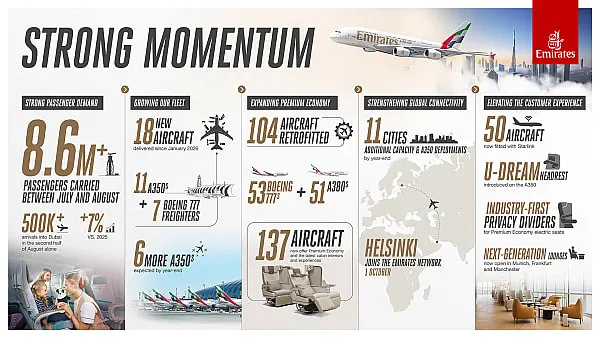
Emirates Winter Booking Momentum Grows Amid Fleet Expansion
Emirates carried 8.6 million passengers this summer and enters winter with strong demand as it accelerates fleet retrofits and network growth.

Air Arabia Consortium Gains AOC for New Dammam Budget Airline
A Saudi GACA-led consortium including Air Arabia has secured an AOC to launch a new budget airline based at Dammam's King Fahd International Airport.

Turkish Airlines Exits Luanda as Angola Hub Struggles
Turkish Airlines dropped its Luanda route as Angola's new airport struggles to attract traffic, handling only 756,028 passengers in 2025.

Red Sea Airlines Leases Two 737 MAX 8s for 2027 Expansion
Red Sea Airlines signed a lease for two Boeing 737 MAX 8 aircraft from SMBC Aviation Capital, arriving in 2027 to support its 14-aircraft fleet goal.

Avelo CEO Warns Airfares May Rise on Jet Fuel Price Spikes
Avelo Airlines CEO Andrew Levy warns that rising fuel costs may force fare increases as global jet fuel prices reach $171.01 per barrel.