Mount Mayon Meteor Strike: Satellite Glint, Not UFO

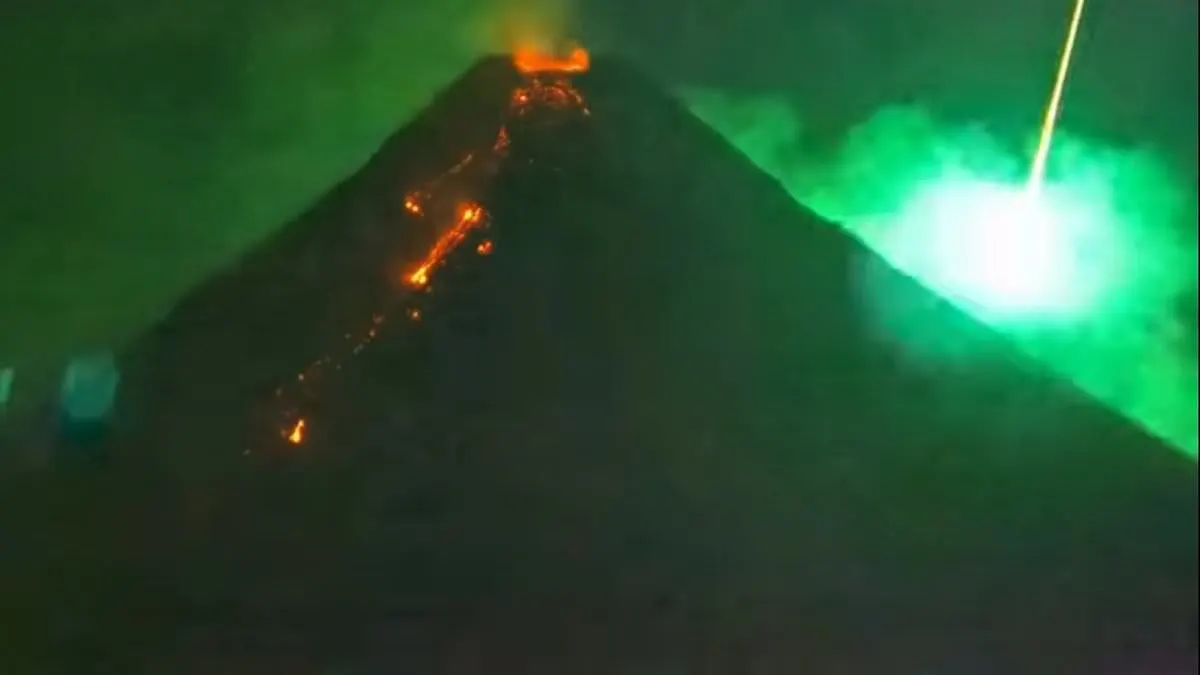
A Harvard physicist identified a light near Mount Mayon as a satellite glint, while CAAP maintained strict flight restrictions due to volcanic ash.
Key Takeaways
- •Harvard physicist identifies the Mayon orb as a satellite glint.
- •CAAP enforced an 11,000-foot no-fly zone under NOTAM B1875/26.
- •Volcanic ash hazards caused flight disruptions at Bicol International.
- •Satellite proliferation increases visual misidentifications in airspace.
Analysis of the Mount Mayon Atmospheric Event
Following a widely publicized Mount Mayon meteor strike on May 25, 2026, footage showing an orb of light rising behind the volcano sparked intense debate regarding potential Unidentified Anomalous Phenomena. However, Harvard University theoretical physicist Avi Loeb has provided a scientific explanation, attributing the visual phenomenon to a satellite glint misidentification. According to Loeb, with over 10,000 communications satellites currently operating in Low Earth Orbit, the reflection of sunlight off these structures creates transient light patterns frequently mistaken for anomalies.
While the public focused on the visual display, the Civil Aviation Authority of the Philippines (CAAP) was actively managing a significant aviation volcanic ash hazard. The event occurred while the volcano was under active monitoring by the Philippine Institute of Volcanology and Seismology (PHIVOLCS), necessitating stringent airspace management to protect commercial traffic.
Airspace Restrictions and Safety Protocols
During the period surrounding the meteor event, the Civil Aviation Authority of the Philippines enforced NOTAM B1875/26. This directive established a strict no-fly zone, prohibiting aircraft from operating from the surface up to 11,000 feet within a 6-kilometer radius of the summit. These CAAP flight restrictions were critical to preventing engine flameouts and navigation system interference caused by volcanic ash and airborne particles.
For domestic carriers, including Cebu Pacific and Philippine Airlines, the eruption necessitated operational adjustments at Bicol International Airport. These airlines faced localized flight cancellations and rerouting, demonstrating the immediate impact of volcanic activity on regional connectivity. The situation mirrors the 2010 Eyjafjallajökull eruption in Iceland, which resulted in the cancellation of over 100,000 flights, underscoring the necessity of the current safety measures around Mount Mayon.
The Proliferation of LEO Satellites
This incident highlights a growing trend in aviation: the increasing frequency of pilot and public misidentification of Low Earth Orbit satellites as UAPs. As mega-constellations continue to expand, aviation authorities are tasked with differentiating between routine orbital reflections and genuine flight safety concerns. Similar to the guidance issued following pilot sightings of Starlink satellite trains, industry experts suggest that increased awareness of orbital mechanics is essential to reducing unnecessary reporting and maintaining focus on genuine airspace hazards.
What Comes Next: Airspace Monitoring
The Civil Aviation Authority of the Philippines continues to monitor volcanic output to determine when it is safe to lift the current altitude restrictions. Future adjustments to the exclusion zone remain contingent upon data provided by PHIVOLCS regarding ash plume height and atmospheric dispersion. Pilots operating in the region are advised to monitor updated Notice to Air Missions filings to ensure compliance with the evolving safety perimeter.
Why This Matters for Airspace Safety
For aviation professionals, this event serves as a reminder of the dual challenges posed by natural hazards and the evolving visual environment of the upper atmosphere. While the 'UFO' speculation remains a point of public interest, the operational reality for the Civil Aviation Authority of the Philippines remains focused on the mitigation of volcanic ash risks. Accurate identification of atmospheric phenomena is increasingly vital to ensure that safety resources are directed toward genuine threats rather than optical artifacts.
Frequently Asked Questions
- Why were flights restricted near Mount Mayon?
- The Civil Aviation Authority of the Philippines issued NOTAM B1875/26 to enforce an 11,000-foot no-fly zone. This was necessary to protect aircraft engines and navigation systems from volcanic ash hazards during the eruption.
- What was the orb seen behind Mount Mayon?
- Harvard physicist Avi Loeb identified the light as a satellite glint. It is a common occurrence caused by sunlight reflecting off one of the more than 10,000 communications satellites currently in Low Earth Orbit.
Get breaking commercial aviation news and expert airline analysis at omniflights.com. From aircraft production to supply chains, commercial aviation manufacturing news is covered at omniflights.com/manufacturing.

Written by Hardik Vishwakarma
Co-Founder & Aviation News Editor leading initiatives that improve trust and visibility across the global aviation industry. Covers airlines, airports, safety, and emerging technology.
Visit ProfileYou Might Also Like

FAA Grounds Elixir Aircraft After Fatal French Crash

Riyadh Airport Closure Extended Following Deadly Attacks

Riyadh Airport Closure Extended After Deadly Houthi Attack
Riyadh Airport Closed Until October 17 After Houthi Attacks

Delta Delays Atlanta-Riyadh Launch After Airport Attack