Lufthansa Boeing 787-9 Suffers Nose Gear Collapse in FRA

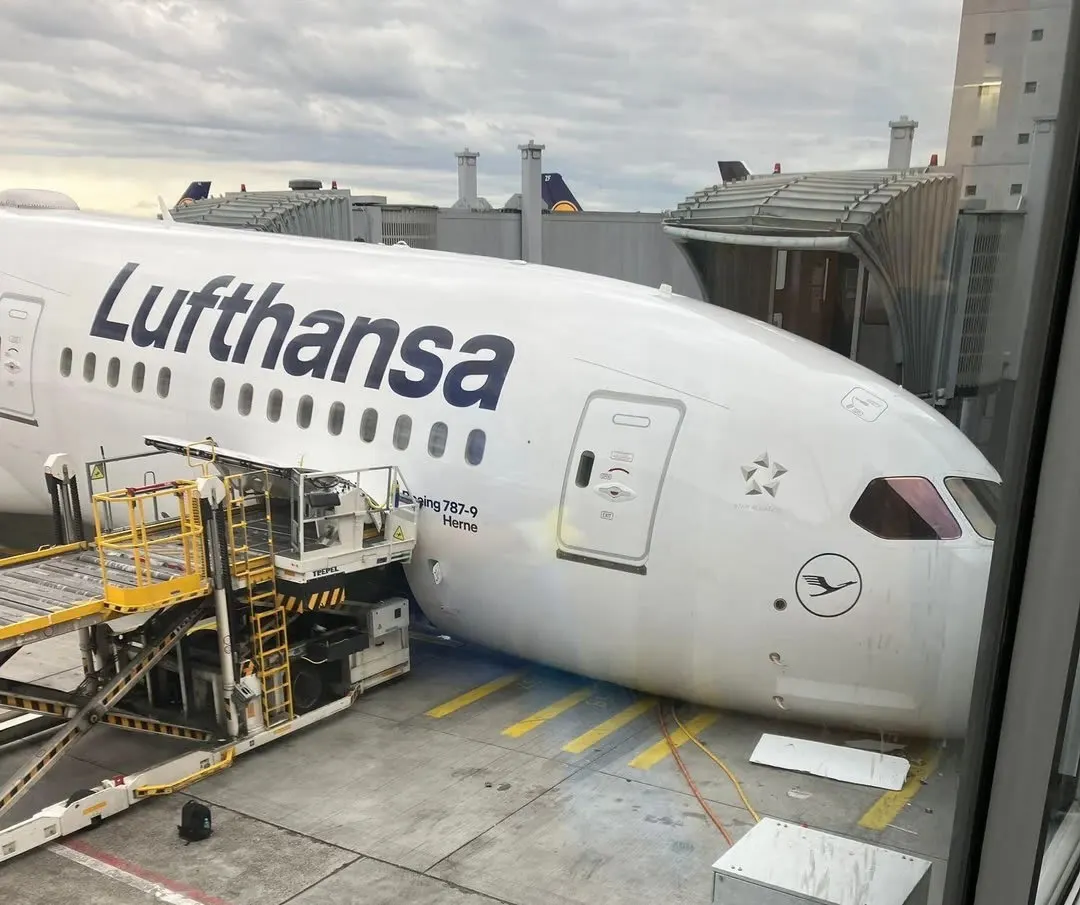
A brand new Lufthansa Boeing 787-9, registration D-ABPQ, suffered a nose gear collapse at Frankfurt Airport on June 4, 2026, while parked at the gate.
Key Takeaways
- •Lufthansa 787-9 nose gear collapsed at Frankfurt on June 4, 2026.
- •Incident involves potential misinsertion of the nose gear downlock pin.
- •FAA AD 2019-23-07 previously mandated design inserts to prevent this error.
- •BFU expects to publish a preliminary investigation report by July 2026.
The Incident at Frankfurt Airport
A Lufthansa Boeing 787-9 Dreamliner, registered as D-ABPQ, suffered a total Nose Landing Gear (NLG) collapse while parked at a gate at Frankfurt Airport (FRA) on June 4, 2026. The incident occurred while the aircraft was stationary, with no passengers onboard, preventing injuries. The event involving this specific Boeing 787-9—which entered long-haul service only in February 2026—has drawn immediate scrutiny from both the airline and safety regulators due to the mechanical nature of the failure.
The Nut Graf
The collapse of the D-ABPQ Dreamliner accident site suggests a potential recurrence of a known design vulnerability in the aircraft’s landing gear assembly. The structural failure, which occurred while the aircraft was awaiting its next departure, highlights persistent operational risks related to ground handling and maintenance procedures. For the Lufthansa Group, which operates an active fleet of 17 Boeing 787-9 aircraft, this event necessitates an urgent safety audit of its maintenance protocols, particularly concerning the installation of locking pins during ground operations.
Core Facts and Evidence
According to the German Federal Bureau of Aircraft Accident Investigation (BFU), the investigation is currently focused on whether the Nose Landing Gear (NLG) downlock pin was incorrectly inserted. This specific type of failure is well-documented in the industry. The Federal Aviation Administration (FAA) previously addressed this risk via Airworthiness Directive (AD) 2019-23-07, which mandated the installation of a physical insert to prevent the downlock pin from being mistakenly placed into the adjacent apex pin bore.
Despite this regulatory intervention, the 2026 incident echoes a 2021 event involving a British Airways 787, which the UK Air Accidents Investigation Branch (AAIB) determined was caused by the exact same mechanical confusion. The Boeing 787-9 carries a Maximum Takeoff Weight (MTOW) of approximately 254,000 kg, and the force of such a collapse while at the gate can cause significant structural damage to the airframe, rendering the aircraft temporarily unserviceable.
Stakeholder Impact
For Lufthansa Technik and the ground handling teams at Frankfurt Airport, the primary impact is the immediate grounding of the four-month-old aircraft for a comprehensive structural assessment. Beyond the physical repairs, the airline faces potential internal disciplinary actions and a mandatory review of its maintenance training. Passengers booked on affected services, such as the LH450 route to Los Angeles, experienced significant delays and cancellations, triggering compensation requirements under European Union aviation passenger rights regulations.
Technical Analysis: The Maintenance Design Flaw
The recurrence of this collapse despite the implementation of FAA AD 2019-23-07 suggests that the current mitigation strategy may be insufficient to overcome human-factors vulnerabilities. Industry experts have argued that the proximity of the downlock pin bore to the apex pin bore represents a fundamental design flaw. While the mandated insert was intended to provide a physical barrier, the fact that a technician can still bypass or misinterpret this mechanism indicates that the design does not fully account for the high-pressure, time-constrained environment of ramp maintenance. This event indicates a trajectory where regulators may eventually force a more permanent, foolproof redesign of the nose gear locking assembly to eliminate the possibility of human error entirely.
What Comes Next: The BFU Investigation
The German Federal Bureau of Aircraft Accident Investigation (BFU) is leading the probe into the Lufthansa Boeing 787 gear collapse. A preliminary report detailing the findings of the gear assembly inspection is expected to be published by July 2026. Until then, the aircraft will remain grounded, and the airline is expected to issue a fleet-wide technical bulletin to all maintenance personnel regarding the correct insertion procedure for the nose gear locking mechanism.
Why This Matters for 787 Operators
This incident serves as a critical reminder of the vulnerability of modern widebody aircraft to simple, procedural maintenance errors. For other carriers operating the Boeing 787 family, the event underscores the importance of rigid adherence to landing gear pinning protocols, regardless of the age of the airframe. The industry is now watching to see if the BFU or other global regulators will demand a more robust mechanical solution from Boeing to prevent future ground retractions.
Frequently Asked Questions
- What is the cause of the Lufthansa 787 nose gear collapse?
- While the investigation is ongoing, the incident appears to involve the incorrect insertion of the nose landing gear downlock pin. This is a known issue that the FAA previously addressed through Airworthiness Directive 2019-23-07.
- How old was the Lufthansa Boeing 787 involved in the incident?
- The aircraft, registered as D-ABPQ, entered long-haul service in February 2026, making it less than four months old at the time of the June 2026 incident.
Get breaking commercial aviation news and expert airline analysis at omniflights.com. Discover how innovation is shaping aviation through aircraft systems, avionics, and digital tools at omniflights.com/technology.

Written by Hardik Vishwakarma
Co-Founder & Aviation News Editor leading initiatives that improve trust and visibility across the global aviation industry. Covers airlines, airports, safety, and emerging technology.
Visit ProfileYou Might Also Like
FAA Grounds Elixir Aircraft After Fatal French Crash
Riyadh Airport Closure Extended Following Deadly Attacks
Riyadh Airport Closure Extended After Deadly Houthi Attack
Riyadh Airport Closed Until October 17 After Houthi Attacks
Delta Delays Atlanta-Riyadh Launch After Airport Attack