Kenya Airways Reports Record Demand Amid Mideast Airspace Closures

Co-Founder & CEOAviation News Editor delivering trusted coverage across the global aviation industry.
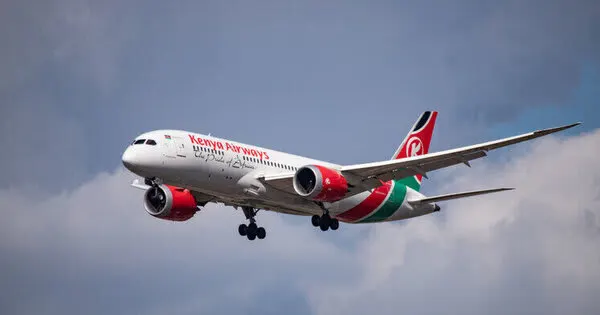
Kenya Airways is adding flights after demand surged to record levels, with load factors hitting 99% as passengers reroute from Middle East airspace.
Key Takeaways
- •Reports record load factors up to 99% on some routes, a surge from 70% averages.
- •Plans to add flight frequencies to accommodate rerouted long-haul passengers from Europe, the US, and Asia.
- •Faces jet fuel supply chain risks as 70% of Africa's supply transits the disrupted Strait of Hormuz.
- •Expects to retain approximately 40% of new transit passengers after the crisis subsides.
Kenya Airways (KQ) plans to add flight frequencies after a surge in demand, driven by passengers rerouting away from disrupted Middle East airspace, has pushed load factors to record levels. Acting Chief Executive Officer George Kamal confirmed that seat occupancy reached as high as 99% on some routes since February 2026, a significant increase from an average of 70% at the start of the year. The spike in traffic, particularly on long-haul routes from Europe, the US, and Asia, is providing a substantial boost to the airline's network performance.
The demand increase is a direct consequence of widespread airspace closures following military strikes in the region. The geopolitical impact on aviation has been severe, forcing a massive rerouting of global air traffic. Countries including Iran, Israel, Iraq, and Kuwait issued Notice to Air Missions (NOTAMs) to close their airspace, while authorities like the European Union Aviation Safety Agency (EASA) published a Conflict Zone Information Bulletin (CZIB) advising against operations in several Middle Eastern Flight Information Regions (FIRs). This disruption has unexpectedly elevated East African hubs like Nairobi into critical transit points for international travel.
"We were like this... until February. Then it significantly increased. We reached up to 90% total, 90, 99[%]," Kamal stated, noting the unprecedented nature of the demand during a typically slower season. "We are already looking to add frequency and we will."
Industry-Wide Impact and Operational Challenges
The crisis has created a stark divide in the industry. While Kenya Airways benefits, major Gulf carriers such as Emirates and Qatar Airways face severe network disruption, flight cancellations, and the grounding of aircraft. According to industry tracking, several airlines have sent widebody jets to long-term storage facilities like Teruel Airport in Spain due to the unusable airspace. For long-haul passengers, the rerouting means longer flight times and higher costs as carriers are forced to fly alternative, less efficient corridors over the Caucasus or East Africa. The current operational picture shows a near-total avoidance of the normal Gulf corridor.
This shift also exposes significant logistical vulnerabilities, particularly regarding fuel. According to the African Airlines Association (AFRAA), Africa imports approximately 70% of its jet fuel through the Strait of Hormuz, a key maritime chokepoint now at the center of the conflict. While Kamal confirmed Kenya Airways currently holds about 50-56 days' worth of jet fuel reserves, the situation highlights a critical supply chain risk for the entire continent. Airlines are reportedly seeking to secure additional fuel supplies from India to mitigate potential shortages and price volatility.
A Familiar Pattern of Disruption
The current global aviation disruption is not without precedent. In February 2022, the closure of Russian airspace to Western airlines following the invasion of Ukraine forced a similar, large-scale rerouting of Europe-Asia flights. That event permanently altered long-haul network economics by making southern routes through the Middle East more critical. The current crisis has now disrupted that very alternative, demonstrating the cascading effect of geopolitical shocks on global aviation.
Similarly, the 2017 Qatar diplomatic crisis, which saw neighboring countries close their airspace to Qatar Airways, provided a regional case study on the operational and financial costs of sudden blockades. These historical events underscore the fragility of established air corridors and the strategic advantage held by airlines with geographically diverse hubs capable of absorbing diverted traffic.
Broader Industry Implications
This development is more than a temporary windfall for a single carrier; it represents a significant stress test of the global aviation system's resilience. The crisis has effectively disabled one of the world's most critical intercontinental hubs, forcing a rapid and costly realignment of traffic flows. It highlights the strategic vulnerability of networks heavily dependent on a single geographic corridor and reinforces the value of secondary hubs in regions like East Africa. For Kenya Airways, the challenge will be to convert this temporary opportunity into a sustainable market share gain. The airline projects it can retain about 40% of the new passengers once the conflict subsides, which would represent a significant long-term benefit from the crisis.
What Comes Next
The immediate future of regional air travel remains uncertain and dependent on geopolitical developments. Aviation authorities will continue to monitor the situation closely. EASA's Conflict Zone Information Bulletin is expected to be reviewed in late March 2026, which will provide further guidance to operators. In the meantime, Kenya Airways is moving forward with its own strategic plans, including a confirmed $500 million capital raise scheduled for early 2026 to support its fleet and network expansion plans.
Why This Matters
This situation demonstrates how quickly regional conflicts can redraw global aviation maps, creating clear winners and losers. For Kenya Airways, it is an unexpected opportunity to capture a significant share of lucrative long-haul transit traffic. For the broader industry, it is a stark reminder of the inherent risks in the global network and exposes critical supply chain vulnerabilities—particularly in fuel—that could have lasting consequences for African carriers long after the immediate crisis has passed.
Access up-to-date commercial aviation news and airline industry developments via omniflights.com. Discover how innovation is shaping aviation through aircraft systems, avionics, and digital tools at omniflights.com/technology.
Written by Hardik Vishwakarma
Co-Founder & Aviation News Editor leading initiatives that improve trust and visibility across the global aviation industry. Covers airlines, airports, safety, and emerging technology.
Visit ProfileYou Might Also Like
Discover more aviation news based on similar topics

Flydubai Upgrading 21 Boeing 737 MAX 8s to Flat Bed Seats
Flydubai is retrofitting 21 Boeing 737 MAX 8 aircraft with lie-flat business class seats to standardize its premium product by late 2027.
Emirates Winter Booking Momentum Grows Amid Fleet Expansion
Emirates carried 8.6 million passengers this summer and enters winter with strong demand as it accelerates fleet retrofits and network growth.
Air Arabia Consortium Gains AOC for New Dammam Budget Airline
A Saudi GACA-led consortium including Air Arabia has secured an AOC to launch a new budget airline based at Dammam's King Fahd International Airport.

Turkish Airlines Exits Luanda as Angola Hub Struggles
Turkish Airlines dropped its Luanda route as Angola's new airport struggles to attract traffic, handling only 756,028 passengers in 2025.

Red Sea Airlines Leases Two 737 MAX 8s for 2027 Expansion
Red Sea Airlines signed a lease for two Boeing 737 MAX 8 aircraft from SMBC Aviation Capital, arriving in 2027 to support its 14-aircraft fleet goal.

Avelo CEO Warns Airfares May Rise on Jet Fuel Price Spikes
Avelo Airlines CEO Andrew Levy warns that rising fuel costs may force fare increases as global jet fuel prices reach $171.01 per barrel.