Jet2 Shifts Demand to Spain as Cyprus Bookings Drop Amid Conflict

Co-Founder & CEOAviation News Editor delivering trusted coverage across the global aviation industry.

Jet2 reports a sharp drop in Cyprus and Turkey bookings as the Middle East conflict pushes leisure travel demand towards Western European destinations.
Key Takeaways
- •Reports a sharp drop in Cyprus and Turkey bookings due to the 2026 Middle East conflict.
- •Shifts holiday demand and aircraft capacity to safer Western Mediterranean destinations like Spain and Italy.
- •Deploys a 'red team' and expands customer support to reassure travelers in affected regions.
- •Warns Spanish and Italian hoteliers against excessive price inflation amid the sudden demand surge.
Leisure travel demand for Eastern Mediterranean destinations is declining sharply, prompting UK-based airline Jet2 to reallocate capacity as customers shift bookings away from Cyprus and Turkey. Speaking at the Travel Trade Gazette (TTG) annual conference in Cadiz, Jet2 CEO Steve Heapy confirmed the trend, attributing it to traveler uncertainty surrounding the major US/Israel-Iran conflict that escalated in early 2026.
The operational impact is significant, with Heapy stating, “bookings to Cyprus and Turkey are drying up, cancellations are up and our aircraft are emptying.” This shift is forcing a rapid operational pivot for one of Europe's largest tour operators. The airline is now seeing a surge in demand for Western Mediterranean destinations, particularly Spain and Italy. This development underscores the sensitivity of leisure travel patterns to geopolitical instability and requires airlines to maintain a high degree of operational flexibility to adapt to sudden market changes.
Operational Response and Industry Corroboration
In response to the situation, Jet2 has initiated several measures to manage customer concerns and operational challenges. According to Lee Davies, Jet2's Head of Overseas Operations, the company has deployed a special 'red team' to the affected regions. This team, along with an expanded 24/7 UK support staff, is focused on reassuring customers currently in Turkey and Cyprus. Heapy also noted that he is in direct discussions with the UK Civil Aviation Authority (CAA) and British politicians regarding the war's impact on flight safety and routing. Regional airspace is monitored by authorities like the European Union Aviation Safety Agency (EASA), which issues Conflict Zone Information Bulletins (CZIBs) that guide airline operations. Government advisories, such as Canada's updated guidance on travel to Iran, reflect the seriousness of the regional instability.
The trend is not isolated to Jet2. EasyJet CEO Kenton Jarvis has corroborated the demand shift, stating, “Eastern Mediterranean less popular, west Mediterranean more popular.” Despite the slump in the East, the broader UK travel market shows resilience. A Q2 FY26 trading update from On the Beach (OTB) indicated a +34% year-over-year increase in travelled volumes for diversified operators, suggesting that while destinations are changing, the overall appetite for travel remains strong.
Stakeholder and Market Impact
The sudden reallocation of thousands of holidaymakers is creating distinct pressures across the European tourism sector. For hoteliers in Cyprus and Turkey, the impact is severe, with a high volume of cancellations threatening the crucial spring and summer seasons. This group is now facing the need to introduce significant discounts to stimulate demand.
Conversely, hoteliers in Spain and Italy are experiencing a surge in bookings, granting them considerable pricing power. However, airline executives are publicly cautioning against opportunism. Heapy directly appealed to Spanish and Italian hotel partners not to “get greedy,” warning that artificial price inflation could damage long-term relationships and deter customers.
Historical Precedents and Analysis
This is not the first time geopolitical events have reshaped European travel maps. In 2015-2016, a series of terrorist attacks in Turkey and the Metrojet bombing in Egypt caused a massive and rapid shift of airline and tour operator capacity to Spain and Portugal. That event, which led to significant price inflation in Western Mediterranean resorts, provides a direct parallel to the current situation. Similarly, the outbreak of the Israel-Hamas war in October 2023 led to immediate flight suspensions to nearby countries and a temporary drop in bookings for Egypt and Jordan, demonstrating the contagion effect of regional conflict on tourism.
The current situation follows this established pattern, where security fears in one region translate directly into a commercial boom for another perceived as a safe haven. The speed and scale of the shift in 2026 reaffirm that for leisure carriers, the ability to rapidly redeploy assets is a critical capability for mitigating geopolitical risk.
What Comes Next
While the immediate focus is on managing the current summer season, industry leaders are looking ahead to a potential recovery. Based on historical precedents, travel industry analysts and Jet2 executives expect a post-conflict booking surge for the Eastern Mediterranean. This recovery is tentatively expected in late 2026, assuming a de-escalation of the conflict. However, this timeline remains subject to the geopolitical situation in the Middle East.
Why This Matters
This development highlights the profound impact of geopolitical instability on airline network planning and the broader European tourism economy. It demonstrates how quickly leisure travel demand can pivot based on perceived safety, forcing airlines into complex and costly operational adjustments. For the industry, it reinforces the need for agile capacity management and diversified destination portfolios to weather regional crises.
Stay ahead of the airline industry with commercial aviation news from omniflights.com. Get the latest updates on major hubs, regional terminals, and airport operations via the Airports section at omniflights.com/airports.
Written by Hardik Vishwakarma
Co-Founder & Aviation News Editor leading initiatives that improve trust and visibility across the global aviation industry. Covers airlines, airports, safety, and emerging technology.
Visit ProfileYou Might Also Like
Discover more aviation news based on similar topics

Flydubai Upgrading 21 Boeing 737 MAX 8s to Flat Bed Seats
Flydubai is retrofitting 21 Boeing 737 MAX 8 aircraft with lie-flat business class seats to standardize its premium product by late 2027.
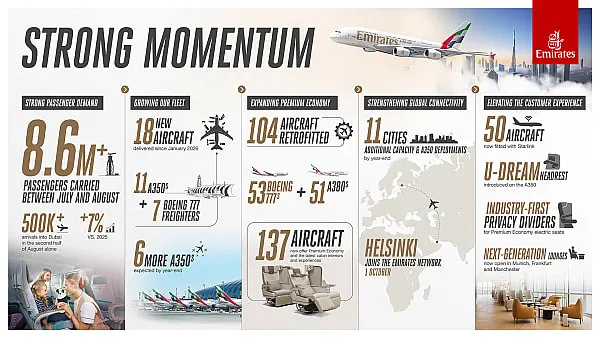
Emirates Winter Booking Momentum Grows Amid Fleet Expansion
Emirates carried 8.6 million passengers this summer and enters winter with strong demand as it accelerates fleet retrofits and network growth.
Air Arabia Consortium Gains AOC for New Dammam Budget Airline
A Saudi GACA-led consortium including Air Arabia has secured an AOC to launch a new budget airline based at Dammam's King Fahd International Airport.
Turkish Airlines Exits Luanda as Angola Hub Struggles
Turkish Airlines dropped its Luanda route as Angola's new airport struggles to attract traffic, handling only 756,028 passengers in 2025.

Red Sea Airlines Leases Two 737 MAX 8s for 2027 Expansion
Red Sea Airlines signed a lease for two Boeing 737 MAX 8 aircraft from SMBC Aviation Capital, arriving in 2027 to support its 14-aircraft fleet goal.
Avelo CEO Warns Airfares May Rise on Jet Fuel Price Spikes
Avelo Airlines CEO Andrew Levy warns that rising fuel costs may force fare increases as global jet fuel prices reach $171.01 per barrel.