Interstellar Comet 3I/ATLAS Scanned for Technosignatures

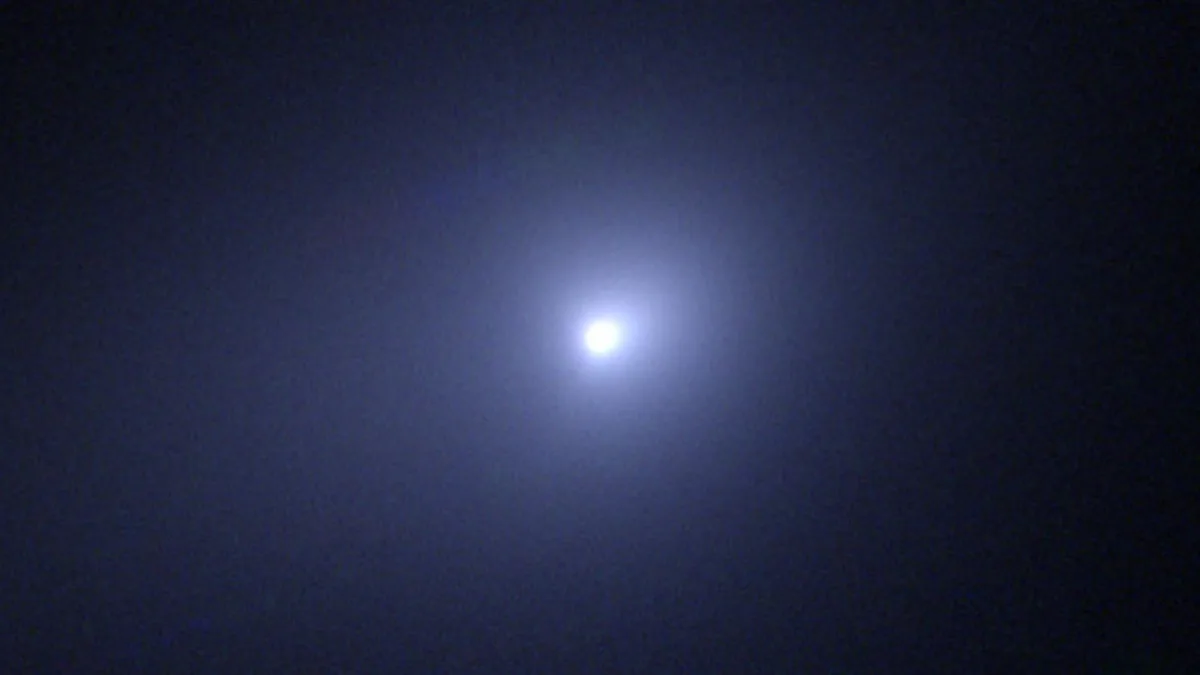
The SETI Institute found no extraterrestrial signals from 3I/ATLAS, confirming the interstellar comet is a natural object.
Key Takeaways
- •SETI Institute scanned 3I/ATLAS for technosignatures using the Allen Telescope Array.
- •Initial radio scans detected 74 million signals, all identified as human interference.
- •3I/ATLAS is the third confirmed interstellar object to visit our solar system.
- •Peer-reviewed findings of the SETI scan are expected for publication in mid-2026.
SETI Scans of 3I/ATLAS
Scientific efforts to determine the origin of the interstellar comet 3I/ATLAS have concluded, with researchers finding no evidence of artificial technology. The Search for Extraterrestrial Intelligence (SETI) Institute utilized the Allen Telescope Array (ATA) in Northern California to conduct a comprehensive SETI technosignature search on the object. Despite collecting extensive observational data, the results confirm that 3I/ATLAS is a natural celestial body rather than an artificial craft.
Data Collection and Signal Filtering
The observation campaign involved over 7 hours of continuous data collection across the 1 to 9 GHz radio frequency range. During this period, the Allen Telescope Array recorded approximately 74 million narrow-band radio signals. Advanced filtering algorithms were required to process this massive dataset, eventually reducing the count to roughly 200 signals. Every remaining instance was subsequently traced back to human-made radio frequency interference, primarily emanating from terrestrial sources and satellite constellations.
"The results from 3I/ATLAS show how realistic it is to detect a signal with the technology we have today," noted Valeria Garcia Lopez, study co-author from Furman University. This project underscores the growing technical challenge of isolating deep-space signals amidst the increasing clutter of Earth-based radio traffic.
Comparative Analysis of Interstellar Objects
3I/ATLAS, discovered by the Asteroid Terrestrial-impact Last Alert System (ATLAS) in July 2025, is the third confirmed interstellar object to enter our solar system. The object made its closest approach to Earth in December 2025 at a distance of approximately 170 million miles. While public speculation often follows the discovery of such rogue bodies, the scientific community maintains that 3I/ATLAS follows the expected trajectory of a natural comet.
3I/ATLAS vs. 1I/'Oumuamua: Key Specifications
| Metric | 3I/ATLAS | 1I/'Oumuamua |
|---|---|---|
| Classification | Interstellar Comet | Asteroid-like/Unknown |
| Discovery Year | 2025 | 2017 |
| Closest Earth Approach | 170 million miles | 15 million miles |
Technical Analysis of Radio Astronomy Trends
The observation of 3I/ATLAS demonstrates an evolution in rapid-response radio astronomy. The Allen Telescope Array commenced tracking within days of the comet's discovery, a significant improvement in operational agility compared to the 2017 observation of 1I/'Oumuamua. Historically, the Breakthrough Listen project set the precedent for scanning interstellar objects, but the 3I/ATLAS campaign highlights a shift toward more robust, automated signal processing. The sheer volume of 74 million false-positive signals serves as a bellwether for the radio astronomy community, signaling that as satellite density increases in low-Earth orbit, the threshold for identifying genuine extraterrestrial technosignatures will require increasingly sophisticated algorithmic filtering.
What Comes Next: Jupiter Approach and Peer Review
Following its transit through the inner solar system, 3I/ATLAS is expected to reach its closest approach to Jupiter in March 2026, according to NASA and Jet Propulsion Laboratory projections. The full findings from the Allen Telescope Array are currently being prepared for formal submission. The peer-reviewed publication of these results is expected in the Astronomical Journal by mid-2026.
Why This Matters for Planetary Science
While the search for radio signals returned null results, the broader planetary science community notes that 3I/ATLAS remains a high-value target for chemical analysis. Researchers are prioritizing the study of its cometary composition, specifically its unusual levels of methane and carbon dioxide. For the scientific community, the primary value of 3I/ATLAS lies in understanding the chemical building blocks of objects originating outside our solar system, rather than the search for artificial emissions.
Frequently Asked Questions
- What is the 3I/ATLAS interstellar comet?
- 3I/ATLAS is the third confirmed interstellar object to be discovered within our solar system. It was identified by the Asteroid Terrestrial-impact Last Alert System in July 2025 and is considered a natural cometary body.
- Why did SETI scan the comet 3I/ATLAS?
- The SETI Institute scanned the comet to check for technosignatures, which are indicators of extraterrestrial technology. The scans confirmed that all detected radio signals were the result of human-made interference from Earth-based or satellite sources.
Access up-to-date commercial aviation news and airline industry developments via omniflights.com. For reporting on UAP sightings, investigations, and aviation-related encounters, see the UAPs section at omniflights.com/uaps.

Written by Hardik Vishwakarma
Co-Founder & Aviation News Editor leading initiatives that improve trust and visibility across the global aviation industry. Covers airlines, airports, safety, and emerging technology.
Visit ProfileYou Might Also Like

Autonomous Fixed-Wing Aircraft Development Gains Momentum

Boeing 787-9 Completes Short Inlet Tests in Montana

Airbus A321neo to Test Folding Wings of Tomorrow Project
Voyageur Orders Canada's First Airbus U030 Flexrotor

LATAM Selects SES Multi-Orbit Wi-Fi for 60+ New Jets