Indian Airlines Seek Aid as West Asia Conflict Inflates Operating Costs

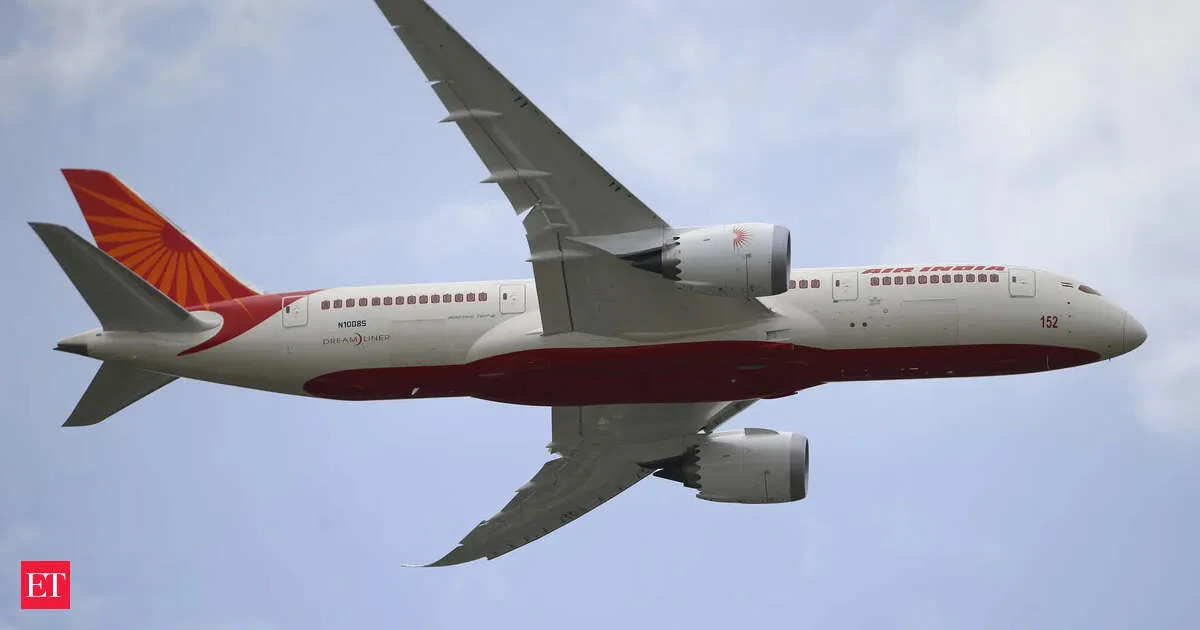
Indian airlines are seeking government aid to mitigate soaring jet fuel prices and insurance premiums caused by the escalating conflict in West Asia.
Key Takeaways
- •Facing soaring jet fuel prices and a 72% spike in Singapore jet fuel costs.
- •Requesting government support for fee relief and regulatory flexibility on pilot duty hours.
- •Experiencing major operational disruptions from costly flight rerouting and EASA restrictions.
- •Seeing insurance premiums for Hull War Risk increase by up to ₹1 crore per wide-body flight.
Indian carriers have formally requested government assistance as the escalating conflict in West Asia drives up operating costs, threatening the viability of key international routes. In a meeting with Civil Aviation Minister Ram Mohan Naidu, airline executives highlighted the severe financial strain from spiking jet fuel prices, surging insurance premiums, and costly flight rerouting.
The conflict has introduced a multi-faceted financial crisis for airlines heavily exposed to the region. The primary concern is the price of jet fuel, which according to the International Air Transport Association (IATA), can account for 25-30% of an airline's operating costs. The price of Singapore jet fuel rocketed 72% to a record $225.44 a barrel, creating immediate and significant pressure on carrier balance sheets. Analysts at Citi noted that they expect benchmark Brent crude to trade between $80 and $90 a barrel if the conflict persists.
Financial Pressures Mount
Beyond fuel, insurance costs have seen a dramatic increase. Insurers have raised premiums for Hull War Risk Insurance—a specialized policy covering conflict-related perils—by ₹30-40 lakh for a narrow-body aircraft and ₹90 lakh to ₹1 crore for a wide-body aircraft on a single return flight, such as Delhi-Dubai-Delhi. In response, airline executives have pressed the government for relief, including the rationalization of airport fees and route navigation charges imposed by the Airports Authority of India (AAI).
A senior government official indicated that while direct financial incentives are not currently under consideration, the ministry is evaluating ways to resolve regulatory bottlenecks. The official stated, “Financial incentive is a call which has to be taken by various arms of the government. In the meantime, we are looking at giving expeditious permission so that airlines can continue operating to West Asia.”
Operational and Regulatory Hurdles
The financial strain is compounded by significant operational challenges. Air India has been forced to adopt longer, more circuitous routes for its services to Europe and North America to bypass the conflict zone. This directly inflates fuel consumption and crew costs, with rerouting adding one to two hours of flight time at an estimated additional cost of US$6,000 to US$10,000 per hour for a long-haul flight.
The situation is particularly complex for IndiGo, which had leased six wide-body aircraft to expand its European network. The airline is unable to fully utilize these aircraft as the owner, Norse Atlantic, must adhere to directives from the European Union Aviation Safety Agency (EASA). Current EASA advisories prohibit flights over the airspace in question. This constraint underscores the cascading impact of regional conflicts on global aviation regulations and partnerships.
These challenges are magnified because West Asia has become the primary transit hub for Indian carriers flying west, particularly since they have been unable to use Pakistani airspace following a previous geopolitical event. Air India is reportedly pushing for permission to use a route over China, but this would require complex approvals from the ministries of home and defence.
To aid operations, the government is considering measures such as extending watch hours at western airports and granting exemptions from Flight Duty Time Limitation (FDTL) rules on certain extended routes to manage crew scheduling.
Evacuation Flights and Market Impact
Airlines are currently running very limited operations into West Asia, primarily focused on evacuating Indian nationals. However, executives describe these flights as commercially unviable. Aircraft often fly nearly empty on the inbound leg to the region. Furthermore, operational reliability at hub airports like Dubai, Doha, and Riyadh is low, with extensive safety risk assessments required before each flight, leading to delays and poor aircraft utilization.
The government stated that on Friday, domestic airlines cancelled 278 international flights and scheduled 96 flights to and from West Asia. The market has reacted to the instability, with shares of InterGlobe Aviation (operator of IndiGo) falling for four consecutive days. Analysts at Standard & Poor's (S&P) cautioned about the outsized risk for Indian carriers. “The conflict will likely have a more pronounced effect on Indian-headquartered carriers, given their higher capacity and number of routes to West Asia,” S&P wrote. “We believe carriers with a higher proportion of international routes will be most affected.”
Why This Matters
The current situation highlights the acute vulnerability of the airline industry to geopolitical shocks. For Indian carriers, their strategic reliance on West Asian airspace as a transit corridor has transformed a regional conflict into a significant threat to their financial stability and international growth plans. The episode underscores the delicate interplay between operational logistics, international regulations, and national security, forcing both airlines and governments to seek rapid and flexible solutions to maintain critical air links.
Get breaking commercial aviation news and expert airline analysis at omniflights.com. From aircraft production to supply chains, commercial aviation manufacturing news is covered at omniflights.com/manufacturing.

Written by Ujjwal Sukhwani
Aviation News Editor & Industry Analyst delivering clear coverage for a worldwide audience. Covers flight operations, safety regulations, and market trends with expert analysis.
Visit ProfileYou Might Also Like

Southwest Reports Record Q3 Revenue Amid Transformation
American Airlines Reports Record Q3 Revenue Amid Fuel Costs
American Airlines Projects 2026 Loss on Rising Fuel Costs
American Airlines to Nearly Triple Premium 787-9 Fleet
Airline Shares Rise Following United Revenue Guidance