Delta Launches Daily LAX-HKG Service with A350-900

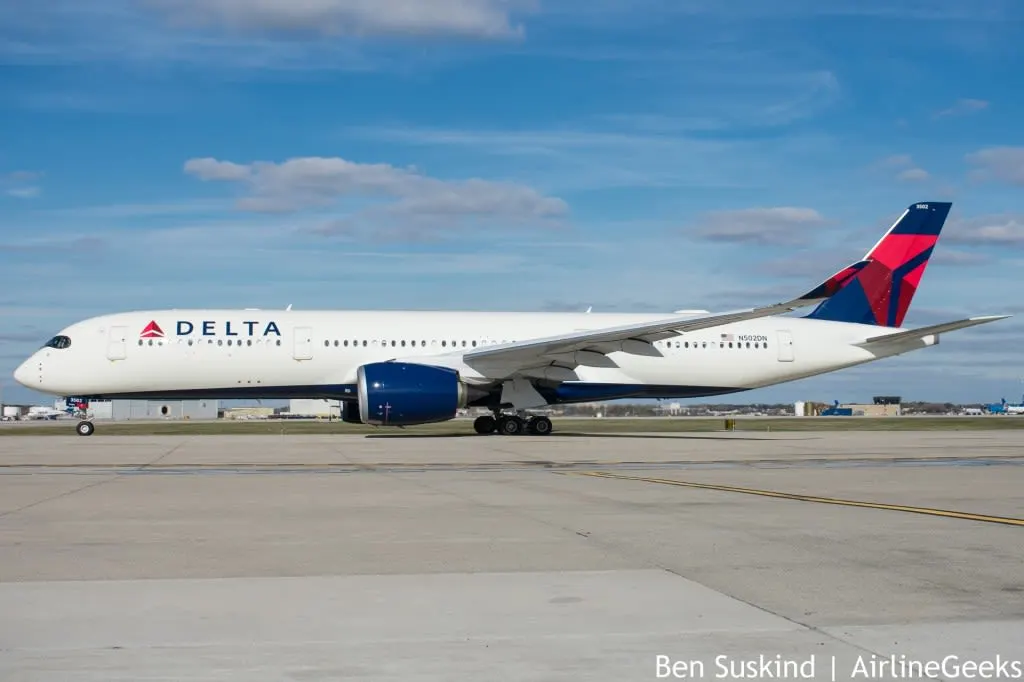
Delta returns to Hong Kong with daily nonstop flights from Los Angeles, adding 4,300 weekly seats to the competitive transpacific corridor.
Key Takeaways
- •Delta launches daily LAX-HKG flights on June 6, 2026.
- •The new route adds 4,300 weekly seats, increasing capacity by 20%.
- •Delta utilizes the A350-900 for the 6,309-nautical-mile journey.
- •The service breaks the existing Cathay Pacific and United duopoly.
Delta Returns to Hong Kong Market
Delta Air Lines is set to resume direct service between Los Angeles International Airport (LAX) and Hong Kong International Airport (HKG) on June 6, 2026. This daily nonstop route marks the airline's return to the Hong Kong market after a seven-year absence, signaling a strategic shift in its transpacific network. The inaugural flight will be commanded by Captain Victor Ngai, a pilot who grew up in Hong Kong near the historical Kai Tak Airport.
Competitive Impact on Transpacific Routes
The launch of Delta LAX to Hong Kong service introduces significant new capacity to a route previously dominated by a duopoly. According to OAG Schedules Analyser data, Delta’s entry adds approximately 4,300 weekly seats to the market, increasing total nonstop capacity by more than 20%. Prior to this expansion, Cathay Pacific held a 63% capacity share, while United Airlines maintained 37%. The arrival of the Airbus A350-900 transpacific service provides a fresh alternative for passengers and cargo forwarders, potentially exerting downward pressure on fares as carriers vie for market share.
Operational Specifications and Fleet Deployment
Delta is deploying the Airbus A350-900 for this route, an aircraft designed for long-haul efficiency. The westbound flight covers a distance of 6,309 nautical miles with a scheduled flight time of 14 hours and 30 minutes. The aircraft operates under Federal Aviation Administration (FAA) Extended-range Twin-engine Operations Performance Standards (ETOPS), ensuring safety and redundancy for long-range oceanic routing. The Airbus A350-900 official specifications detail its optimized range and cabin efficiency, which are critical for maintaining profitability on such extended segments.
The Strategic Shift at LAX
This route expansion is part of a broader strategy to bolster LAX as a premier coastal hub. Paul Baldoni, Senior Vice President of Network Planning at Delta, noted that the service strengthens the airline’s presence in one of the world's most dynamic markets. The move complements recent capacity additions to Auckland, Melbourne, and Shanghai. For Los Angeles World Airports (LAWA), the new service provides a tangible return on the $2.3 billion Terminal 3 modernization project, which was designed to accommodate increased international throughput.
Technical Comparison: A350-900 vs 787-9
| Metric | Airbus A350-900 (Delta) | Boeing 787-9 (United) |
|---|---|---|
| Maximum Range | 8,500 nm | 7,530 nm |
| Typical Capacity | 275-306 seats | ~257 seats |
| Engine Type | Rolls-Royce Trent XWB | GEnx-1B / Trent 1000 |
Why This Matters for Transpacific Competition
This expansion represents a significant test of the current transpacific demand landscape. While the route offers a new corridor for high-value cargo—capable of transporting over 20 tons per flight—some analysts suggest the added capacity could be aggressive given that corporate travel recovery has lagged in certain Asian sectors. Historically, Delta's previous exit from the Hong Kong market in 2018 followed challenges in maintaining a viable transit strategy, contrasting with its current focus on point-to-point connectivity from its primary West Coast gateway. The success of this route will likely depend on Delta's ability to capture premium demand currently split between established incumbent carriers.
Frequently Asked Questions
- What aircraft does Delta use for the new LAX to Hong Kong route?
- Delta is operating the daily nonstop service between Los Angeles and Hong Kong using the Airbus A350-900 aircraft, which is configured with four cabin classes.
- Why did Delta previously leave the Hong Kong market?
- Delta suspended its Hong Kong service in October 2018 as part of a strategy to shift its Asian transit focus toward its joint venture with Korean Air at Seoul-Incheon.
omniflights.com is your source for accurate commercial aviation news and global aviation updates. Track policy changes, airspace rules, and global aviation governance in the Regulatory category at omniflights.com/regulatory.

Written by Hardik Vishwakarma
Co-Founder & Aviation News Editor leading initiatives that improve trust and visibility across the global aviation industry. Covers airlines, airports, safety, and emerging technology.
Visit ProfileYou Might Also Like

Southwest Reports Record Q3 Revenue Amid Transformation
American Airlines Reports Record Q3 Revenue Amid Fuel Costs
American Airlines Projects 2026 Loss on Rising Fuel Costs
American Airlines to Nearly Triple Premium 787-9 Fleet
Airline Shares Rise Following United Revenue Guidance