Indian Airlines Face Delays as IMD Issues Delhi Weather Alert

Co-Founder & CEOAviation News Editor delivering trusted coverage across the global aviation industry.
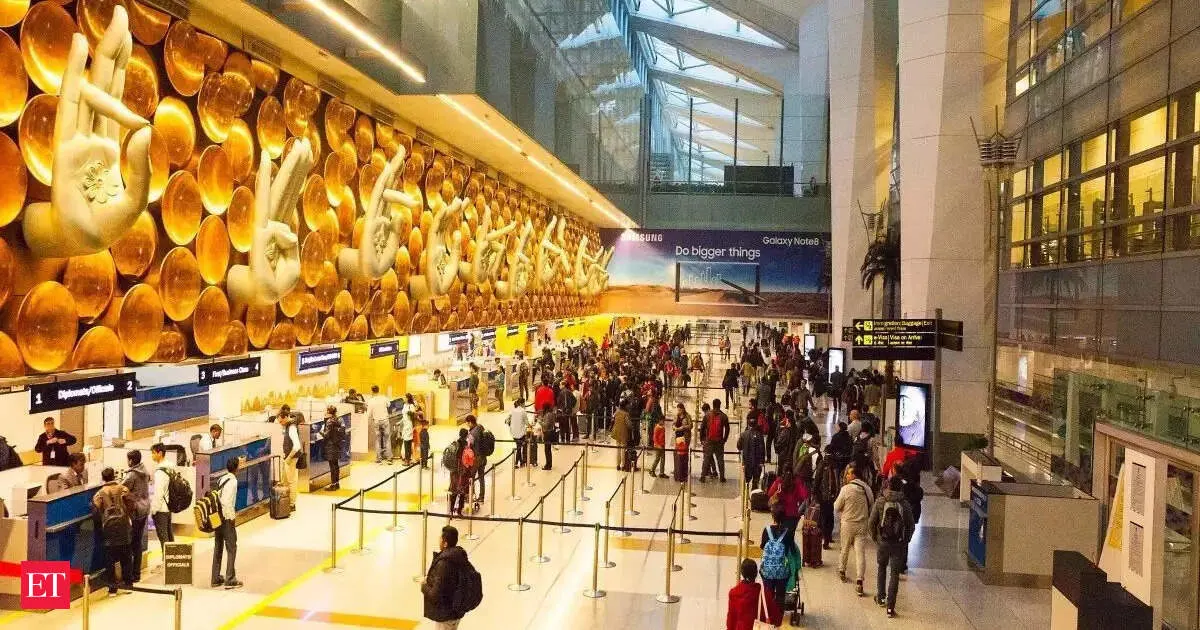
Over 300 flights were delayed at Delhi Airport after an IMD weather alert for thunderstorms prompted travel advisories from IndiGo, Air India, and SpiceJet.
Key Takeaways
- •Delayed over 300 flights at Delhi's Indira Gandhi International Airport.
- •Diverted at least 22 flights following a yellow alert for thunderstorms from the IMD.
- •Prompted travel advisories from major carriers including IndiGo, Air India, and SpiceJet.
- •Highlights the growing impact of extreme weather on Indian aviation operations.
Severe weather in India's National Capital Region (NCR) has caused significant operational disruptions at Delhi's Indira Gandhi International Airport (DEL), with over 300 flights delayed and at least 22 flights diverted. The disruption followed a yellow alert for rain and thunderstorms issued by the India Meteorological Department (IMD), prompting major carriers including IndiGo, Air India, and SpiceJet to issue travel advisories for passengers.
The widespread delays and diversions underscore the operational challenges faced by one of the world's busiest airports during adverse weather events. According to data from Delhi International Airport Limited (DIAL), the airport operator, the diversions occurred on March 18, 2026, as conditions deteriorated. The impact on flight schedules highlights the cascading effect of weather on an airport that handles more than 1,300 flight movements daily. The primary stakeholders affected include passengers, who faced extensive delays and potential missed connections; the airlines, which incurred higher operational costs from fuel burn and crew rescheduling; and DIAL, which managed significant air traffic and terminal congestion.
Airline and Regulatory Response
In response to the IMD forecast, Indian airlines proactively communicated with passengers. SpiceJet issued a formal travel advisory warning of potential disruptions to both arrivals and departures at Delhi. Similarly, IndiGo stated, "With thundershower expected to pass over Delhi and Bangalore, departures and arrivals may be slightly impacted." The airline noted that its teams were preparing in advance but acknowledged that severe weather could slow operations.
The response from airlines and air traffic control is governed by strict safety protocols mandated by the Directorate General of Civil Aviation (DGCA), India's aviation regulator. The DGCA's "Revised Operational Guidelines for Adverse Weather Conditions" requires pilots to prioritize safety over on-time performance. These guidelines mandate that aircraft maintain a buffer of at least 20 nautical miles from identified convective activity, such as thunderstorms, often necessitating holding patterns or diversions to alternate airports. These procedures, while critical for safety, contribute directly to airport congestion and flight delays.
Context of Recurring Weather Disruptions
This event is not an isolated incident for Delhi Airport. It aligns with a broader trend of increasing flight disruptions in India due to extreme and unseasonal weather patterns. The DGCA has previously updated its safety guidelines to address the growing unpredictability associated with climate change.
Historical precedents further illustrate the airport's vulnerability. In August 2025, an IMD red alert for heavy rain led to over 300 departing flights facing average delays of 17 minutes. A few months later, in December 2025, dense fog and low visibility conditions resulted in over 148 flight cancellations and more than 150 delays. These past events, similar to the current thunderstorm-related disruptions, demonstrate how high-volume operations at DEL are susceptible to significant schedule degradation from severe weather.
Technical Analysis
The repeated disruption at a major hub like Delhi highlights a critical intersection of meteorology, infrastructure capacity, and regulatory oversight. With air traffic density increasing, the buffer for absorbing weather-related delays is shrinking. The event on March 18-20 demonstrates that even with advanced forecasting from the IMD and proactive advisories from airlines, the physical limitations of runway capacity and airspace management during severe weather can lead to widespread, cascading delays. This pattern is consistent with the historical precedent of fog and monsoon-related disruptions, suggesting a systemic challenge for Indian aviation. The DGCA's focus on safety, while non-negotiable, places the economic and operational burden on airlines and airports, reinforcing the need for enhanced resilience strategies and dynamic air traffic flow management to mitigate future impacts.
What Comes Next
The immediate operational focus is on stabilizing flight schedules and clearing the backlog of delayed flights. According to the India Meteorological Department, the yellow alert for the Delhi-NCR region is expected to be lifted by March 21, 2026, which should allow for a gradual return to normal operations. Airlines will continue to manage passenger re-bookings and communicate any further schedule adjustments. The event will likely be reviewed by both DIAL and the DGCA to refine adverse weather protocols further, as outlined in the official guidelines available on the Directorate General of Civil Aviation (DGCA) website.
Why This Matters
This incident underscores the increasing vulnerability of India's aviation network to climate-related disruptions. For airlines, it represents a recurring source of financial strain and a challenge to service reliability. For passengers, it signals a growing need to anticipate weather-related travel uncertainty, particularly when flying through major hubs like Delhi.
From airline operations to fleet updates, commercial aviation news lives at omniflights.com. From aircraft production to supply chains, commercial aviation manufacturing news is covered at omniflights.com/manufacturing.
Written by Hardik Vishwakarma
Co-Founder & Aviation News Editor leading initiatives that improve trust and visibility across the global aviation industry. Covers airlines, airports, safety, and emerging technology.
Visit ProfileYou Might Also Like
Discover more aviation news based on similar topics

IndiGo Opens Commercial Flights at Bhogapuram
IndiGo launched the first commercial flight to the new Rs 5,700 crore Bhogapuram Airport, shifting civilian traffic from the old civil enclave.

Sydney Airport Master Plan 2045 Approved
The Australian government approved Sydney Airport's Master Plan 2045, enabling terminal integration to handle 72.6 million passengers by 2045.

Visakhapatnam Airport Ends Commercial Flights for 30 Years
Visakhapatnam Airport ended scheduled commercial flights ahead of Bhogapuram's opening, triggering a 30-year moratorium on civil operations.

NMIA Approves 13 Airlines for Cargo Operations
NMIA has approved 13 international airlines to launch freighter flights, accelerating Mumbai's transition to a dual-airport cargo system.

Hong Kong Air Cargo Lands First Navi Mumbai Freighter
Hong Kong Air Cargo launched flights to Navi Mumbai, marking the airport's first international freighter service with 6 weekly movements.

ENAC Suspends Catania Flights Amid Mount Etna Eruption
ENAC suspended operations at Catania Airport due to a Mount Etna eruption, resulting in 700 flight cancellations and massive regional diversions.