CLT Begins Construction on New 10,000-Foot Runway with Digital Twin Tech

Co-Founder & CEOAviation News Editor delivering trusted coverage across the global aviation industry.
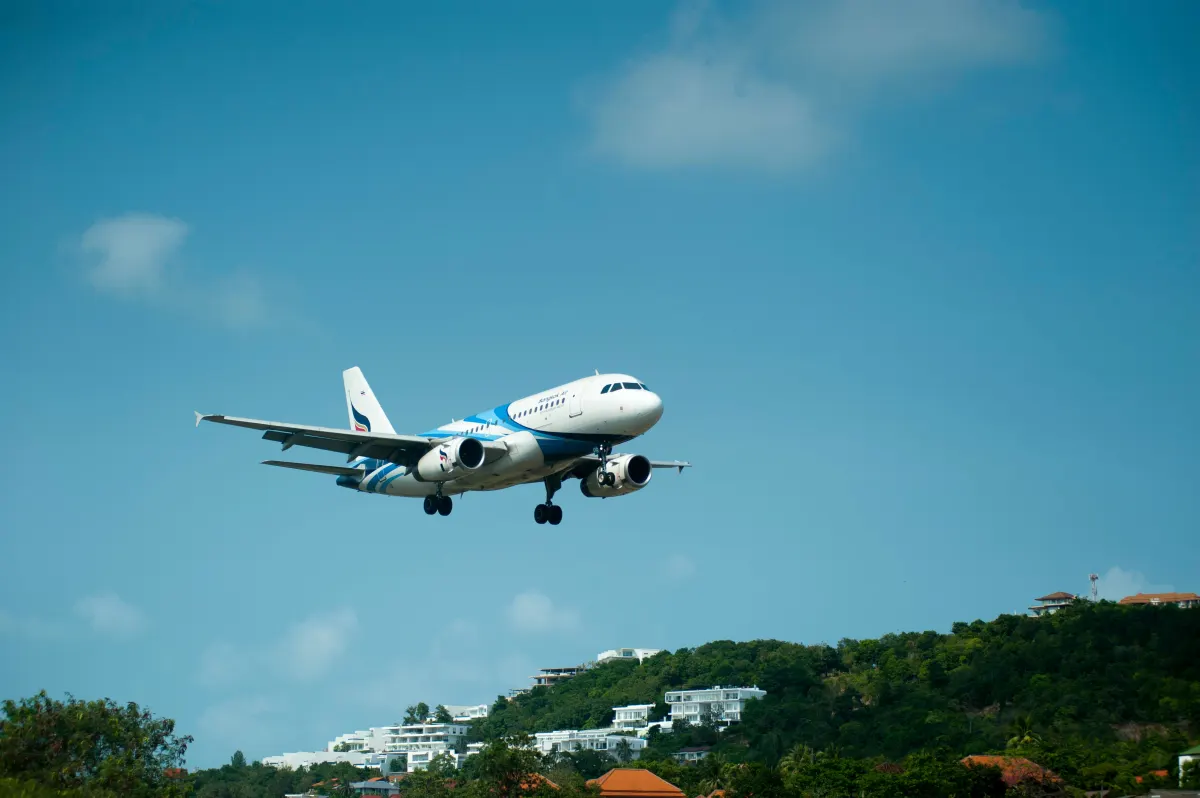
Charlotte Douglas International Airport begins building a fourth runway featuring embedded sensors and a digital twin to enhance airfield safety and...
Key Takeaways
- •Begins construction on a new 10,000-foot fourth parallel runway at Charlotte Douglas International Airport.
- •Partners with UNC Charlotte in a $6.5 million project to create a runway digital twin with embedded sensors.
- •Projects a 39% increase in airfield capacity for arrivals and departures upon completion in Fall 2027.
- •Secures a $2 million Federal Aviation Administration grant to inform future national pavement standards.
Construction has commenced on a new fourth parallel runway at Charlotte Douglas International Airport (CLT), an infrastructure project that integrates advanced sensor technology to create a 'living laboratory' for airfield pavement. The project, a collaboration with the University of North Carolina at Charlotte, aims to significantly enhance operational efficiency and safety. According to the Charlotte Douglas International Airport Official Press Release, CLT ranked 7th globally with 574,193 aircraft operations in 2025, underscoring the need for expanded capacity.
The new runway represents a critical capacity expansion for the major hub, which is projected to increase airfield capacity for arrivals and departures by 39%. This development will directly benefit hub operator American Airlines and its passengers by reducing delays and increasing operational flexibility. The core of the project's innovation lies in a partnership with UNC Charlotte's Aviation and Innovation Research Institute (AIR) to embed a network of sensors directly into the concrete, creating a real-time digital twin of the runway.
Project Scope and Technology
The new runway's physical specifications are substantial, measuring 10,000 feet long, 150 feet wide, and 18 inches deep. The technological overlay is part of an approximately $6.5 million instrumentation and digital twin initiative, supported by a $2 million grant from the Federal Aviation Administration (FAA) under its Airport Concrete Pavement Technology Program. This FAA grant aims to leverage the data collected at CLT to inform and update future nationwide airfield pavement design and construction standards.
Sensors embedded within the concrete will collect real-time data on pavement health, strain from aircraft loads, temperature, and moisture levels. Tara Cavalline, Director of the Charlotte AIR Institute, noted that this system will replace traditional manual visual assessments for de-icing. Instead of relying on observation, airport maintenance crews will have access to precise data, allowing for optimized application of de-icing agents. This transition is expected to increase safety and reduce the inefficiencies associated with conventional methods.
Jack Christine, Chief Infrastructure Officer at CLT, highlighted the dual benefit of the project, stating it transforms the airport into a 'living laboratory' for students while simultaneously modernizing critical infrastructure. This collaboration provides UNC Charlotte students and researchers with invaluable hands-on experience and access to a unique dataset.
Industry Context and Precedents
The integration of digital twin technology into airport infrastructure is a growing industry trend. This approach allows operators to create virtual replicas of physical assets, fed by real-time data, to proactively monitor wear, stress, and environmental impacts. The project at CLT follows earlier explorations of smart pavement in the U.S. In the mid-2010s, Denver International Airport (DEN) conducted trials with embedded sensors to monitor aircraft loads and weather conditions. More recently, in 2021, Dallas Fort Worth International Airport (DFW) utilized digital twin technology for a major runway rehabilitation project, demonstrating the viability and benefits of virtual models for managing large-scale infrastructure.
CLT's initiative builds on these precedents by fully integrating the technology from the ground up in new construction, rather than retrofitting existing pavement. John Daniels, Vice Chancellor of Research at UNC Charlotte, emphasized the national significance, stating that the data and models generated will inform future airfield design across the country. The FAA's financial backing reinforces the project's role as a national testbed.
What Comes Next
The project has a clear timeline established by the airport and its university partners. The installation of the advanced sensor network into the runway pavement is scheduled for Summer 2026. Following the completion of all construction and technology integration, the new fourth parallel runway is slated for commissioning and full operational use by Fall 2027. Once active, the FAA will begin receiving empirical data on concrete performance under live conditions, which will be used to refine its national design and construction criteria for airport pavements.
Why This Matters
This development at Charlotte Douglas International Airport signals a significant step in the modernization of U.S. aviation infrastructure. It moves beyond simply adding capacity and establishes a new benchmark for how airports can leverage data and technology to improve safety, efficiency, and long-term maintenance. For airlines and passengers, the project promises reduced delays at a major hub, while for the broader aviation industry, it serves as a critical pilot program for the future of 'smart' airfield design and operation.
Frequently Asked Questions
- What is the new fourth runway project at Charlotte Douglas International Airport?
- It is the construction of a new 10,000-foot parallel runway that embeds advanced sensors into the pavement. This technology, part of a $6.5 million partnership with UNC Charlotte, will create a digital twin to monitor the runway's health, improve de-icing, and increase safety.
- How will the new runway at CLT improve airport operations?
- The new runway is projected to increase airfield capacity for arrivals and departures by 39%. Additionally, its smart sensor technology will enable more efficient de-icing operations, reducing delays and resource consumption during winter weather at the major American Airlines hub.
- When will the new fourth runway at Charlotte Douglas Airport be completed?
- Construction on the runway has already begun. The installation of the embedded sensor technology is planned for Summer 2026, and the new runway is scheduled to be fully operational and commissioned by Fall 2027.
Visit omniflights.com for the latest commercial aviation news and airline industry updates. Stay informed on aviation incidents, investigations, and best practices in the Safety category at omniflights.com/safety.
Written by Hardik Vishwakarma
Co-Founder & Aviation News Editor leading initiatives that improve trust and visibility across the global aviation industry. Covers airlines, airports, safety, and emerging technology.
Visit ProfileYou Might Also Like
Discover more aviation news based on similar topics
IndiGo Opens Commercial Flights at Bhogapuram
IndiGo launched the first commercial flight to the new Rs 5,700 crore Bhogapuram Airport, shifting civilian traffic from the old civil enclave.

Sydney Airport Master Plan 2045 Approved
The Australian government approved Sydney Airport's Master Plan 2045, enabling terminal integration to handle 72.6 million passengers by 2045.
Visakhapatnam Airport Ends Commercial Flights for 30 Years
Visakhapatnam Airport ended scheduled commercial flights ahead of Bhogapuram's opening, triggering a 30-year moratorium on civil operations.
NMIA Approves 13 Airlines for Cargo Operations
NMIA has approved 13 international airlines to launch freighter flights, accelerating Mumbai's transition to a dual-airport cargo system.

Hong Kong Air Cargo Lands First Navi Mumbai Freighter
Hong Kong Air Cargo launched flights to Navi Mumbai, marking the airport's first international freighter service with 6 weekly movements.

ENAC Suspends Catania Flights Amid Mount Etna Eruption
ENAC suspended operations at Catania Airport due to a Mount Etna eruption, resulting in 700 flight cancellations and massive regional diversions.