IATA Warns EES Delays May Cause 6-Hour Airport Queues

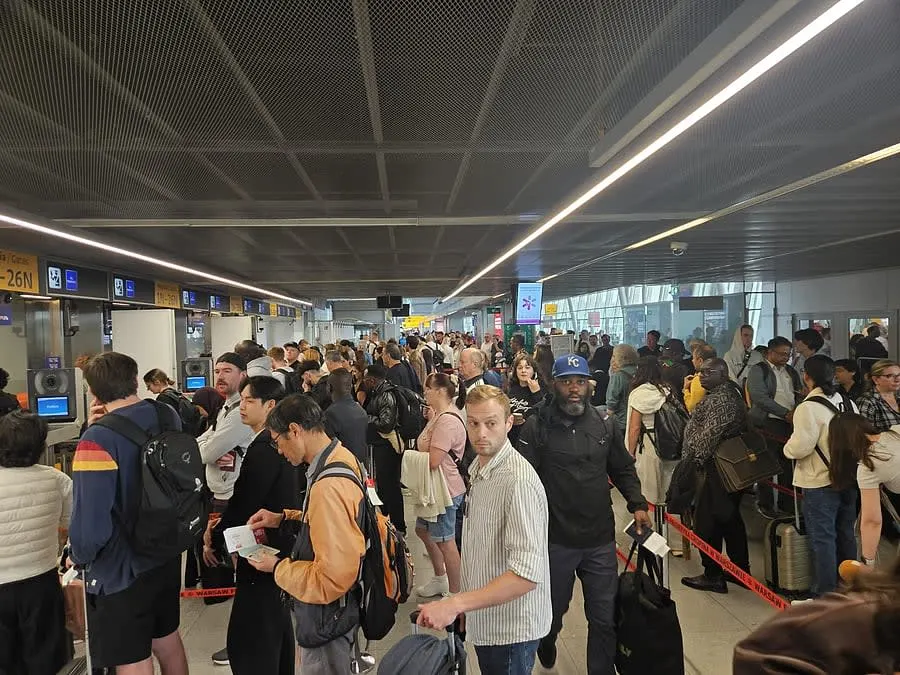
IATA warns that the EU's new Entry/Exit System could cause six-hour border delays for non-EU travelers, threatening connectivity this summer.
Key Takeaways
- •IATA warns EES biometric checks could cause 6-hour airport queues.
- •New biometric processing takes 90 seconds, 3x longer than manual checks.
- •Fuel costs now account for up to 45% of airline operating expenses.
- •EES flexibility mechanism is set to expire on September 7, 2026.
IATA Warns of Summer Border Chaos
Europe’s new Entry/Exit System (EES) is poised to create significant operational disruption across the continent this summer, according to the International Air Transport Association (IATA). At the association's 82nd Annual General Meeting in Rio de Janeiro, leadership warned that the transition to digital biometric border registration for non-EU travelers is already causing severe bottlenecks. Rafael Schvartzman, IATA’s Regional Vice President for Europe, cautioned that passengers could face waiting times of up to six hours at border checkpoints as the system struggles to handle current traffic volumes.
Operational Bottlenecks and Processing Times
The implementation of the EES across 29 participating European nations has fundamentally altered the throughput math at international hubs. While traditional manual passport stamping typically required 20 to 25 seconds per passenger, the new biometric registration process requires approximately 90 seconds. This 260% to 350% increase in processing time per individual has created a systemic strain on terminal infrastructure. According to Schvartzman, these delays are already manifesting in major hubs including Italy, Greece, Spain, Portugal, and Belgium, leading to a rising volume of missed flights and broken connections.
Industry Resilience and Rising Costs
Beyond the immediate border control challenges, the aviation sector is grappling with a broader financial crisis. European carriers are reporting that fuel costs have surged, now accounting for up to 45% of total operating expenses compared to a historical baseline of roughly 25%. This financial pressure, combined with increased passenger taxes and airport charges, is significantly degrading the competitiveness of the regional market. Airlines are currently forced to rationalize routes and implement aggressive fuel hedging strategies to mitigate these mounting costs while simultaneously managing the logistical fallout of border-related passenger disruptions.
The September 7 Deadline
Regulatory authorities are currently utilizing the Schengen Borders Code flexibility mechanism, which allows border agencies to temporarily suspend biometric collection during periods of extreme congestion. However, this provision is set to expire on September 7, 2026. IATA is advocating for the extension of these suspension mechanisms, arguing that the system has not yet reached the required level of stability to function effectively without them. The European Commission maintains that the regulation provides necessary security enhancements, though industry stakeholders argue that the current infrastructure is insufficient to meet the demands of the upcoming peak travel season.
Historical Context of Border Transitions
The current challenges mirror historical transitions in border technology. In 2004, the introduction of the US-VISIT biometric program required extensive infrastructure modifications and initially triggered significant processing throughput issues. Similarly, the 2019 expansion of UK eGates to additional nationalities resulted in widespread queuing and technical instability. These precedents indicate that large-scale biometric rollouts frequently experience a stabilization period marked by significant operational friction, a pattern that industry experts suggest is currently repeating across the European theater.
Why This Matters for European Connectivity
The failure to resolve these border bottlenecks carries implications for the entire European network. For airlines, the primary risk is an unplanned increase in passenger rebooking costs and a degradation of hub efficiency. For travelers, the uncertainty around transit times necessitates a departure from standard pre-flight planning, with IATA advising passengers to allow for significantly longer lead times at airports. The situation positions the European aviation sector at a critical junction where the need for digital security upgrades must be balanced against the necessity of maintaining efficient passenger throughput to support regional economic activity.
Frequently Asked Questions
- Why is the new EES system causing longer airport queues?
- The Entry/Exit System requires biometric registration that takes approximately 90 seconds per passenger, which is significantly longer than the 20 to 25 seconds required for traditional manual passport stamping.
- What is the current status of the EES flexibility mechanism?
- Border agencies are currently using a flexibility mechanism to suspend biometric collection during severe congestion, but this provision is scheduled to expire on September 7, 2026.
Visit omniflights.com for the latest commercial aviation news and airline industry updates. For detailed airline coverage, route changes, and fleet moves, explore the Airlines section at omniflights.com/airlines.

Written by Hardik Vishwakarma
Co-Founder & Aviation News Editor leading initiatives that improve trust and visibility across the global aviation industry. Covers airlines, airports, safety, and emerging technology.
Visit ProfileYou Might Also Like

FAA Mandates Inspections for Nearly 2,000 Boeing 737NG Jets

FAA Proposes Inspection Rule for 980 Airbus Helicopters

FAA Clears Boeing 737 MAX 10 Software Glitch

FAA Faces $3.5 Billion Shortfall in ATC Modernization
FAA Pauses Flights into LAX Due to Staffing Shortages