Hop-A-Jet Seeks Stricter FAA Rules After Fatal Engine Crash

Co-Founder & CEOAviation News Editor delivering trusted coverage across the global aviation industry.

Following a fatal February 2024 crash, Hop-A-Jet is urging the FAA to strengthen a proposed Airworthiness Directive regarding GE CF34 engine corrosion.
Key Takeaways
- •NTSB links 2024 fatal crash to undetected GE CF34 engine corrosion.
- •FAA proposal affects 1,152 CF34 engines on U.S.-registered Challengers.
- •Hop-A-Jet urges stricter mandatory inspections over manufacturer flexibility.
- •Final FAA Airworthiness Directive is expected by late 2026.
Following the fatal Hop-A-Jet Challenger 604 crash on February 9, 2024, the operator is formally urging the Federal Aviation Administration (FAA) to implement more stringent oversight regarding GE CF34 engine corrosion. The National Transportation Safety Board (NTSB) released its final report on April 23, 2026, officially identifying undetected corrosion in the High-Pressure Compressor (HPC) as the probable cause of the dual-engine failure. The incident, which involved a Bombardier Challenger 604, has prompted a significant regulatory response centered on the Variable Geometry (VG) system.
Regulatory Response and Industry Impact
The FAA has issued a Notice of Proposed Rulemaking (NPRM) Docket No. FAA-2026-3875, which outlines mandatory restart tests, Borescope Inspections (BSI), and functional checks for GE CF34 engines. This proposed Airworthiness Directive (AD) currently affects 1,152 CF34-series engines installed on U.S.-registered Bombardier Challenger aircraft. The public comment period for this proposal concluded on June 15, 2026. For Part 135 operators, the directive introduces substantial operational burdens, including increased maintenance costs and extended aircraft grounding periods required to facilitate these internal engine examinations.
Technical Analysis: The Corrosion Mechanism
The NTSB investigation revealed that the engine failure was linked to long-term exposure to saline environments, which accelerated corrosion within the HPC. A critical finding in the investigation was the occurrence of a 'hung start' issue 25 days before the fatal accident—a documented precursor to the eventual failure of the variable geometry system. This system relies on adjustable stator vanes to regulate airflow; when corrosion binds these components, the engine cannot maintain stable airflow, leading to a compressor stall. Historically, this event echoes the 2004 Pinnacle Airlines Flight 3701 crash, where engine core lock on a CF34-powered CRJ200 led to systemic changes in pilot training and engine maintenance procedures. The current situation suggests a shift toward applying Part 121 commercial maintenance rigor to the private charter sector.
Manufacturer Perspectives and Compliance
While the industry largely supports the safety objective, GE Aerospace has argued in public comments that the FAA's proposed dual-mandate of both borescope inspections and functional checks may be redundant. The manufacturer advocates for more flexible alternative compliance methods to reduce the operational burden on operators. Conversely, Hop-A-Jet CEO Barry Ellis has maintained that current manufacturer service bulletins are insufficient. Ellis argues that these must be elevated to mandatory directives to close existing reporting gaps, ensuring that operators cannot bypass essential baseline inspections.
What Comes Next
The FAA is expected to issue a final Airworthiness Directive for the GE CF34 engine fleet in late 2026. This regulation will codify the inspection requirements, likely forcing a standardization of maintenance practices across all Part 135 operators of the Challenger 604, 605, and 650 variants. Maintenance, Repair, and Overhaul (MRO) providers are preparing for a projected surge in demand for specialized borescope analysis and stator vane spindle checks as the mandate takes effect.
Why This Matters for Private Aviation
This regulatory shift signals a broader industry trend toward heightened scrutiny of legacy engine components operating in coastal, salt-heavy climates. For operators, the move represents a permanent increase in the cost of airworthiness, as corrosion-related risks now require more proactive and frequent intervention. The case serves as a reminder of the critical interplay between engine health monitoring and the safety of business aviation fleets.
Frequently Asked Questions
- What caused the fatal Hop-A-Jet Challenger 604 accident in 2024?
- The NTSB determined that the fatal dual-engine failure was caused by undetected corrosion in the GE CF34 engine's high-pressure compressor, which led to a failure of the variable geometry system.
- How many engines are affected by the proposed FAA Airworthiness Directive?
- The proposed FAA directive, docket FAA-2026-3875, affects 1,152 GE CF34-series engines currently installed on U.S.-registered Bombardier Challenger aircraft.
omniflights.com is your source for accurate commercial aviation news and global aviation updates. From aircraft production to supply chains, commercial aviation manufacturing news is covered at omniflights.com/manufacturing.
Written by Hardik Vishwakarma
Co-Founder & Aviation News Editor leading initiatives that improve trust and visibility across the global aviation industry. Covers airlines, airports, safety, and emerging technology.
Visit ProfileYou Might Also Like
Discover more aviation news based on similar topics
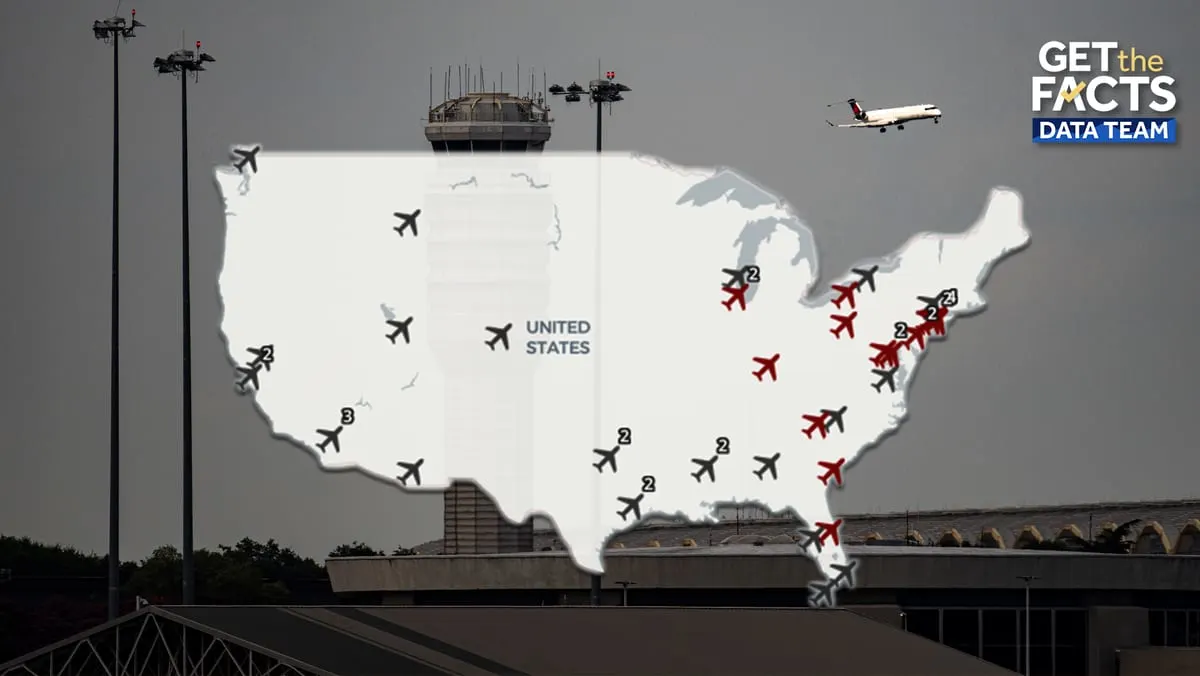
NTSB Safety Recommendations Lag Amid 6 Monthly Near-Misses
Approximately 6 near-miss incidents occur monthly at U.S. airports as 270 NTSB safety recommendations remain unaddressed by federal regulators.
NTSB Rejects FAA Safety Responses After 67-Fatality Crash
The NTSB labeled 11 FAA responses to 2025 DCA mid-air collision recommendations as unacceptable, citing the lack of a mandatory ADS-B In requirement.
EASA Orders Urgent Airbus A380 Wing Spar Inspections
The EASA ordered urgent inspections on 16 Airbus A380s after discovering wing spar cracks that could compromise structural integrity.
Ryanair Flight RK514 Diverts to Birmingham After Emergency
Ryanair flight RK514 diverted to Birmingham Airport on September 13, 2026, following a medical emergency involving a passenger.
Amazon Suspends 21 Air After Fatal Miami 767 Runway Overrun
Amazon has suspended operations with 21 Air following a fatal Boeing 767 runway overrun at Miami International Airport that resulted in five deaths.
FAA Proposes A220 Fuel Line Inspections for US Operators
The FAA issued a proposed directive requiring inspection of motive-flow fuel lines on 13 US-registered Airbus A220s to prevent potential leaks.