Gulf Airspace Closures Force Rerouting; Travel Insurance Coverage Limited

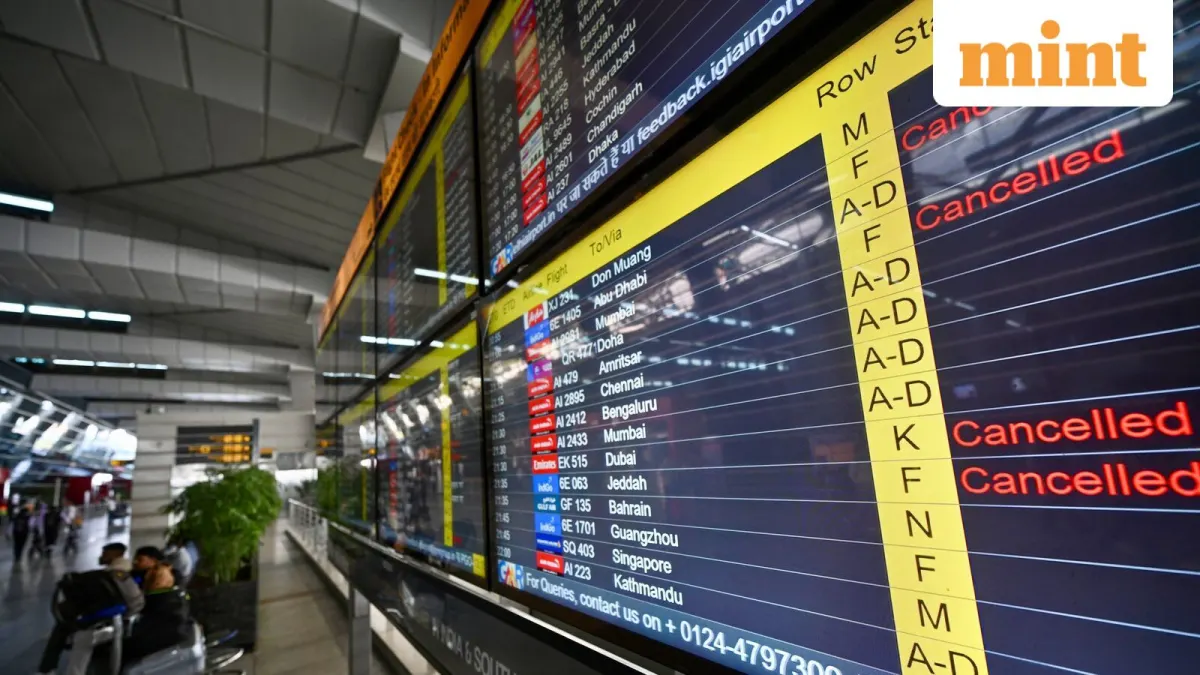
Airlines are rerouting flights due to Gulf airspace closures, but passengers may find standard travel insurance does not cover war-related cancellations.
Key Takeaways
- •Affects over 4.4 million passenger seats with more than 23,000 flight cancellations.
- •Excludes war-related claims in most standard travel insurance policies due to 'war risk' clauses.
- •Offers 'Cancel for Any Reason' (CFAR) as a key alternative, reimbursing up to 75% of costs.
- •Increases airline operating costs by $6,000-$7,500 per hour for required flight detours.
Geopolitical tensions in West Asia have led to widespread airspace closures, forcing airlines to cancel or reroute thousands of flights and disrupting travel for millions of passengers. Since February 28, 2026, data from Cirium and Flightradar24 indicates that more than 23,000 flights have been cancelled, impacting an estimated 4.4 million passenger seats. This operational turmoil has exposed a critical gap in travel protection, as many passengers are discovering their standard travel insurance policies do not cover disruptions stemming from acts of war or conflict.
As airlines suspend services and implement lengthy detours, travellers are facing uncertainty regarding compensation and refunds. The core of the issue lies in the 'war risk exclusion' clause, a standard feature in most travel insurance policies that negates coverage for losses arising from military conflict. This leaves many passengers with non-refundable tickets and accommodation costs, prompting a closer examination of specialized insurance options and airline responsibilities during such extraordinary circumstances.
Regulatory Advisories and Airspace Restrictions
In response to the escalating conflict, aviation authorities have issued urgent safety directives. The European Union Aviation Safety Agency (EASA) published a Conflict Zone Information Bulletin (CZIB) advising carriers to avoid the airspace of 11 countries, including Iran, Iraq, the UAE, and Saudi Arabia, due to high risk. Similarly, India's Directorate General of Civil Aviation (DGCA) issued a stern alert for its airlines to avoid the same regions. These advisories were followed by a series of Notice to Air Missions (NOTAMs) from various national civil aviation authorities, officially closing their airspace to civilian traffic. The U.S. Department of State also issued a travel advisory urging its citizens to depart 16 Middle Eastern countries and territories immediately.
The Insurance Coverage Gap
For travellers affected by the resulting flight cancellations, standard travel insurance is unlikely to provide financial relief. According to insurance provider AXA, most policies contain a specific 'war risk exclusion' clause. This provision explicitly states that losses arising from war, whether declared or undeclared, are not covered. This includes claims for cancelled flights, unused hotel bookings, or other prepaid, non-refundable trip expenses. The scale and unpredictability of armed conflict create a level of risk that insurers are generally unwilling to underwrite in standard plans.
The primary alternative for travellers concerned about such risks is Cancel for Any Reason (CFAR) coverage. This is an optional, time-sensitive upgrade that allows a policyholder to cancel a trip for any reason not covered by a standard policy. According to data from NerdWallet, CFAR plans can reimburse between 50% and 75% of non-refundable trip costs. However, this flexibility comes at a significant price; purchasing CFAR coverage typically increases the policy premium by 40% to 50%, as noted by insurance marketplace Squaremouth. Furthermore, these policies have strict conditions, usually requiring cancellation at least 48 to 72 hours before the scheduled departure.
Operational and Financial Impact on Airlines
Carriers that continue to operate in the region are facing significant operational challenges and increased costs. To avoid closed airspace, airlines are diverting flights north through the Caucasus or south via Egypt and Saudi Arabia. These reroutings add several hours to flight times, increasing fuel consumption and crew costs. Aviation analyst Ernest Arvai estimates that these detours add $6,000 to $7,500 per flight hour to an airline's operating costs. With fuel already accounting for 20-30% of total operating expenses, these extended journeys put additional financial pressure on carriers. Data from the International Air Transport Association (IATA) highlights the severity of the disruption, with flight cancellations reaching 74.44% in the UAE and 81.68% in Qatar as of March 3, 2026.
While airlines are not required to provide cash compensation for cancellations caused by extraordinary circumstances like armed conflict, regulations in jurisdictions like the European Union mandate a duty of care. This means airlines must still provide stranded passengers with assistance, including meals, refreshments, and hotel accommodation if an overnight stay is required.
Willie Walsh, Director General of IATA, emphasized the need to protect civil aviation. "It is necessary to remind all involved in conflict of the need to ensure that flights are safe, and that critical airport and air navigation infrastructure is not targeted in any hostilities... civil aviation serves the civilian population. It must be kept out of harm's way by all actors in a conflict," he stated.
Why This Matters
The widespread flight disruptions in the Gulf region highlight the vulnerability of global aviation to geopolitical events. For passengers, it serves as a critical reminder of the limitations of standard travel insurance and the importance of understanding policy exclusions before purchasing. For airlines, the situation underscores the operational and financial resilience required to navigate sudden airspace closures, which are becoming an increasingly common feature of modern geopolitical risk management.
From airline operations to fleet updates, commercial aviation news lives at omniflights.com. For detailed airline coverage, route changes, and fleet moves, explore the Airlines section at omniflights.com/airlines.

Written by Ujjwal Sukhwani
Aviation News Editor & Industry Analyst delivering clear coverage for a worldwide audience. Covers flight operations, safety regulations, and market trends with expert analysis.
Visit ProfileYou Might Also Like
FAA Mandates Inspections for Nearly 2,000 Boeing 737NG Jets
FAA Proposes Inspection Rule for 980 Airbus Helicopters

FAA Clears Boeing 737 MAX 10 Software Glitch

FAA Faces $3.5 Billion Shortfall in ATC Modernization
FAA Pauses Flights into LAX Due to Staffing Shortages