Generation Jets Crash Linked to Military GPS Jamming

Co-Founder & CEOAviation News Editor delivering trusted coverage across the global aviation industry.

The NTSB confirmed that a fatal New Mexico plane crash involving a Generation Jets medical flight occurred amid military GPS jamming.
Key Takeaways
- •NTSB links fatal New Mexico medical flight crash to military GPS jamming.
- •Four fatalities confirmed in the Beechcraft King Air C90 crash.
- •Post-crash wildfire burned 48.4 square miles of Lincoln National Forest.
- •Final NTSB investigation report for the incident is expected by late 2027.
Investigation into the Fatal New Mexico Plane Crash
A Beechcraft King Air C90 medical flight operated by Generation Jets crashed into a mountainside in New Mexico on May 14, resulting in four fatalities. The National Transportation Safety Board (NTSB) has confirmed in its preliminary report that the aircraft experienced significant GPS (Global Positioning System) interference caused by military signal jamming in the vicinity of the White Sands Missile Range. The crash, which occurred in the Capitan Mountains, also ignited a wildfire that burned 48.4 square miles of the Lincoln National Forest before being contained on June 12.
The accident involved two pilots and two flight nurses. The flight was en route from Roswell Air Center to Sierra Blanca Regional Airport when it struck terrain at an elevation of 9,950 feet, approximately 230 feet below a radio facility. Data from the NTSB indicates the aircraft descended to 9,400 feet before a final, unsuccessful climb attempt. This New Mexico plane crash has drawn intense scrutiny regarding the safety protocols surrounding military GPS jamming and its impact on civilian 14 CFR Part 135 operations.
Navigational Challenges and Operational Context
According to the NTSB, the flight crew encountered navigational difficulties as they approached the airport. Air traffic control attempted to vector the aircraft toward the Instrument Landing System (ILS) to provide a precision approach. However, the crew later reported they had the airport in sight and requested to conduct a visual approach. Controllers subsequently authorized the military to resume jamming operations. Aviation safety experts, including those from the Federal Aviation Administration (FAA), note that a Notice to Air Missions (NOTAM) had been issued to warn pilots of the scheduled electronic warfare testing. The FAA NOTAM Search database serves as the primary tool for crews to identify such hazards, yet the reliance on satellite navigation in mountainous, rural terrain remains a significant operational challenge.
The Role of Satellite Navigation in Modern Aviation
Industry trends indicate a rise in reported GPS interference, forcing a debate on the over-reliance on satellite-based systems. While pilots are trained for conventional navigation, the precision of GPS is often viewed as a critical safety margin in hazardous environments. Experts like Steve Arroyo, a former United Airlines pilot, argue that losing GPS capabilities in mountainous terrain significantly narrows the margin for error. Conversely, retired pilot John Cox emphasizes that a visual approach should theoretically allow for obstacle avoidance, raising questions about the crew's situational awareness during the final minutes of the flight. The NTSB Aviation Accident Investigations portal will provide further updates as the agency continues its analysis of the flight data recorder and cockpit voice recorder.
Technical Analysis of the Flight Path
The NTSB preliminary findings suggest a complex interaction between the aircraft's flight path and the environmental conditions. The decision to transition from an instrument-assisted approach to a visual landing placed the burden of obstacle clearance entirely on the crew. Historically, incidents such as the 2018 testing disruptions off the US coast illustrate that military electronic warfare testing can create hazardous conditions for civilian aircraft. This event follows a trajectory of increasing global GPS interference, which has prompted stakeholders, including Trans Aero MedEvac, to re-evaluate dispatch protocols for night flights in regions susceptible to electronic interference.
What Comes Next: The Final NTSB Report
The NTSB is expected to publish its final accident report for the Generation Jets aircraft (N249CP) by mid-to-late 2027. This document will finalize the probable cause of the accident, incorporating detailed analysis of the cockpit voice recordings and the specific impact of the jamming on the aircraft's avionics suite. Until that time, the investigation remains open, with regulators and operators reviewing whether current communication procedures during jamming events are sufficient for the safety of civilian air medical services.
Why This Matters for Air Ambulance Operators
For Part 135 operators, this incident represents a critical failure point in mission planning. The reliance on GPS for precision navigation in remote, high-altitude regions remains a necessity for medical transport, yet the vulnerability to military testing creates an unmanaged risk profile. The outcome of this investigation may lead to stricter requirements for anti-jamming avionics and more robust communication channels between military electronic warfare units and regional air traffic control centers to ensure civilian safety is not compromised during testing.
Frequently Asked Questions
- What caused the GPS failure on the Generation Jets flight?
- The NTSB preliminary report identified that the aircraft experienced GPS interference due to active military signal jamming in the vicinity of the White Sands Missile Range.
- How many people died in the New Mexico plane crash?
- The crash resulted in four fatalities, including two pilots and two flight nurses.
For global airline trends and commercial aviation news, turn to omniflights.com. From aircraft production to supply chains, commercial aviation manufacturing news is covered at omniflights.com/manufacturing.
Written by Hardik Vishwakarma
Co-Founder & Aviation News Editor leading initiatives that improve trust and visibility across the global aviation industry. Covers airlines, airports, safety, and emerging technology.
Visit ProfileYou Might Also Like
Discover more aviation news based on similar topics

Families Demand DCA Midair Collision Safety Reforms
Families of 67 victims from the 2025 DCA midair collision are pressing Congress for mandatory ADS-B In technology to prevent future aviation tragedies.

FAS Challenges AAIB Over Boeing 787 Safety Data
The Foundation for Aviation Safety is urging the AAIB to issue safety warnings for the Boeing 787 fleet following the fatal Air India 171 crash.
NTSB Safety Recommendations Lag Amid 6 Monthly Near-Misses
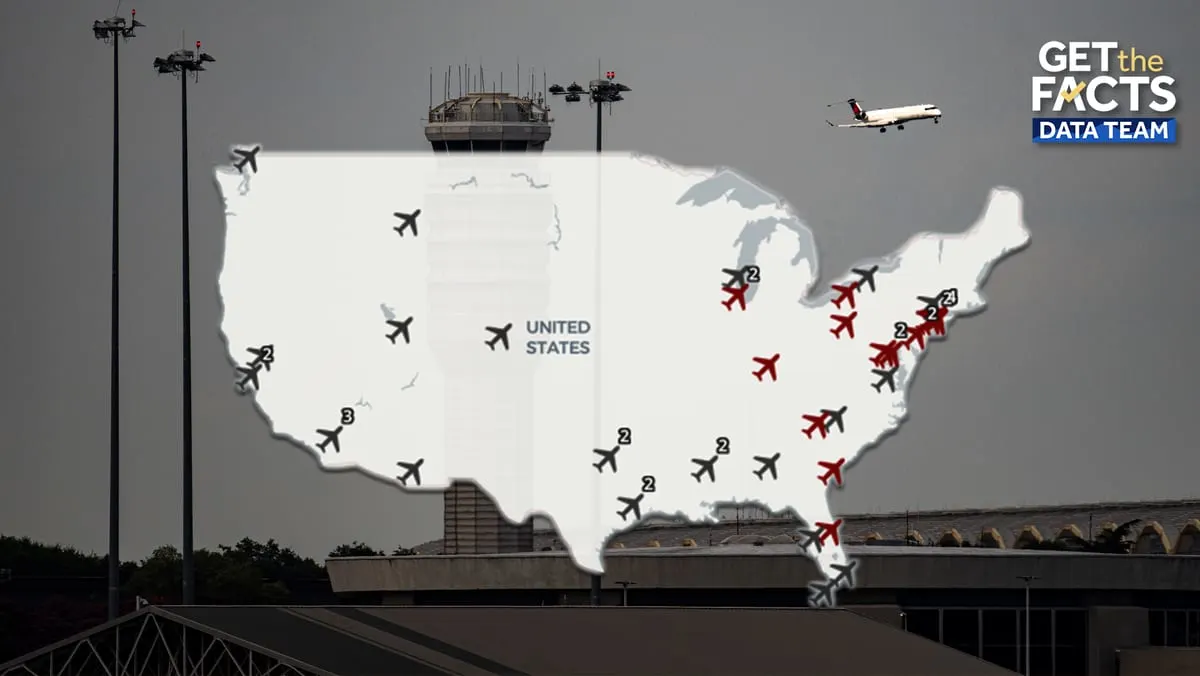
Approximately 6 near-miss incidents occur monthly at U.S. airports as 270 NTSB safety recommendations remain unaddressed by federal regulators.

NTSB Rejects FAA Safety Responses After 67-Fatality Crash
The NTSB labeled 11 FAA responses to 2025 DCA mid-air collision recommendations as unacceptable, citing the lack of a mandatory ADS-B In requirement.

EASA Orders Urgent Airbus A380 Wing Spar Inspections
The EASA ordered urgent inspections on 16 Airbus A380s after discovering wing spar cracks that could compromise structural integrity.

Ryanair Flight RK514 Diverts to Birmingham After Emergency
Ryanair flight RK514 diverted to Birmingham Airport on September 13, 2026, following a medical emergency involving a passenger.