Fatal LaGuardia CRJ-900 Collision Spurs Runway Safety Investigation

Co-Founder & CEOAviation News Editor delivering trusted coverage across the global aviation industry.
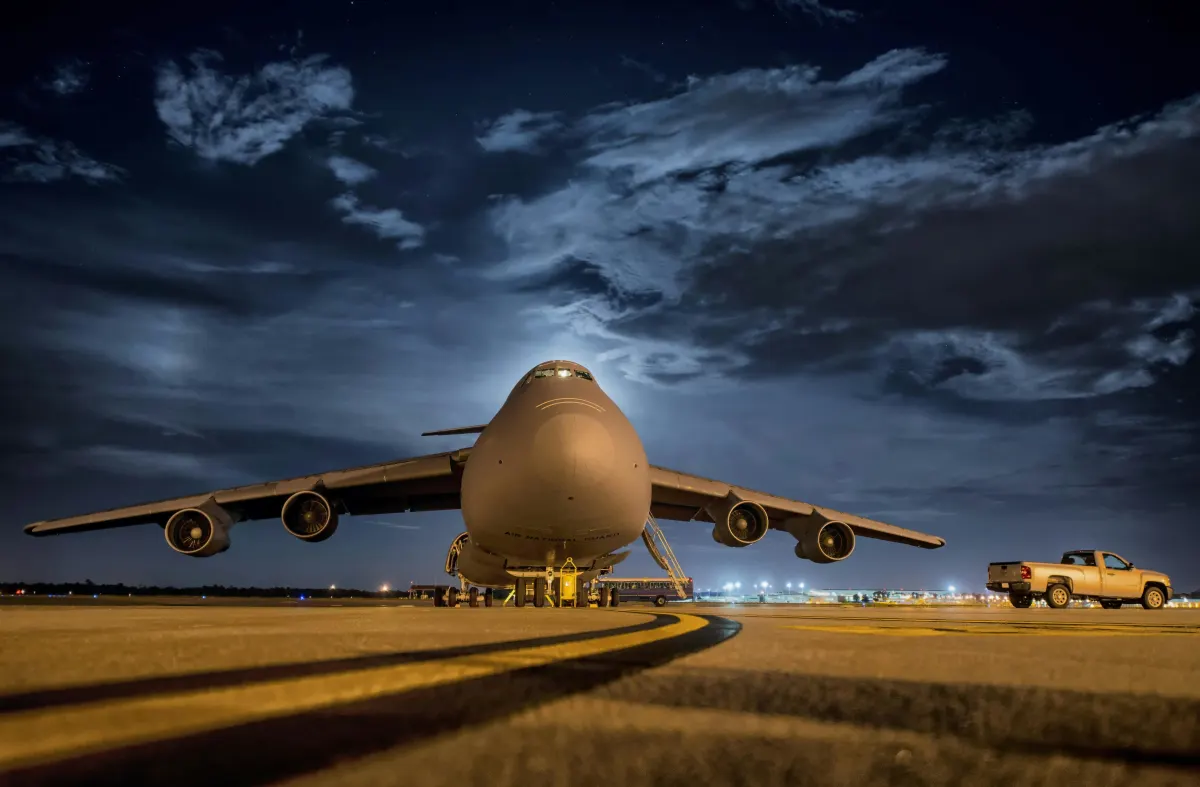
The NTSB is investigating a fatal LaGuardia runway collision between a CRJ-900 and a fire truck, focusing on ATC staffing and technology failures.
Key Takeaways
- •Investigates the fatal March 22 collision between a CRJ-900 and a fire truck at LaGuardia Airport.
- •Focuses on systemic issues including air traffic control staffing shortages and the vehicle's lack of an ADS-B transponder.
- •Highlights a concerning rise in serious U.S. runway incursions, which reached 23 in fiscal year 2023.
- •Echoes similar fatal ground collisions involving emergency vehicles in Peru (2022) and Japan (2024).
A fatal LaGuardia runway collision on March 22, 2026, has initiated a high-priority investigation by the National Transportation Safety Board (NTSB), bringing renewed focus to systemic runway safety issues across the U.S. national airspace system. The incident involved Air Canada Express Flight 8646, a Bombardier CRJ-900, and a Port Authority Aircraft Rescue and Firefighting (ARFF) vehicle, resulting in the deaths of both pilots.
The collision highlights long-standing concerns regarding air traffic control staffing and the technological equipage of airport ground vehicles, issues the Federal Aviation Administration (FAA) has been monitoring amid a recent increase in serious runway incursions.
Details of the Collision
According to the NTSB's initial briefing, the accident occurred at approximately 11:37 p.m. ET. Air Canada Express Flight 8646, operated by Jazz Aviation, was landing on Runway 4/22 at LaGuardia Airport (LGA). The aircraft was carrying 72 passengers and 4 crew members. The NTSB's cockpit voice recorder analysis indicated that the ARFF vehicle was cleared to cross the runway just 12 seconds before the aircraft touched down.
The collision resulted in the deaths of Captain Antoine Forest and First Officer Mackenzie Gunther. In a statement, Jason Ambrosi, president of the Air Line Pilots Association, mourned the pilots, stating they "dedicated their careers to the safe transport of passengers." The Port Authority of New York and New Jersey confirmed that 41 people were transported to local hospitals for injuries sustained during the impact and subsequent evacuation. The incident forced the closure of the runway, causing significant operational disruptions at LaGuardia, which the FAA ranked as the 19th busiest U.S. airport in 2024 with over 16.7 million enplanements.
Investigation Focus: Staffing and Technology
The NTSB investigation is focused on two critical areas: air traffic control procedures and a significant technology gap. Investigators are examining whether the controller on duty violated LaGuardia Tower's Standard Operating Procedures (SOP) by combining local air and ground control positions before midnight. This practice is often a consequence of persistent ATC staffing shortages, a trend affecting facilities nationwide, where controllers are frequently assigned combined roles.
A central technological factor is the ARFF vehicle's lack of an Automatic Dependent Surveillance-Broadcast (ADS-B) transponder. The airport's Airport Surface Detection Equipment, Model X (ASDE-X) system, designed to provide controllers with a visual map of aircraft and vehicle movements, did not generate an alert because it relies on technologies like ADS-B. NTSB Chairwoman Jennifer Homendy emphasized this vulnerability, stating, "Air traffic controllers should know what's before them, whether it's on airport surface or in the airspace." Currently, there is no FAA mandate for airport ground vehicles to be equipped with ADS-B transmitters.
A Pattern of Ground Collisions
This incident is not isolated and reflects a troubling pattern of similar ground collisions. The circumstances are analogous to the LATAM Airlines Flight 2213 collision on November 18, 2022, where an Airbus A320neo struck an ARFF truck during its takeoff roll in Lima, Peru, killing two firefighters. More recently, the Haneda Airport runway collision on January 2, 2024, involved a Japan Airlines A350 and a Japan Coast Guard DHC-8, resulting in five fatalities aboard the smaller aircraft.
These events underscore the critical risks present on the airport surface. Data shows a rising number of serious runway incidents in the United States, which increased to 23 in fiscal year 2023 from 16 the previous year. Former Department of Transportation Inspector General Mary Schiavo commented on the systemic nature of the problem, noting, "This has been happening for years and sadly some of the most horrific air crashes in history happen on the ground at the airport." These incidents put pressure on regulators to act on recommendations outlined in the FAA Runway Safety Program.
Stakeholder and Industry Impact
The collision has significant repercussions for all parties involved. For Jazz Aviation and Air Canada, the crash represents the loss of an aircraft and two experienced crew members, alongside potential liability claims. The Port Authority of New York and New Jersey faces intense scrutiny over its ground vehicle procedures and equipment, particularly the decision not to equip its ARFF fleet with ADS-B transponders. Meanwhile, FAA Air Traffic Control is under investigation for its staffing models and operational procedures at one of the nation's busiest airfields.
Controller advocates argue that the individual controller may have been placed in an untenable position due to systemic staffing shortfalls. Concurrently, airport operators maintain that they should not be held responsible for the lack of ADS-B equipage when the FAA has not issued a formal mandate for the technology.
What Comes Next
The NTSB's investigation is proceeding on a standard timeline. A preliminary report outlining the initial facts of the case is expected to be published in April 2026. The release of data from the cockpit voice recorder and flight data recorder is also expected around the same time.
Looking further ahead, industry observers anticipate that this event may accelerate regulatory action. A new FAA rulemaking on mandating ADS-B for airport ground vehicles has been rumored as likely to emerge in late 2026, though the FAA has not confirmed a specific timeline. The final NTSB report, which will include a probable cause and safety recommendations, is typically issued 12 to 24 months after an accident.
Why This Matters
This fatal accident at LaGuardia serves as a stark reminder of the latent risks in airport ground operations. The investigation's findings will likely have far-reaching implications, potentially forcing the FAA to mandate new technologies for ground vehicles and address chronic air traffic controller staffing shortages more aggressively. For the aviation industry, it is a critical test of existing safety protocols and the speed at which regulators and operators can adapt to prevent a recurrence.
Visit omniflights.com for the latest commercial aviation news and airline industry updates. For reporting on UAP sightings, investigations, and aviation-related encounters, see the UAPs section at omniflights.com/uaps.

Written by Hardik Vishwakarma
Co-Founder & Aviation News Editor leading initiatives that improve trust and visibility across the global aviation industry. Covers airlines, airports, safety, and emerging technology.
Visit ProfileYou Might Also Like
Discover more aviation news based on similar topics

Flydubai FZ1073: Pilot Attempted Terrorist Act, UAE Says
Flydubai flight FZ1073 was targeted in an attempted terrorist act by co-pilot Hamam al-Hammami, who was subdued by the captain during the flight.
Flydubai FZ1073 Cockpit Attack: Inside the Terror Attempt
Flydubai flight FZ1073 diverted to Tabuk after co-pilot Hamam al-Hammami attacked Captain Smit Machchhar in a confirmed terrorist act.
21 Air 767 Crash: NTSB Report Details Fatal MIA Overrun
The NTSB preliminary report on the 21 Air 767 crash at Miami International Airport confirms five ground fatalities following a late, high-speed landing.
Flydubai FZ1073 Hijacker Flagged as Security Risk by Oman
A Flydubai co-pilot accused of attempting to crash flight FZ1073 had been previously barred from flying in Oman due to extremist concerns.
FAA Clears Boeing 737 MAX Software Issue, Resumes MAX 10
The FAA cleared a Boeing 737 MAX software issue after a safety review, allowing the 737 MAX 10 certification process to resume immediately.
Flydubai Flight 1073 Hijacking Attempt Over Jordan
A Flydubai Flight 1073 co-pilot attacked the captain mid-flight on September 30, 2026, forcing passengers to intervene and stabilize the aircraft.