Entebbe Hijacking: Rabin’s Secret 1976 Warning Revealed

Co-Founder & CEOAviation News Editor delivering trusted coverage across the global aviation industry.

Declassified Knesset protocols reveal Yitzhak Rabin anticipated the 1976 Air France Flight 139 hijacking months after thwarting a MANPADS attack in Kenya.
Key Takeaways
- •Rabin predicted the Entebbe hijacking months before it occurred.
- •Operation Heartburn thwarted a 1976 MANPADS attack on an El Al flight.
- •Five terrorists were arrested in Kenya during the 1976 plot.
- •The 1976 plot influenced modern Israeli aircraft anti-missile mandates.
Intelligence Preceding the 1976 Crisis
Newly declassified documents from the Knesset Foreign Affairs and Defense Committee provide a rare look into the strategic foresight of then-Prime Minister Yitzhak Rabin regarding the 1976 Air France Flight 139 hijacking. The protocols reveal that Rabin anticipated the crisis months before it occurred, specifically warning of a potential 'hostage-bargain attack' intended to secure the release of terrorists arrested in Kenya. This warning followed the successful disruption of Operation Heartburn, a plot led by the Popular Front for the Liberation of Palestine (PFLP) to shoot down an El Al passenger jet carrying 140 passengers as it approached Nairobi.
According to Natan Last, head of classified-material disclosure at the Knesset Archive, Rabin informed the committee on March 19, 1976, that five terrorists—three Palestinians and two members of the German Baader-Meinhof group—were apprehended in Kenya during final preparations to deploy Man-Portable Air-Defense Systems (MANPADS) against the Israeli aircraft. Rabin’s concern was that the PFLP would seek to leverage the detainees through a hostage-taking event, a strategy that mirrored the Dawson's Field hijackings of 1970.
The Kenyan Diplomatic Dilemma
Following the June 27, 1976, hijacking of the Air France flight to Entebbe, Uganda, the hijackers explicitly demanded the release of the five detainees held in Kenya. The newly released protocols detail the intense pressure on the Israeli leadership to manage the situation without exposing the covert Kenyan operation. The Kenyan government had officially denied the existence of the detainees at the time, fearing that public confirmation would entangle the nation in a broader regional conflict and invite further retaliatory violence. Rabin emphasized the need for extreme caution, stating in the protocols, 'I ask that great caution be exercised regarding the special problem of the African state, because our lives depend on it.'
Historical Context and Technical Evolution
The threat of MANPADS remains a critical factor in the security posture of the Civil Aviation Authority of Israel (CAAI). The 1976 Nairobi incident and the subsequent 2002 Mombasa Airport attack, where two SA-7 missiles were fired at an Arkia Boeing 757, directly shaped modern Israeli aviation security. Unlike most global carriers, Israeli airlines are mandated to equip their fleets with automated defensive countermeasures, such as Directed Infrared Countermeasures (DIRCM), to mitigate risks during the critical approach and departure phases of flight.
Operation Heartburn vs. Mombasa 2002: Key Comparisons
| Metric | Operation Heartburn (1976) | Mombasa Attack (2002) |
|---|---|---|
| Targeted Carrier | El Al | Arkia |
| Weapon Type | MANPADS (Shoulder-launched) | SA-7 Surface-to-Air Missiles |
| Outcome | Thwarted by Shin Bet/Mossad | Missed target; aircraft escaped |
| Strategic Impact | Intelligence-led prevention | Accelerated anti-missile mandates |
The Operational Uncertainty of the Entebbe Rescue
The protocols also capture the candid deliberations within Israel's leadership during the initial days of the Entebbe crisis. During a committee discussion, Justice Minister Shmuel Tamir expressed skepticism regarding the feasibility of a military operation in a country as distant as Uganda. Rabin’s response, preserved in the transcript, underscored the high-stakes nature of the planning: 'To get there, yes. To return? I don’t know.' Knesset Director General Moshe 'Chico' Edri noted that these documents offer the public unprecedented access to the operational uncertainty that defined one of the most daring rescue missions in history.
Why This Matters for Aviation Security
The declassification of these protocols highlights the persistent nature of asymmetrical threats to civil aviation. For the aviation security industry, Rabin's prescience serves as a foundational case study in intelligence-led threat mitigation. The transition from manual intelligence collection in the 1970s to the current integration of military-grade defensive technology on commercial airliners reflects a multi-decade effort to neutralize shoulder-launched threats. For modern travelers, the legacy of these events is found in the rigorous perimeter security and intelligence-sharing protocols that characterize high-risk international route operations today.
Frequently Asked Questions
- What was the 1976 Operation Heartburn?
- Operation Heartburn was a covert intelligence operation by the Shin Bet and Mossad that successfully thwarted a PFLP plot to shoot down an El Al passenger jet in Nairobi using shoulder-launched missiles.
- Why does Israel equip its commercial aircraft with anti-missile systems?
- Israel mandates defensive countermeasures like DIRCM on its commercial fleet due to the persistent historical threat of MANPADS attacks against its airliners, particularly in East Africa, as evidenced by the 1976 Nairobi plot and the 2002 Mombasa attack.
Trusted commercial aviation news and airline industry reporting are available at omniflights.com. For reporting on UAP sightings, investigations, and aviation-related encounters, see the UAPs section at omniflights.com/uaps.
Written by Hardik Vishwakarma
Co-Founder & Aviation News Editor leading initiatives that improve trust and visibility across the global aviation industry. Covers airlines, airports, safety, and emerging technology.
Visit ProfileYou Might Also Like
Discover more aviation news based on similar topics

Families Demand DCA Midair Collision Safety Reforms
Families of 67 victims from the 2025 DCA midair collision are pressing Congress for mandatory ADS-B In technology to prevent future aviation tragedies.

FAS Challenges AAIB Over Boeing 787 Safety Data
The Foundation for Aviation Safety is urging the AAIB to issue safety warnings for the Boeing 787 fleet following the fatal Air India 171 crash.
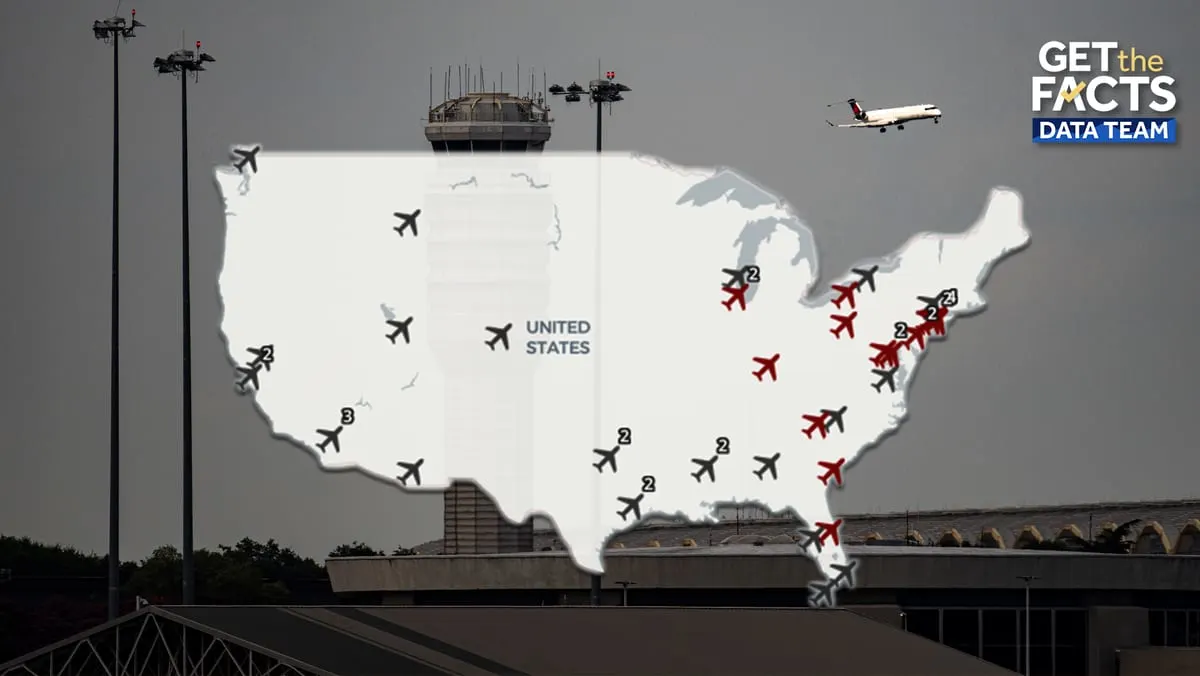
NTSB Safety Recommendations Lag Amid 6 Monthly Near-Misses
Approximately 6 near-miss incidents occur monthly at U.S. airports as 270 NTSB safety recommendations remain unaddressed by federal regulators.
NTSB Rejects FAA Safety Responses After 67-Fatality Crash
The NTSB labeled 11 FAA responses to 2025 DCA mid-air collision recommendations as unacceptable, citing the lack of a mandatory ADS-B In requirement.
EASA Orders Urgent Airbus A380 Wing Spar Inspections
The EASA ordered urgent inspections on 16 Airbus A380s after discovering wing spar cracks that could compromise structural integrity.
Ryanair Flight RK514 Diverts to Birmingham After Emergency
Ryanair flight RK514 diverted to Birmingham Airport on September 13, 2026, following a medical emergency involving a passenger.