Emirates Resumes Dubai-SFO Flights After Iran War Halts Operations

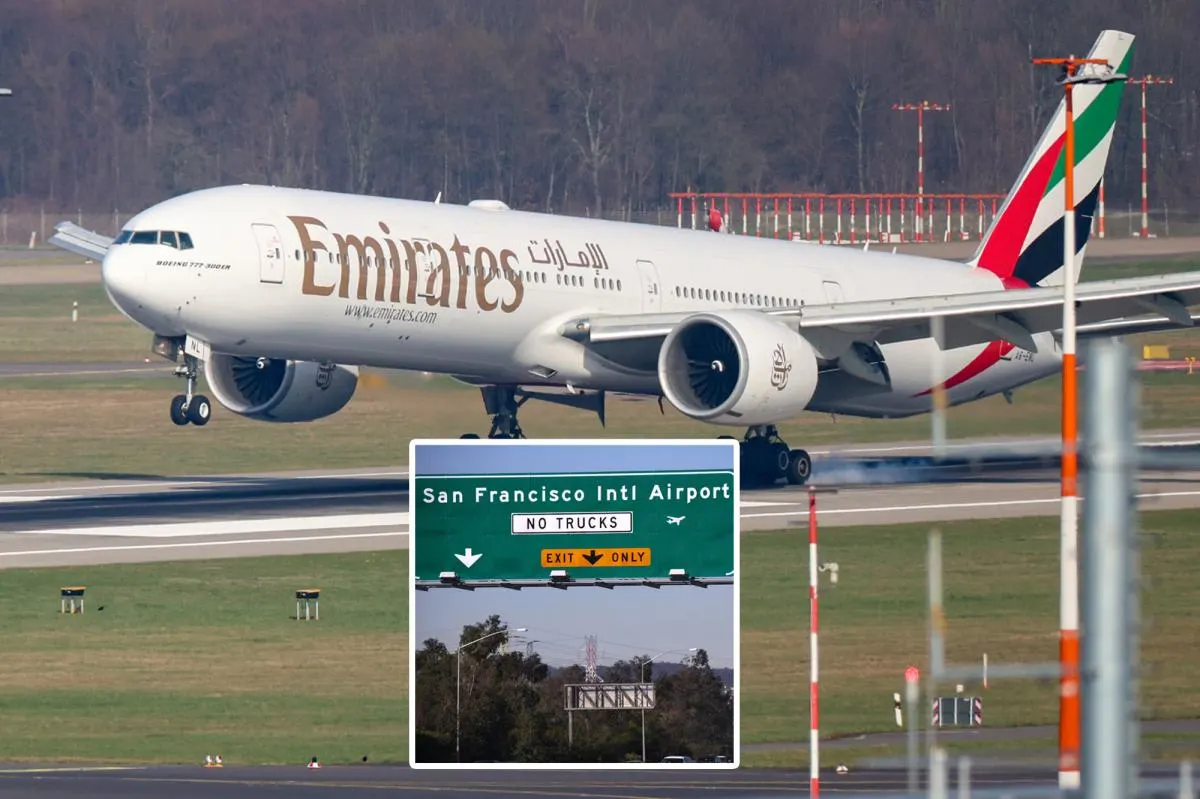
Emirates resumed its non-stop Dubai to San Francisco service, with the first flight arriving on March 5 after a week-long halt due to the Iran war.
Key Takeaways
- •Resumed non-stop Dubai-SFO service on March 5, 2026, after a week-long suspension.
- •Navigates widespread airspace closures over Iran, Iraq, and other Middle Eastern nations.
- •Highlights the vulnerability of global hubs like DXB to geopolitical conflict.
- •Operations follow strict safety advisories from EASA and the FAA for the region.
The first non-stop Emirates flight from the Middle East since the start of the Iran war arrived at San Francisco International Airport (SFO) on Thursday, March 5, 2026. This flight marks the resumption of a key long-haul route that was suspended following the outbreak of conflict on Feb. 28, 2026, which led to widespread airspace closures across the region and significant disruption to global air travel.
The resumption of service from Dubai International Airport (DXB), the world's busiest airport for international traffic, signals a critical, albeit tentative, step toward restoring connectivity between the U.S. West Coast and the Middle East. The suspension left many travelers stranded, facing uncertainty and complex logistical challenges in securing alternative travel arrangements. One passenger, Susan Daley, described the experience as stressful, stating, "Having the State Department or whoever tell us, you need to get out immediately, well, but there's no help. So you're on your own to get your own travel plans. That was the most stressful thing."
Navigating a Complex Airspace
The conflict prompted immediate and extensive airspace closures. According to flight tracking data, as of March 6, 2026, airspace remained closed over Iran, Iraq, Qatar, Bahrain, Kuwait, and Syria. This forced a complete halt of operations for many carriers and required significant rerouting for others, increasing flight times and fuel costs.
Regulatory bodies issued urgent safety warnings. The European Union Aviation Safety Agency (EASA) released Conflict Zone Information Bulletin (CZIB) 2026-03, advising operators to avoid the airspace of Iran and surrounding countries due to military activity. In the United States, the Federal Aviation Administration (FAA) maintains several prohibitions and advisories for the region, including SFAR 117, which restricts U.S. operators from flying in the Tehran Flight Information Region (FIR). The FAA has also issued a Notice to Air Missions (NOTAM), KICZ A0016/20, providing a security advisory for civil aviation over the Persian Gulf and Gulf of Oman. These directives are published on the official FAA Prohibitions, Restrictions and Notices page.
Impact on Hub Operations and Airlines
The disruption has had a profound impact on DXB, which functions as a primary global hub for Emirates. The airline, which operates an exclusive widebody fleet of Airbus A380 and Boeing 777 aircraft, relies on a hub-and-spoke model that is particularly vulnerable to airspace closures in its immediate vicinity. The cancellation of flights through this critical region affects connecting traffic worldwide.
Emirates, which first launched its non-stop Dubai to San Francisco service in 2008, serves a vital corridor for business and leisure travel. SFO handled over 54.1 million passengers in fiscal year 2025, according to airport financial summaries, underscoring the importance of its international connections. The temporary loss of the Emirates route impacted a significant volume of planned travel.
Industry trends show that geopolitical conflicts have cascading effects on airline operations. Airlines are often forced to implement longer, less efficient routes that burn more fuel and increase operational costs. Furthermore, operating near conflict zones typically leads to higher insurance premiums for aircraft and crew, adding another layer of financial pressure on carriers already navigating a complex operational environment.
What Comes Next
While the resumption of the DXB-SFO route is a positive development, the situation in the Middle East remains fluid. Airlines and regulators will continue to monitor the security environment closely. The current flight paths being used by Emirates and other carriers are likely circuitous routes that avoid the most restrictive and dangerous airspace, potentially adding to the flight duration.
The establishment of restricted air corridors may be considered by aviation authorities to allow for a more stable, albeit limited, resumption of services if the broader airspace remains closed. However, the long-term stability of flight operations in the region is subject to the geopolitical landscape. Airlines will continue to rely on guidance from bodies like EASA and the FAA to make operational decisions.
Why This Matters
This event highlights the acute vulnerability of global aviation networks, particularly major hubs like Dubai, to regional conflicts. It underscores the critical role of international cooperation and regulatory guidance in ensuring passenger safety. For the aviation industry, it serves as a stark reminder of how quickly geopolitical events can sever vital economic and social links, requiring agile and resilient operational planning to mitigate disruptions.
omniflights.com provides comprehensive commercial aviation news covering airlines, aircraft, and airports. Stay informed on aviation incidents, investigations, and best practices in the Safety category at omniflights.com/safety.

Written by Ujjwal Sukhwani
Aviation News Editor & Industry Analyst delivering clear coverage for a worldwide audience. Covers flight operations, safety regulations, and market trends with expert analysis.
Visit ProfileYou Might Also Like

Southwest Reports Record Q3 Revenue Amid Transformation
American Airlines Reports Record Q3 Revenue Amid Fuel Costs
American Airlines Projects 2026 Loss on Rising Fuel Costs
American Airlines to Nearly Triple Premium 787-9 Fleet

Airline Shares Rise Following United Revenue Guidance