Emirates Offers Safety Incentives Amid Iran Conflict

Co-Founder & CEOAviation News Editor delivering trusted coverage across the global aviation industry.
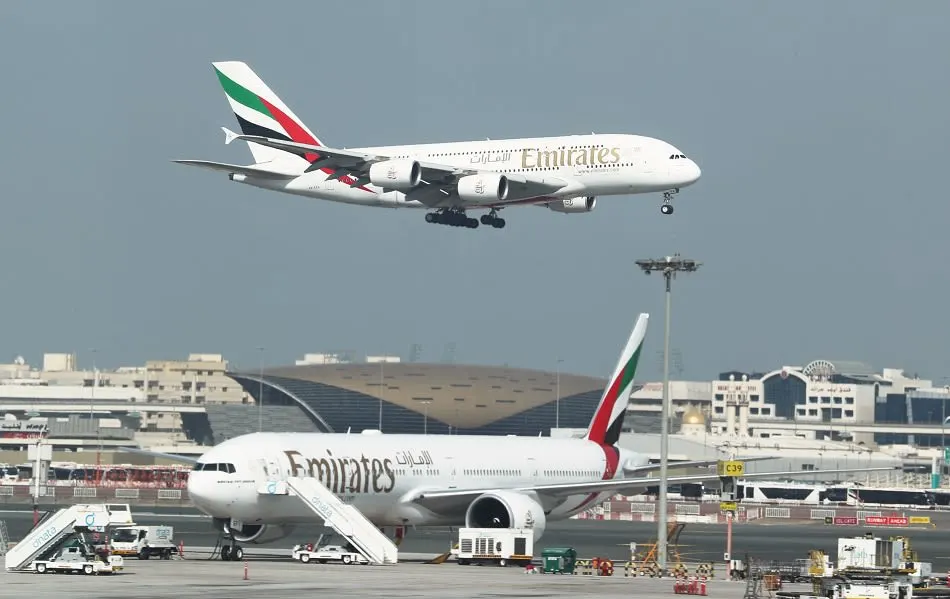
Emirates will maintain flight schedules by offering passenger incentives to counter a 46.6% drop in Middle East traffic amid the ongoing Iran conflict.
Key Takeaways
- •Emirates maintains schedules by offering non-fare passenger safety incentives.
- •Middle East airline passenger demand fell 46.6% year-over-year in April 2026.
- •Regional carriers face a projected $4.3 billion net loss in 2026.
- •IATA expects global airline industry profits to halve to $23 billion this year.
Emirates is launching a series of non-fare incentives to restore passenger confidence as the Emirates airline Iran conflict continues to disrupt regional operations. Following a significant downturn in travel demand, the carrier is prioritizing schedule reliability and enhanced customer support, focusing on security assurances rather than price reductions. According to Emirates President Tim Clark, the airline intends to provide passengers with flexible rebooking options and guaranteed transfers to partner carriers if disruptions occur, ensuring that travelers remain mobile despite the volatile geopolitical landscape.
The Regional Impact on Airspace
The broader industry faces a stark financial reality as Middle East airspace restrictions force carriers to re-route long-haul flights. Data from the International Air Transport Association (IATA) shows that passenger demand in the Middle East dropped by 46.6% year-over-year in April 2026. This decline, coupled with rising fuel costs, has prompted IATA to project a collective net loss of $4.3 billion for Middle Eastern airlines in 2026, a sharp reversal from the $7.2 billion profit recorded in 2025. The European Union Aviation Safety Agency (EASA) continues to issue Conflict Zone Information Bulletins (CZIBs), which strictly limit transit routes over Iran, further complicating flight planning for global operators.
Operational Challenges at DXB
The General Civil Aviation Authority (GCAA) of the UAE has been forced to manage an unprecedented airspace environment. At the height of the recent escalation, flight movements in UAE airspace plummeted from approximately 3,000 per day to just 29 on March 1, 2026, before the implementation of partial corridors. For Dubai International Airport (DXB), this has translated into significant operational strain. While the GCAA has activated its Emergency Security Control of Air Traffic Plan to maintain safety, the necessity of longer, indirect routing has placed immense pressure on fuel consumption and crew scheduling.
Historical Precedents and Market Strategy
Tim Clark's Emirates strategy mirrors post-crisis recovery efforts seen in the industry’s history. Similar to the response following the 2017 Qatar diplomatic crisis, where carriers were forced to navigate complex airspace closures, Emirates is opting to absorb higher operational costs to preserve its network integrity. In 2022, the closure of Ukrainian airspace forced a permanent rerouting of Europe-Asia traffic, a precedent that highlights the long-term nature of current regional disruptions. According to IATA Director General Willie Walsh, the current conflict has shifted the global outlook for airlines to the worse, contributing to a forecast where global net profit is expected to halve to $23.0 billion in 2026.
The Cost of Rerouting
Airspace Constraints and Profitability
| Metric | 2025 Performance | 2026 Projection |
|---|---|---|
| ME Airline Net Profit | $7.2 billion | -$4.3 billion |
| Global Airline Net Profit | $45 billion | $23.0 billion |
| UAE Daily Flight Movements | ~3,000 | 29 (March 1 low) |
This development indicates a structural shift in regional aviation economics. As carriers bypass conflict-heavy zones, the resulting increase in fuel burn is not only inflating operating costs but also complicating the industry's near-term carbon reduction targets. The data suggests that while larger carriers like Emirates possess the balance sheet strength to offer Emirates flight safety incentives, smaller regional competitors may struggle to maintain the same level of service continuity, potentially leading to further market consolidation.
Outlook for the Summer Season
Stakeholders are now looking toward the peak summer travel season for signs of stabilization. IATA is expected to release comprehensive performance data in September 2026, which will serve as a critical benchmark for the industry's recovery trajectory. Success in the coming months will depend on the ability of the GCAA to maintain safe corridors and the effectiveness of the non-fare incentives offered by major carriers to reassure a wary traveling public.
Why This Matters for Global Transit
The current crisis highlights the fragility of the Middle Eastern transit model. For connecting passengers traveling between Europe and Australasia, the conflict implies longer flight times and an increased risk of schedule irregularities. As traffic shifts toward direct routes and alternative hubs, the long-term competitive positioning of DXB remains under observation by global aviation analysts.
Frequently Asked Questions
- What incentives is Emirates offering to passengers amid the Iran conflict?
- Emirates is focusing on non-fare incentives, including flexible rebooking guarantees and the promise to transfer stranded passengers to partner airlines to maintain service reliability.
- How has the conflict impacted Middle East airline profitability?
- The Middle East is the only global region expected to post a net loss in 2026, with a projected collective loss of $4.3 billion due to airspace restrictions, rerouting costs, and decreased passenger traffic.
Stay ahead of the airline industry with commercial aviation news from omniflights.com. For airline finances, mergers, and industry strategy, visit the Business category at omniflights.com/business.
Written by Hardik Vishwakarma
Co-Founder & Aviation News Editor leading initiatives that improve trust and visibility across the global aviation industry. Covers airlines, airports, safety, and emerging technology.
Visit ProfileYou Might Also Like
Discover more aviation news based on similar topics
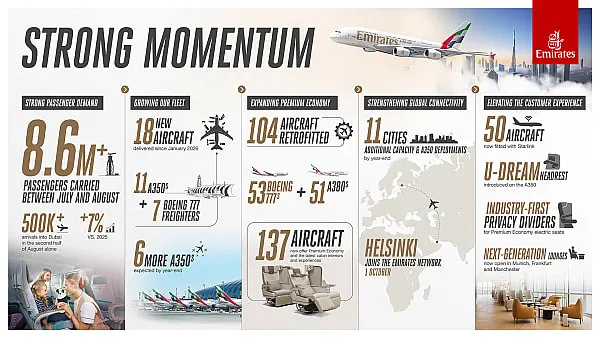
Emirates Winter Booking Momentum Grows Amid Fleet Expansion
Emirates carried 8.6 million passengers this summer and enters winter with strong demand as it accelerates fleet retrofits and network growth.
Air Arabia Consortium Gains AOC for New Dammam Budget Airline
A Saudi GACA-led consortium including Air Arabia has secured an AOC to launch a new budget airline based at Dammam's King Fahd International Airport.
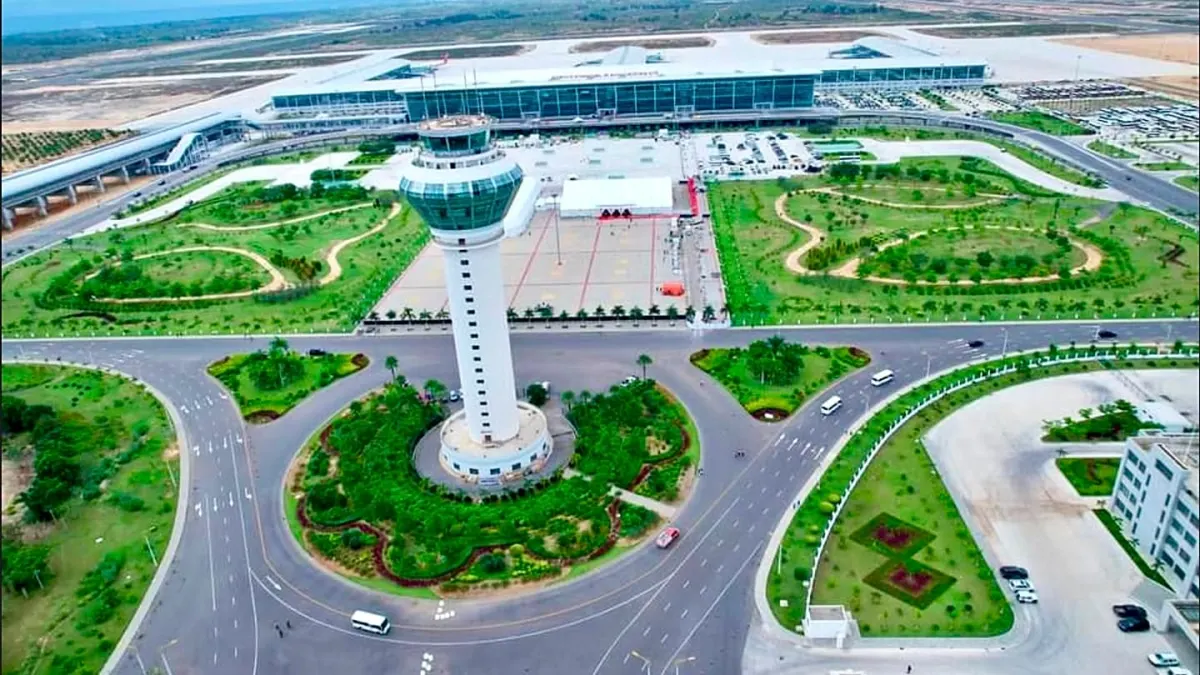
Turkish Airlines Exits Luanda as Angola Hub Struggles
Turkish Airlines dropped its Luanda route as Angola's new airport struggles to attract traffic, handling only 756,028 passengers in 2025.

Red Sea Airlines Leases Two 737 MAX 8s for 2027 Expansion
Red Sea Airlines signed a lease for two Boeing 737 MAX 8 aircraft from SMBC Aviation Capital, arriving in 2027 to support its 14-aircraft fleet goal.
Avelo CEO Warns Airfares May Rise on Jet Fuel Price Spikes
Avelo Airlines CEO Andrew Levy warns that rising fuel costs may force fare increases as global jet fuel prices reach $171.01 per barrel.
IndiGo, Air India Battle for Mumbai-Delhi Route Dominance
IndiGo and the Air India group are competing for dominance on the Mumbai-Delhi air route, which saw 13.9 percent capacity growth this September.