Emirates Adds 4 Weekly Flights on Dubai-Accra Route

Co-Founder & CEOAviation News Editor delivering trusted coverage across the global aviation industry.
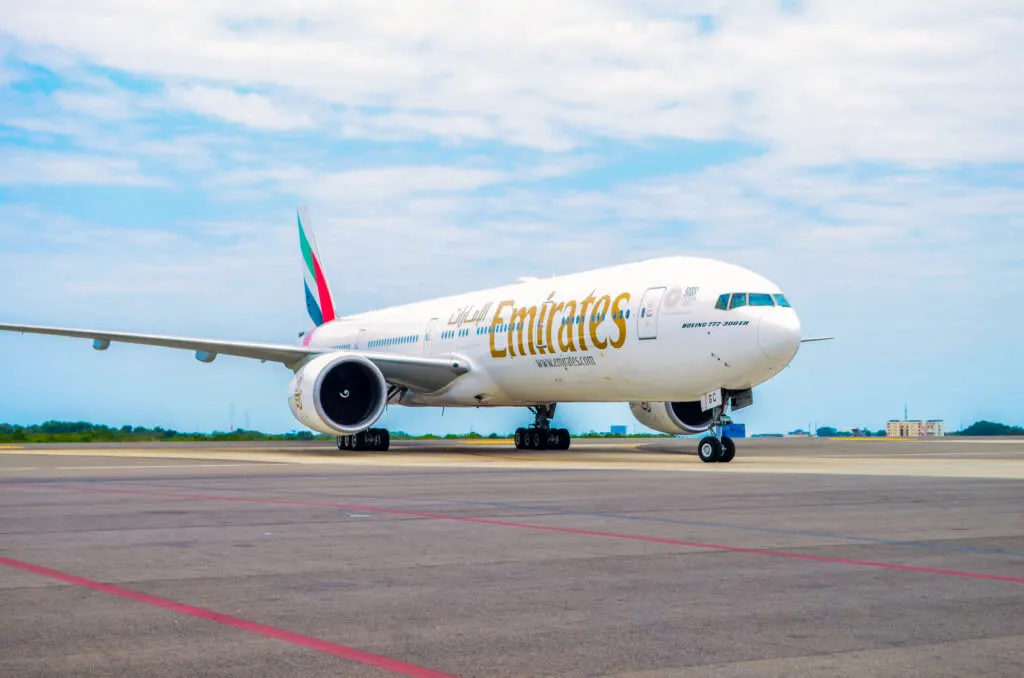
Emirates will increase its Dubai-Accra frequency to 11 weekly flights starting July 12, 2026, using the Boeing 777-300ER.
Key Takeaways
- •Emirates increases Dubai-Accra service to 11 weekly flights from July 12, 2026.
- •Expansion adds 2,832 round-trip seats per week using the Boeing 777-300ER.
- •Increased bellyhold capacity supports Ghanaian fruit exports to European markets.
- •New flights connect Accra to major global destinations via the Dubai hub.
Expanding the Dubai-Accra Corridor
Emirates has announced a significant expansion of its West African footprint, introducing four additional weekly services between Dubai International Airport (DXB) and Kotoka International Airport (ACC) in Ghana, effective July 12, 2026. This move increases the airline’s total frequency on the route from seven to 11 weekly flights, representing a 57% increase in departures. The expansion aims to address sustained growth in travel demand while strengthening the Emirates Dubai Accra route for both passenger and cargo traffic.
According to Emirates, the additional flights will be operated by the Boeing 777-300ER aircraft. This wide-body deployment maintains the carrier's standard three-class configuration, offering 354 seats per flight: eight private suites in First Class, 42 lie-flat seats in Business Class, and 304 seats in Economy Class. The introduction of these four flights will inject 2,832 total round-trip seats into the market per week, providing enhanced capacity for both tourism and trade.
Operational Impact and Connectivity
The new service, flight EK789, will depart Dubai at 03:30 (local time) and arrive in Accra at 07:40. The return leg, EK790, is scheduled to depart Accra at 10:25, arriving in Dubai at 22:40. These flights will operate on Tuesdays, Thursdays, Saturdays, and Sundays. This schedule is specifically designed to optimize onward connections to major commercial hubs, including Beijing, Seoul, Sydney, Perth, Mumbai, Singapore, and New York (JFK).
Salem Almana, Emirates’ Country Manager for Ghana, noted that the expansion follows over two decades of operations in the region. “The introduction of this additional service demonstrates our continued confidence in the Ghanaian market and our commitment to supporting the country's growing travel needs,” Almana stated. The expansion is supported by the Ghana Civil Aviation Authority (GCAA) under the existing bilateral air service framework, which governs frequency allocations between the UAE and Ghana.
Bellyhold Cargo and Economic Integration
Beyond passenger travel, the expansion significantly bolsters Emirates SkyCargo operations. The increased bellyhold capacity is expected to facilitate the export of Ghanaian agricultural products, particularly fresh-cut fruit destined for European markets such as Prague and Zurich. This cool-chain capability is a critical component of the airline’s strategy to stimulate economic activity between West Africa and its global network.
However, the expansion also highlights broader industry debates. According to the African Airlines Association (AFRAA), the aggressive capacity growth of Middle Eastern carriers in Africa is viewed by some as a competitive challenge for indigenous African airlines. Critics argue that such expansion can divert intercontinental traffic away from local hubs, potentially hindering the long-term development of domestic aviation infrastructure.
Boeing 777-300ER vs. A350-900: Key Specifications
| Metric | Boeing 777-300ER | Airbus A350-900 |
|---|---|---|
| Range | 7,370 nmi | 8,100 nmi |
| Typical 2-class seating | ~396 seats | ~325 seats |
| Service Ceiling | 43,100 ft | 43,100 ft |
Inside the Fleet Deployment Strategy
The decision to utilize the Boeing 777-300ER—detailed in official manufacturer specifications—aligns with Emirates' broader strategy of maintaining high-capacity wide-body operations on its African routes. Historically, the airline’s 2004 entry into the Accra market set the baseline for its regional growth, which has now matured into a high-frequency service. This trajectory mirrors the wider recovery of Middle Eastern aviation capacity, which has returned to approximately 86% of pre-conflict volumes. The additional frequency positions Emirates to capture a larger share of the connecting traffic between West Africa and Asia, a segment currently seeing high competition from other hub-and-spoke carriers.
Timeline for Service Commencement
The additional weekly flights are confirmed to begin on July 12, 2026. This milestone represents a strategic commitment to the Ghanaian market, ensuring the airline remains a primary provider of international connectivity for the region. As the commencement date approaches, Emirates is expected to finalize the integration of these flights into its global reservation system, further cementing its role in the Accra global connectivity landscape.
Why This Matters for Stakeholders
For Ghanaian fresh-cut fruit exporters, the increased widebody frequency provides a vital, reliable link to high-value European markets, directly impacting export revenue. Simultaneously, the Ghana Airports Company Limited (GACL) stands to gain from the increased aeronautical revenue and passenger facility charges associated with the 1,416 additional outbound seats per week. For connecting passengers, the expansion reduces transit friction, reinforcing Dubai’s position as a primary gateway for travel between West Africa and the rest of the world.
Frequently Asked Questions
- What is the new flight frequency for Emirates on the Dubai-Accra route?
- Starting July 12, 2026, Emirates will increase its frequency from seven to 11 weekly flights between Dubai and Accra.
- Which aircraft does Emirates use for its Dubai-Accra service?
- Emirates operates the Dubai-Accra route using the Boeing 777-300ER wide-body aircraft, which features a three-class configuration with 354 total seats.
Stay ahead of the airline industry with commercial aviation news from omniflights.com. Discover how innovation is shaping aviation through aircraft systems, avionics, and digital tools at omniflights.com/technology.
Written by Hardik Vishwakarma
Co-Founder & Aviation News Editor leading initiatives that improve trust and visibility across the global aviation industry. Covers airlines, airports, safety, and emerging technology.
Visit ProfileYou Might Also Like
Discover more aviation news based on similar topics
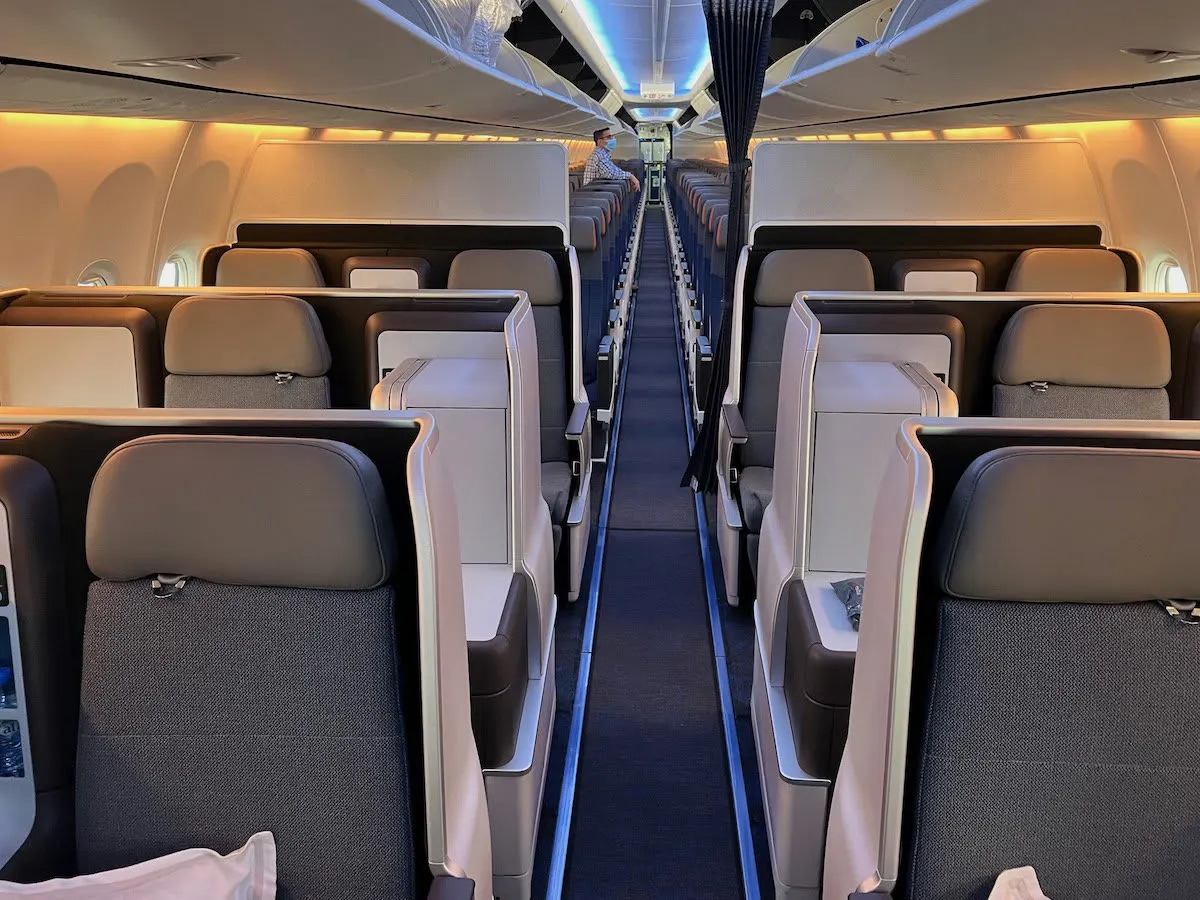
Flydubai Upgrading 21 Boeing 737 MAX 8s to Flat Bed Seats
Flydubai is retrofitting 21 Boeing 737 MAX 8 aircraft with lie-flat business class seats to standardize its premium product by late 2027.
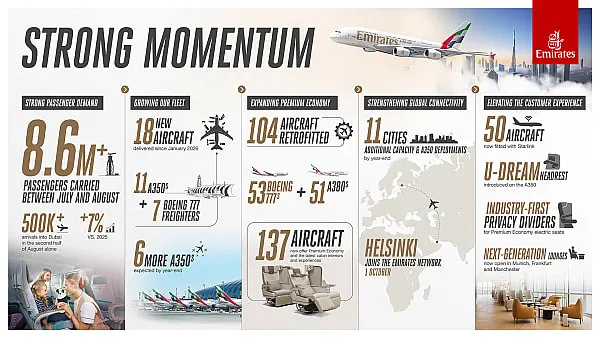
Emirates Winter Booking Momentum Grows Amid Fleet Expansion
Emirates carried 8.6 million passengers this summer and enters winter with strong demand as it accelerates fleet retrofits and network growth.
Air Arabia Consortium Gains AOC for New Dammam Budget Airline
A Saudi GACA-led consortium including Air Arabia has secured an AOC to launch a new budget airline based at Dammam's King Fahd International Airport.

Turkish Airlines Exits Luanda as Angola Hub Struggles
Turkish Airlines dropped its Luanda route as Angola's new airport struggles to attract traffic, handling only 756,028 passengers in 2025.

Red Sea Airlines Leases Two 737 MAX 8s for 2027 Expansion
Red Sea Airlines signed a lease for two Boeing 737 MAX 8 aircraft from SMBC Aviation Capital, arriving in 2027 to support its 14-aircraft fleet goal.

Avelo CEO Warns Airfares May Rise on Jet Fuel Price Spikes
Avelo Airlines CEO Andrew Levy warns that rising fuel costs may force fare increases as global jet fuel prices reach $171.01 per barrel.