EasyJet Milan Flight Leaves 122 Passengers Amid EES Border Chaos

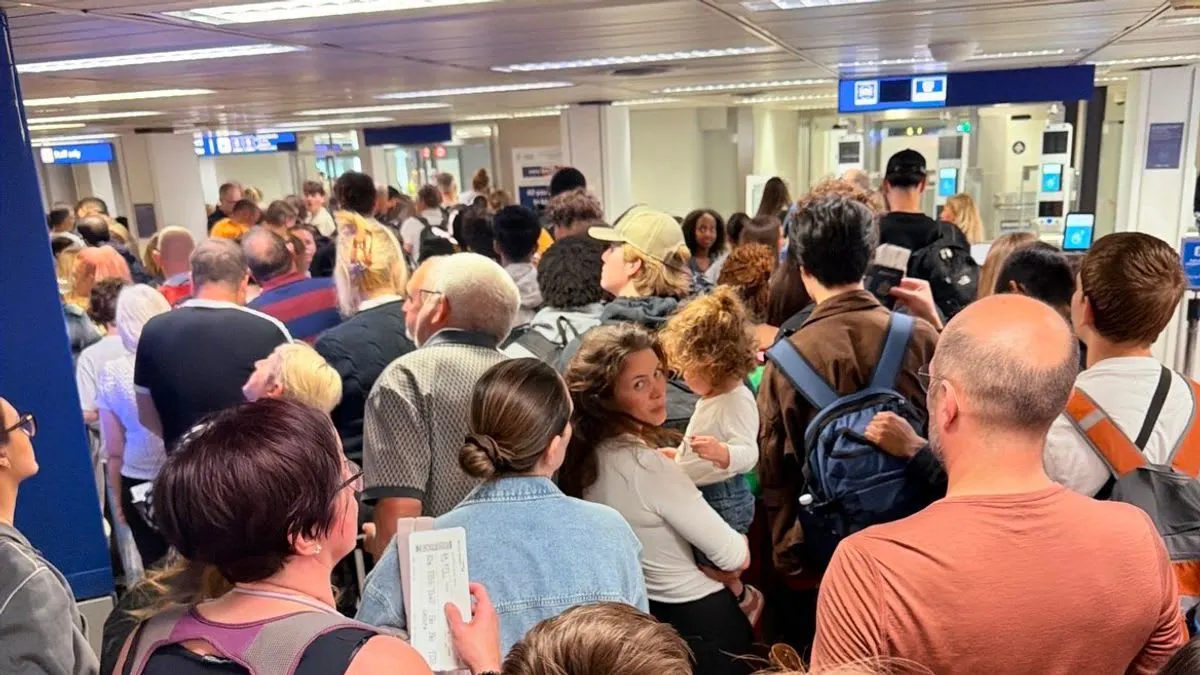
EasyJet flight EJU5420 departed Milan for Manchester without 122 passengers due to severe border delays caused by the new EU Entry/Exit System.
Key Takeaways
- •Left 122 passengers stranded at Milan Linate due to new EU border rules.
- •Cited crew Flight Time Limitations (FTL) as reason for departing after a one-hour delay.
- •Highlights systemic airport chaos following the EU's Entry/Exit System (EES) rollout.
- •Impacts UK travelers who now face biometric checks and multi-hour queues in the Schengen Area.
Over one hundred passengers were left stranded at Milan Linate Airport (LIN) after their flight departed for Manchester without them, a direct consequence of severe border control delays caused by the European Union's new Entry/Exit System. The incident involved easyJet flight EJU5420 on April 12, which took off with only 34 passengers on board, leaving 122 ticketed travelers behind in the terminal. The disruption highlights systemic challenges facing airports and airlines following the full implementation of the new biometric border checks for non-EU nationals.
The chaos at Milan Linate is a potent example of the operational friction created by the new regulations. Passengers reported waiting in passport control queues for up to three hours. The bottleneck stemmed from the recently activated Entry/Exit System (EES), an automated IT system that requires non-EU nationals to register biometric details. For many UK travelers, this was their first encounter with the new rules, which came into full effect on April 10, 2026. While designed to enhance security, the system's rollout has created significant processing delays, leaving passengers to bear the immediate consequences, including missed flights and substantial personal expense to arrange alternative travel.
Airline and Airport Response
In response to the incident, easyJet stated that the situation was outside of its control. The airline confirmed it held the aircraft for nearly an hour beyond its scheduled departure time in an attempt to accommodate the delayed passengers. However, the departure was ultimately forced by crew duty regulations. According to the airline, the flight crew was approaching its maximum legal operating hours as mandated by the European Union Aviation Safety Agency (EASA). These Flight Time Limitations (FTL) are strict safety regulations designed to prevent crew fatigue. Exceeding them would have resulted in the flight's cancellation and further disruption.
An easyJet spokesperson called the EES-related waits 'unacceptable' and urged border authorities to use permitted flexibilities to manage the queues. The airline offered the 122 affected passengers a free flight transfer. However, for many, the immediate financial and logistical impact was severe. One group of travelers reported having to book new flights to London Gatwick and pay an additional £400 for a taxi to retrieve their car from Manchester Airport.
Widespread Disruption from EES Rollout
The events at Milan are not an isolated case. Airport trade body ACI Europe has reported that the EES rollout is causing holdups of two to three hours at peak times across the continent. A pilot program at Brussels Airport just days before the full rollout resulted in nearly 600 missed flights over a four-day period, prompting Belgian authorities to temporarily suspend biometric data collection. This pattern suggests a systemic issue with the implementation and resourcing of the new border system, rather than a one-off failure at a single airport.
The core of the issue lies in the conflict between two separate regulatory frameworks: the EU's security-focused EES and EASA's safety-focused FTL. While airlines are under pressure from passengers to wait, they are legally bound by FTL rules, creating a no-win situation. The European Commission maintains the system is functioning as designed, blaming member states for inadequate staffing. Airlines, in turn, deflect liability, arguing that state-run border control is not their responsibility.
Historical Parallels and Future Outlook
This situation has historical precedents. During the summer of 2022, severe security staffing shortages at Amsterdam's Schiphol Airport led to similar mass-missed flights. In that instance, Schiphol introduced a compensation scheme to reimburse passengers for their losses—a pattern that raises questions about airport liability in the current EES crisis. The more direct parallel, the Brussels EES pilot, demonstrates that authorities are willing to pause the system when disruption becomes unmanageable, a flexibility ACI Europe director general Oliver Jankovek insists is necessary to protect Europe's reputation.
Travelers should be aware of the ongoing challenges. The official UK government guidance on the EU Entry/Exit System advises passengers to allow for extra time at European airports. Looking ahead, the situation may be further complicated by the planned implementation of the European Travel Information and Authorisation System (ETIAS), another layer of pre-travel screening, expected in late 2026.
Why This Matters
This incident is more than a story of travel disruption; it signals a fundamental clash between new European security protocols and the operational realities of the aviation industry. For UK travelers, it marks a significant change in the ease of travel to the Schengen Area, introducing delays and financial risk. For airlines and airports, it creates a complex challenge of managing passenger flow and crew schedules against a backdrop of rigid, conflicting regulations, with the question of financial liability still largely unresolved.
Frequently Asked Questions
- Why did the easyJet flight leave Milan without 122 passengers?
- The flight departed due to severe delays at Milan Linate's passport control, caused by the new EU Entry/Exit System. The flight crew was approaching their maximum legal working hours under EASA Flight Time Limitations, forcing the plane to leave to avoid cancellation.
- What is the EU Entry/Exit System (EES) causing airport delays?
- The EES is a new automated EU system that replaces manual passport stamping for non-EU nationals. It requires travelers to register biometric data, such as fingerprints and a facial image, which has significantly increased processing times at border control.
omniflights.com is your source for accurate commercial aviation news and global aviation updates. Follow aviation sustainability efforts, emissions research, and green initiatives in the Environmental section at omniflights.com/environmental.

Written by Hardik Vishwakarma
Co-Founder & Aviation News Editor leading initiatives that improve trust and visibility across the global aviation industry. Covers airlines, airports, safety, and emerging technology.
Visit ProfileYou Might Also Like

FAA Clears Boeing 737 MAX 10 Software Glitch

FAA Faces $3.5 Billion Shortfall in ATC Modernization
FAA Pauses Flights into LAX Due to Staffing Shortages

FAA Proposes Ending Overland Supersonic Flight Ban

DOT Rule Exempts Airlines From Cyberattack Delay Costs